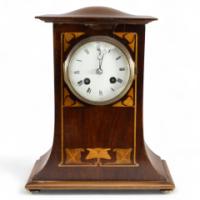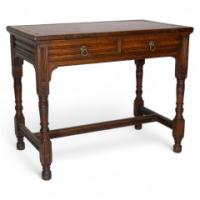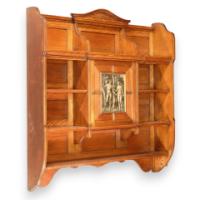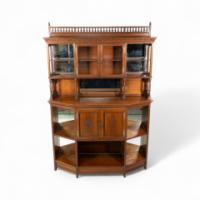
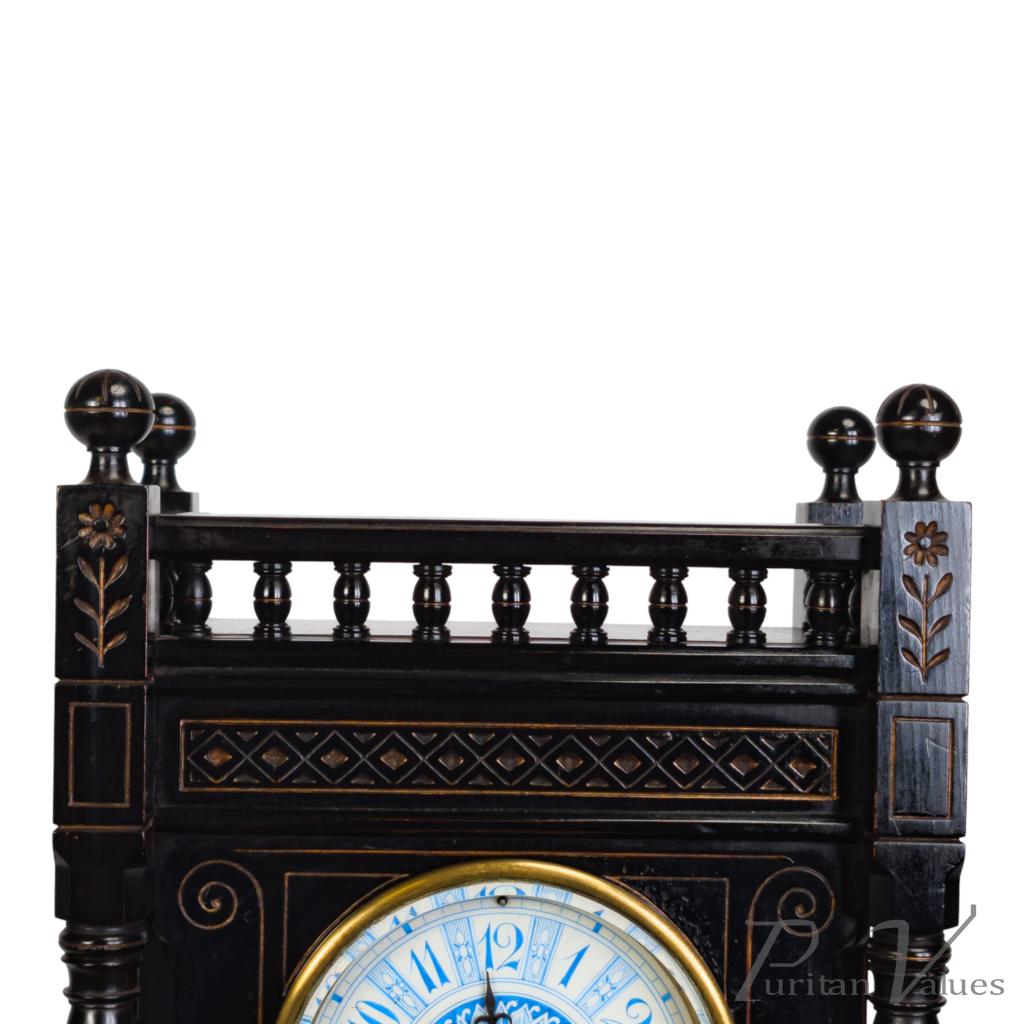

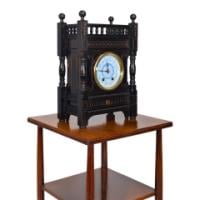
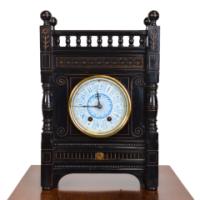
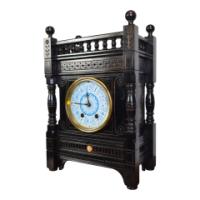



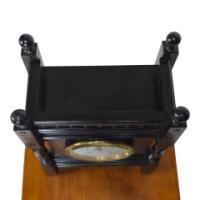
Bruce Talbert for Gillow and Co. – Aesthetic Movement Ebonised Mantel Clock
£8,500
Please note this does not include delivery. We will be in contact to arrange delivery or collection.
Width: 10.83 in (27.5 cm)
Depth: 6.38 in (16.2 cm)
1870-1879
About this piece
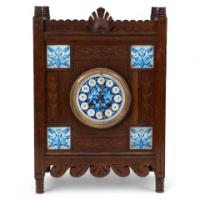
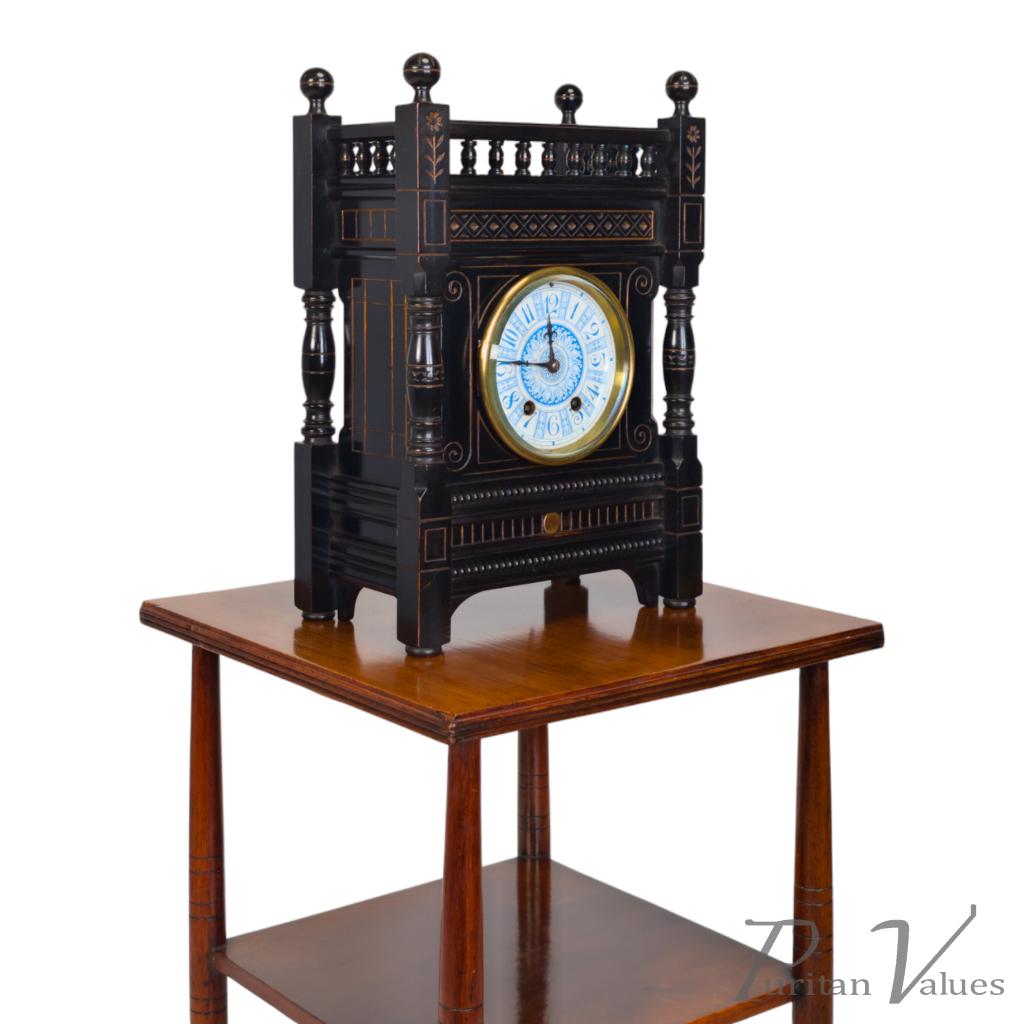
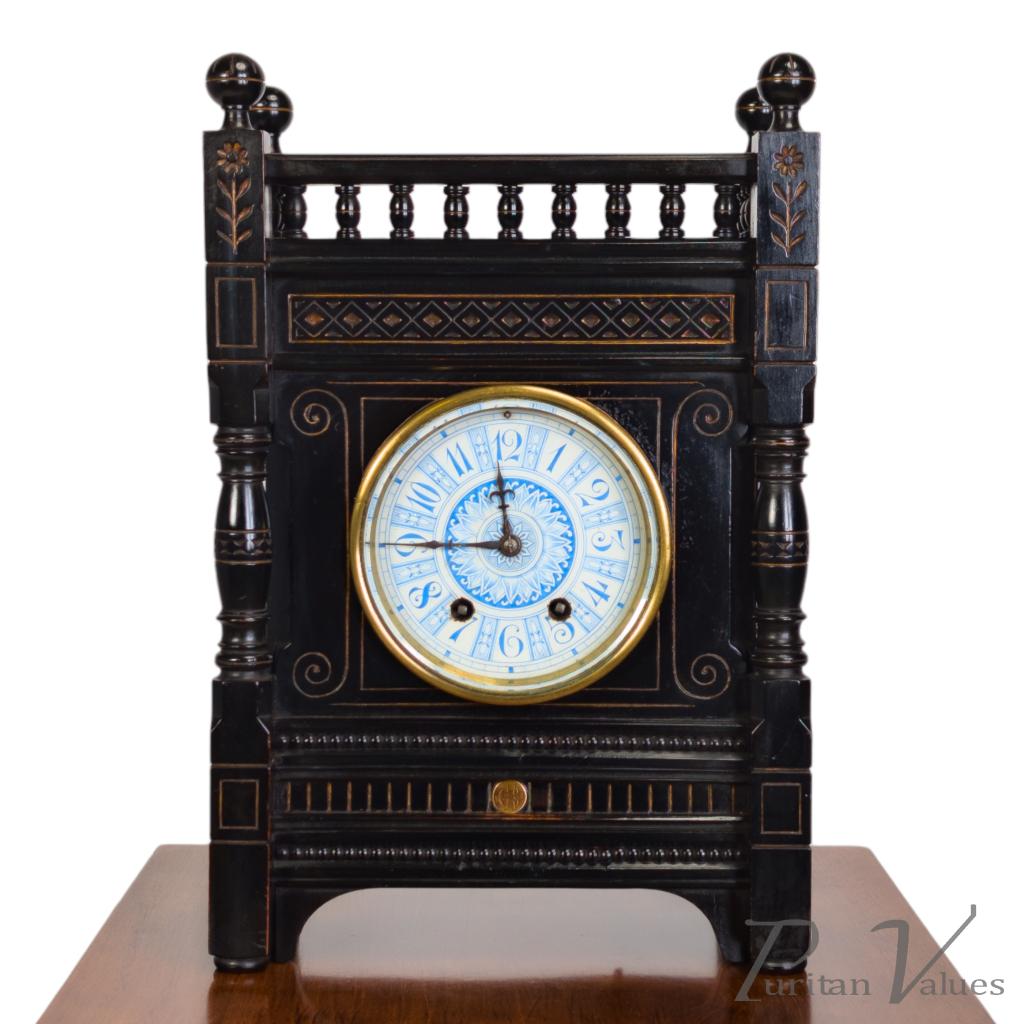
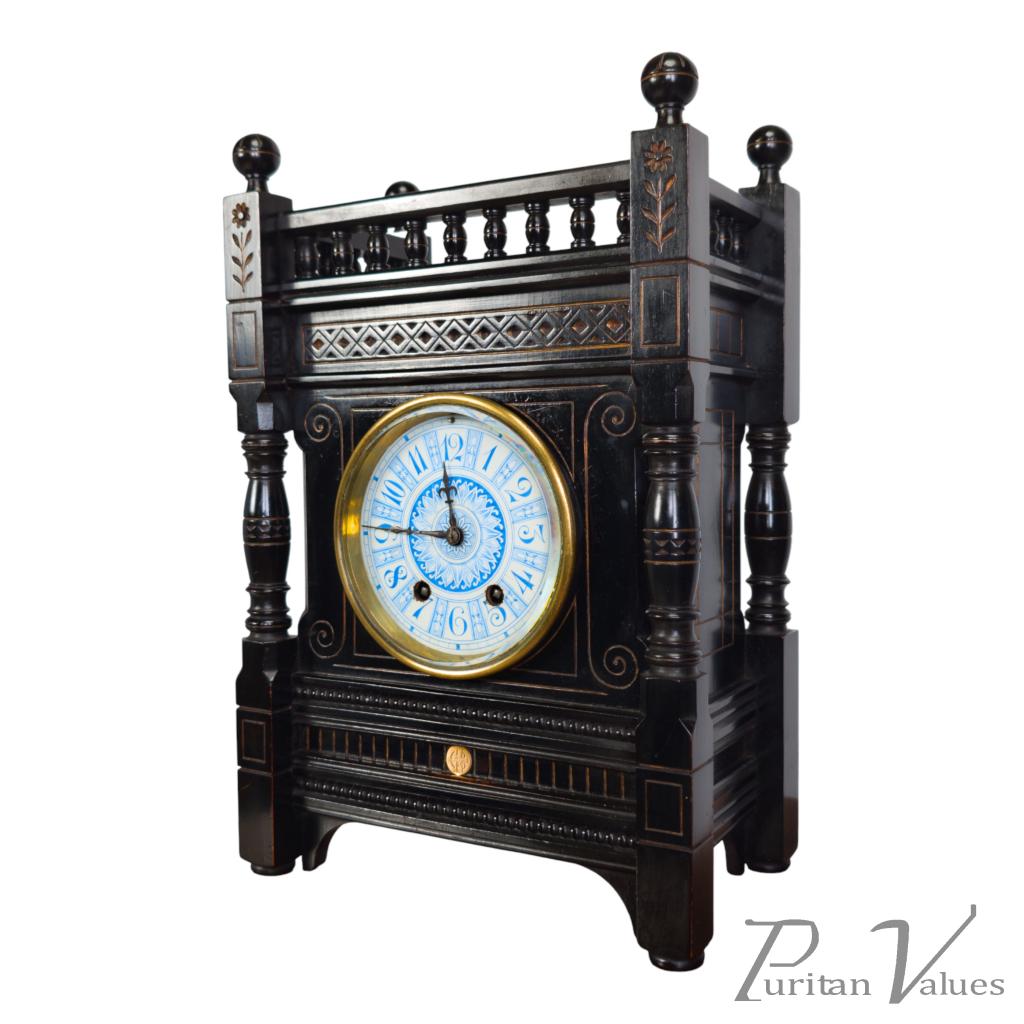
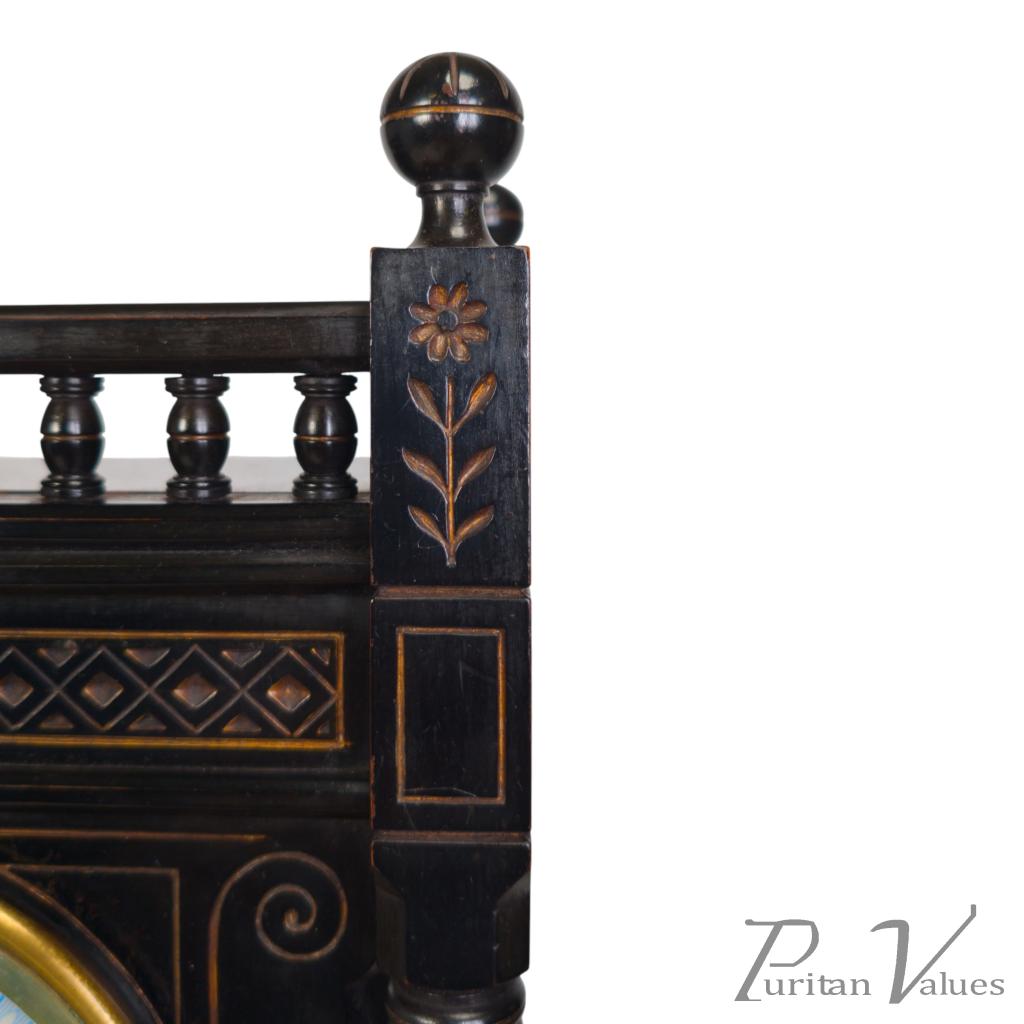
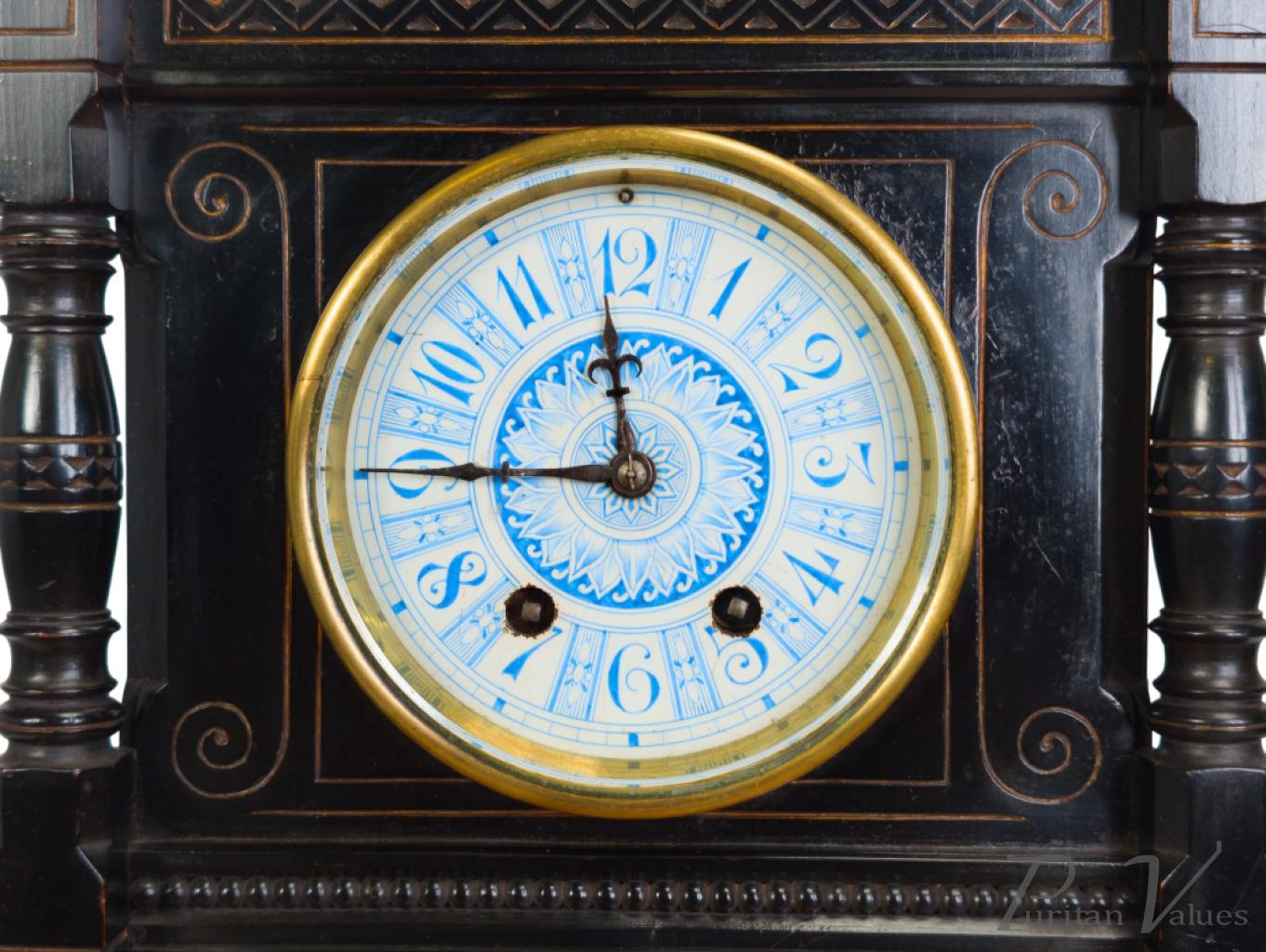
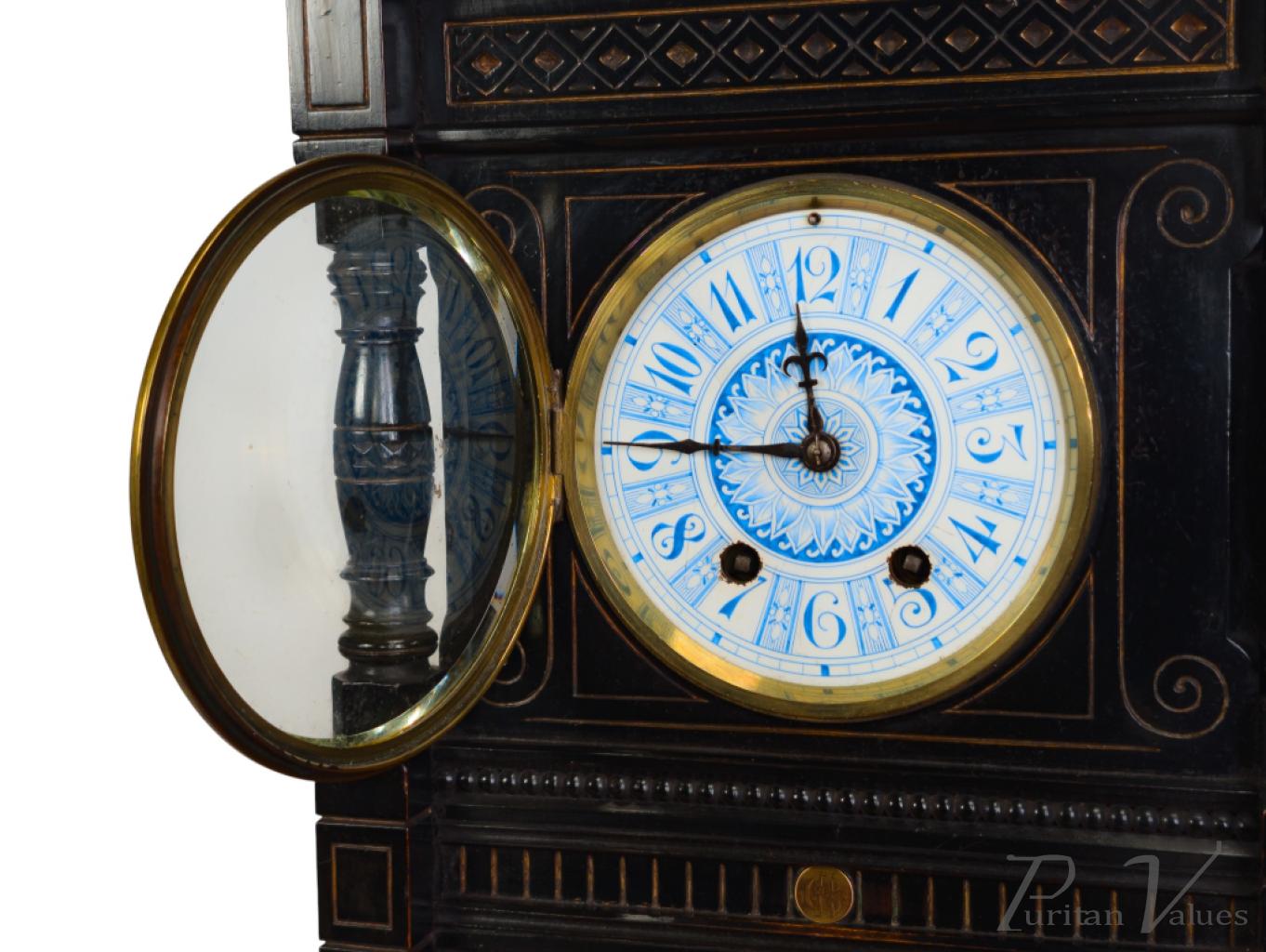
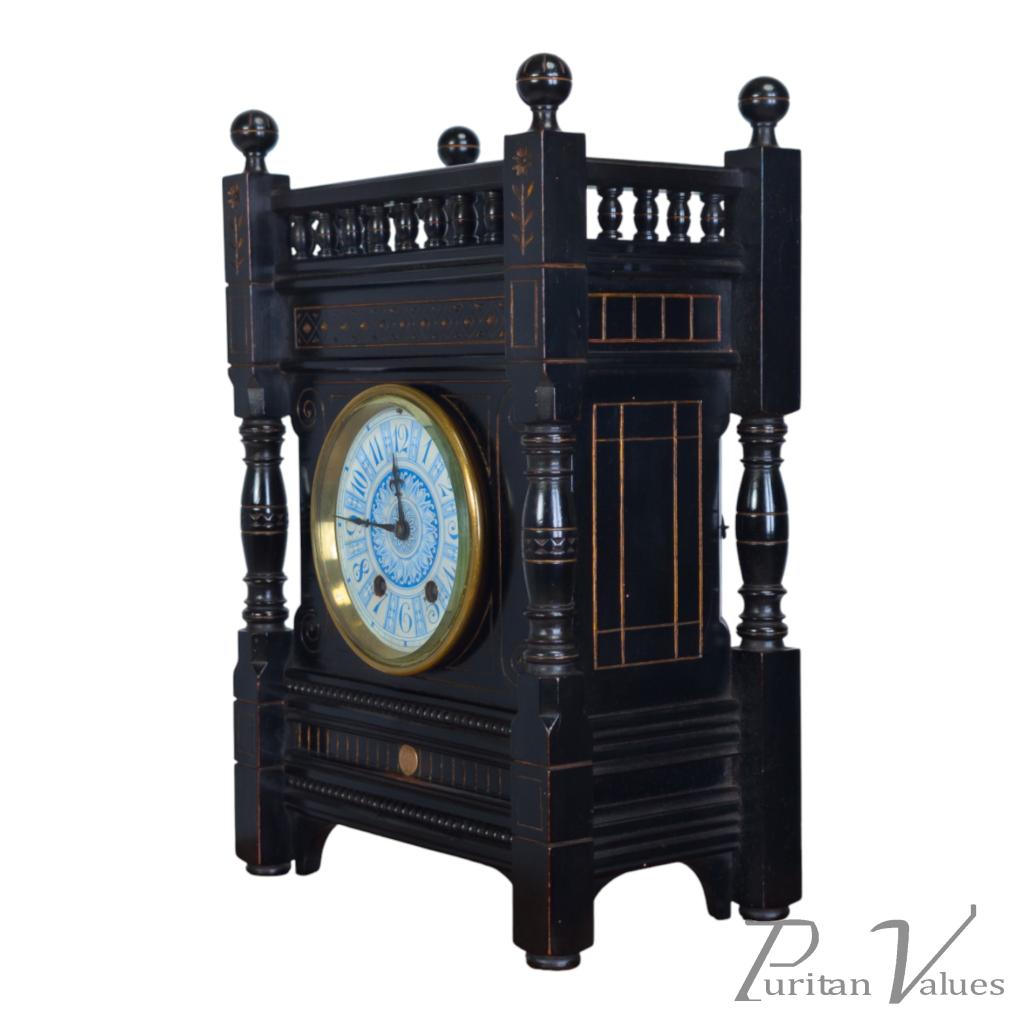
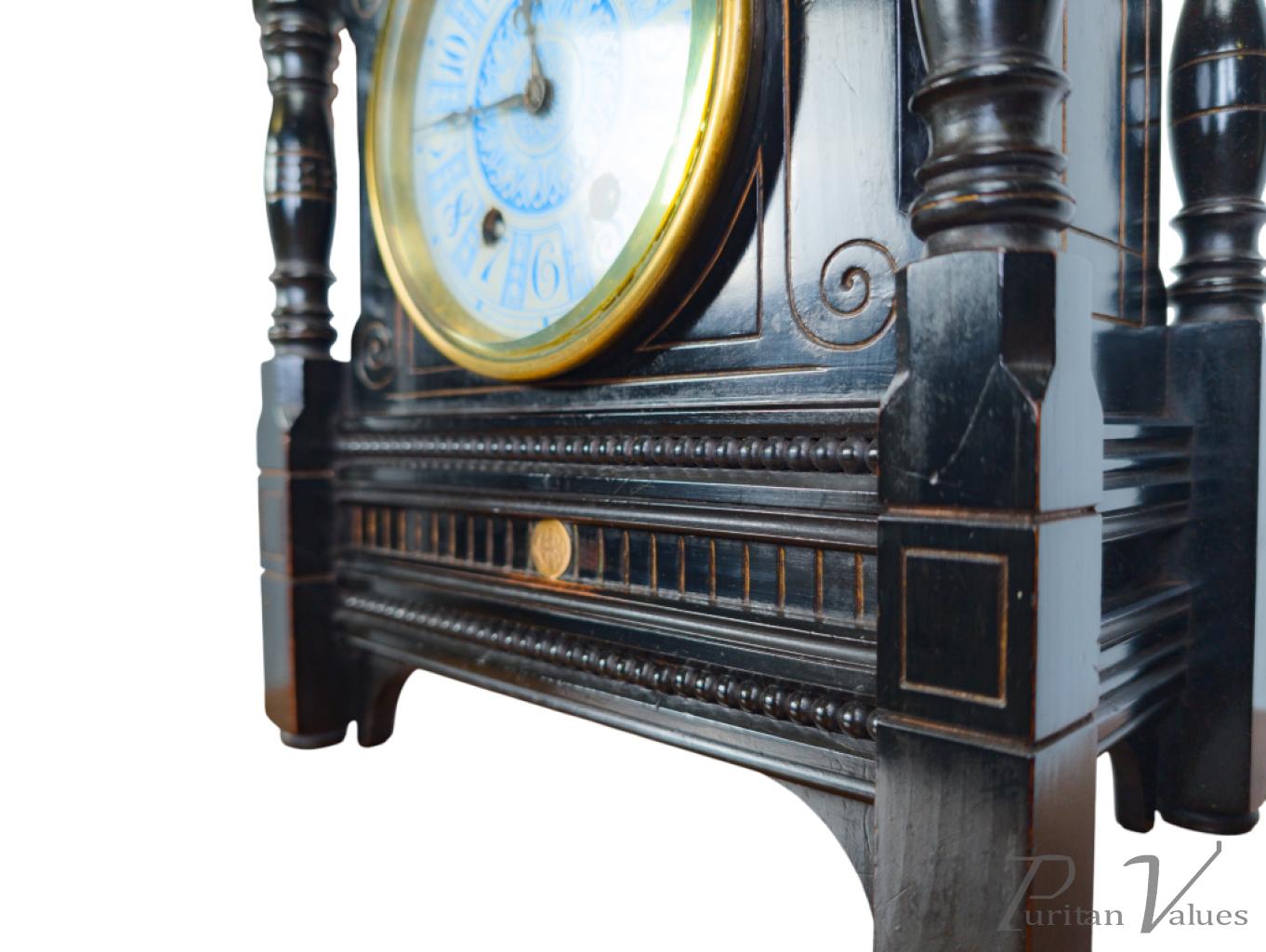
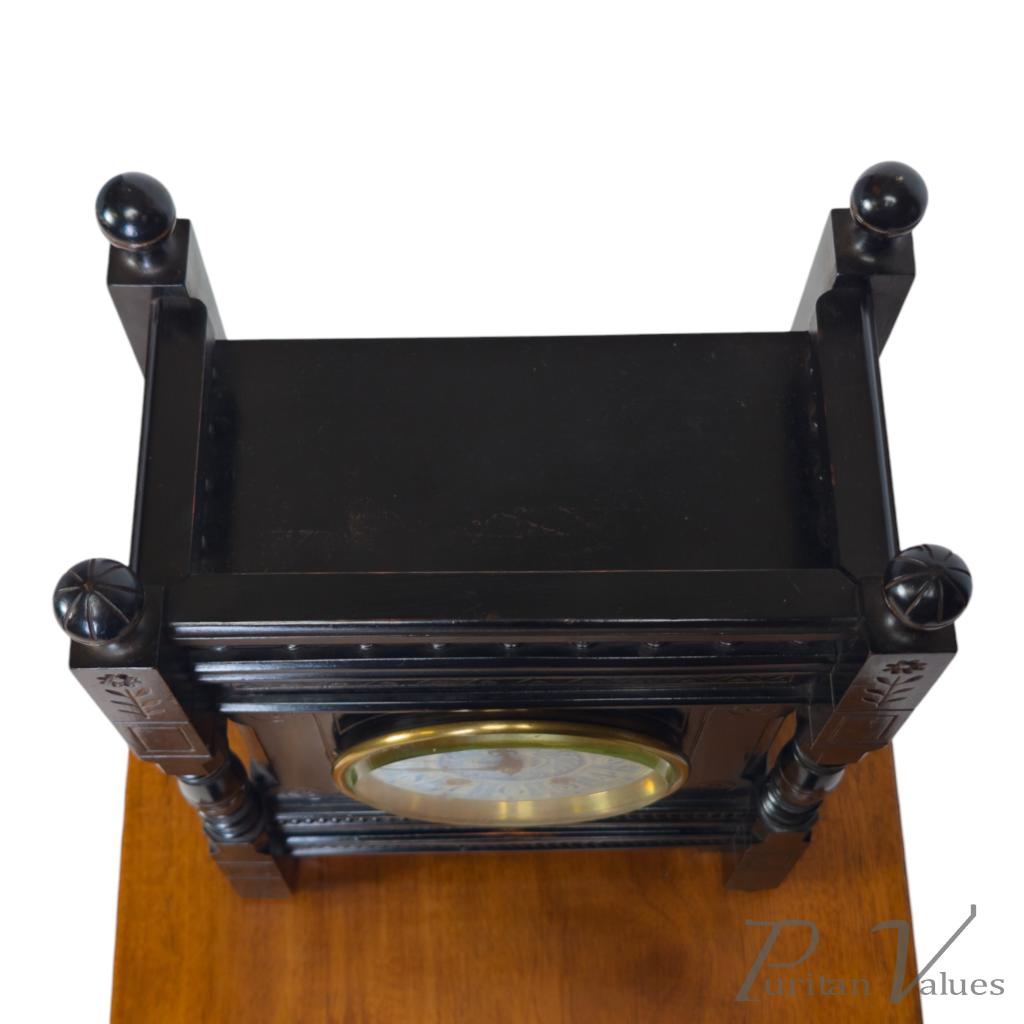
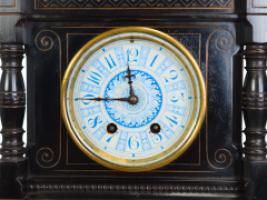
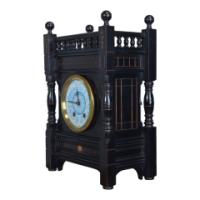
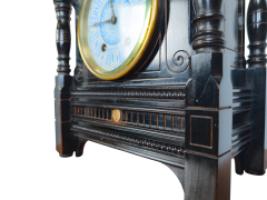
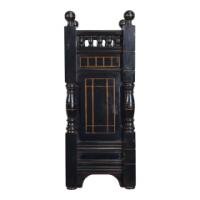
By Bruce James Talbert for Gillows and made by Howell and Co of Regent Street for the Midland Grand Hotel, St Pancras, an ebonised walnut mantel clock aligned to the Aesthetic Movement (1860–1890), c.1870. The piece displays Talbert’s characteristic fusion of linear surface patterning, incised ornament and compact architectural form.
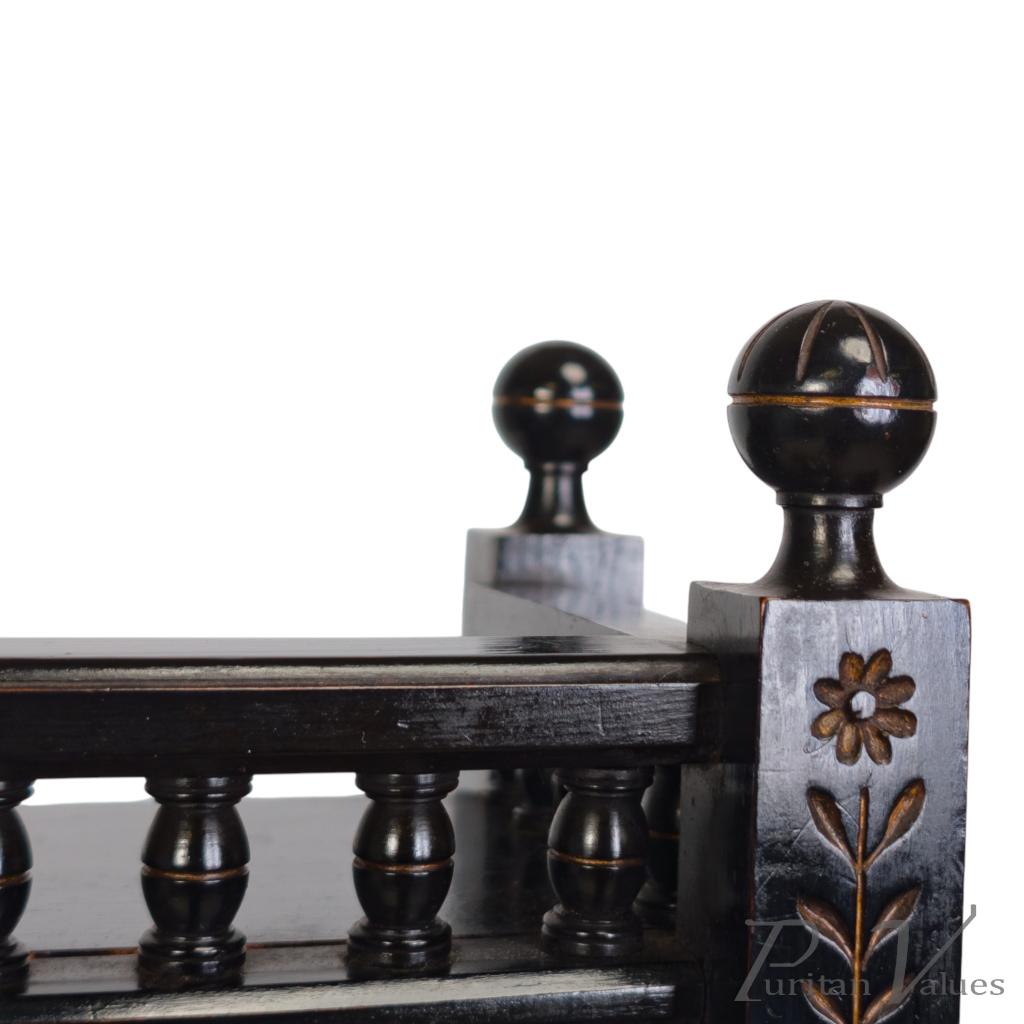
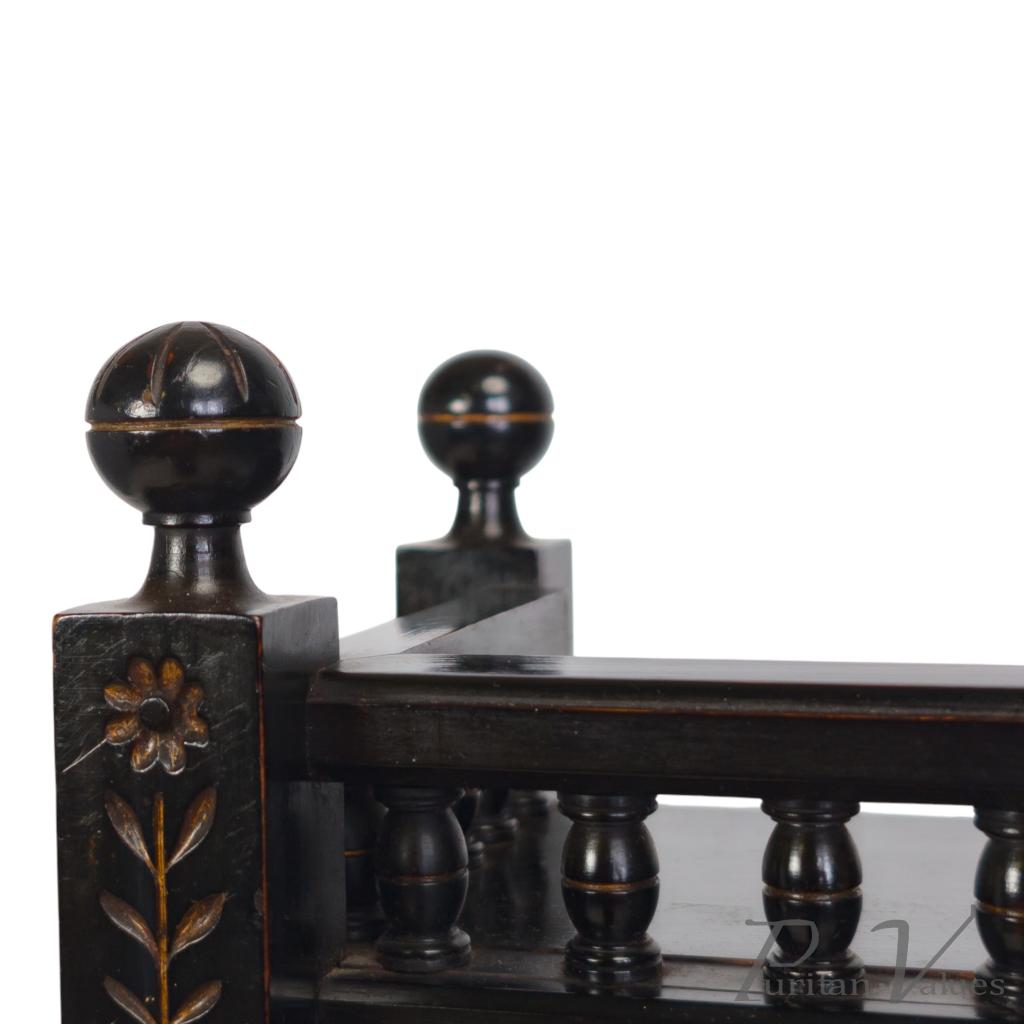
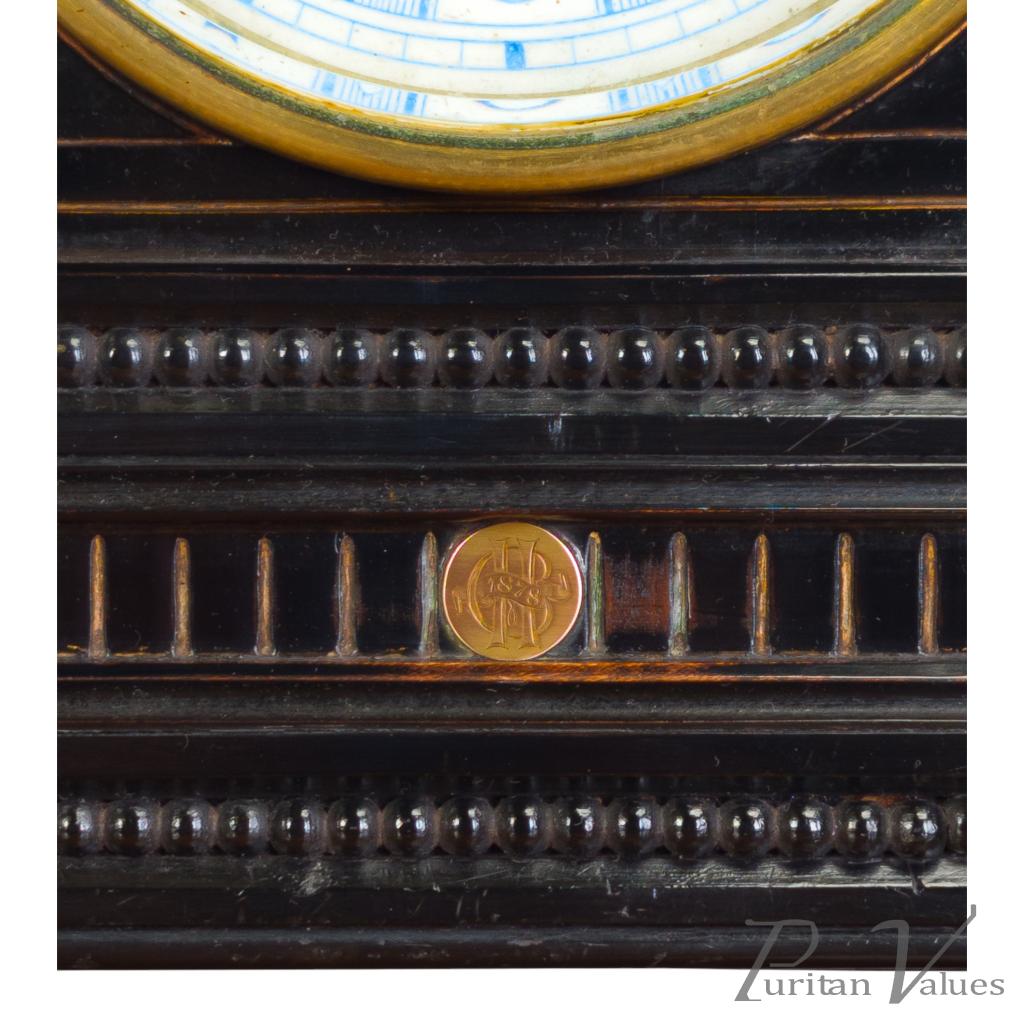
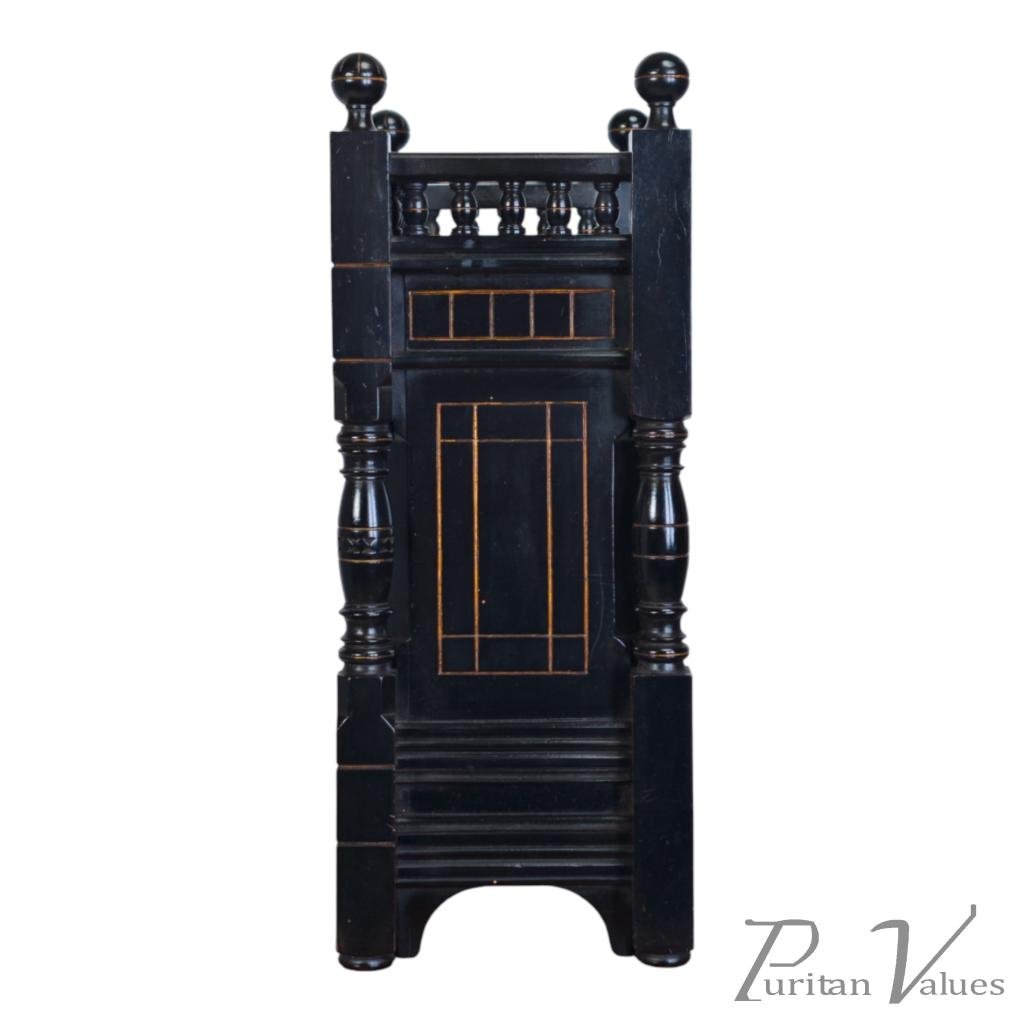
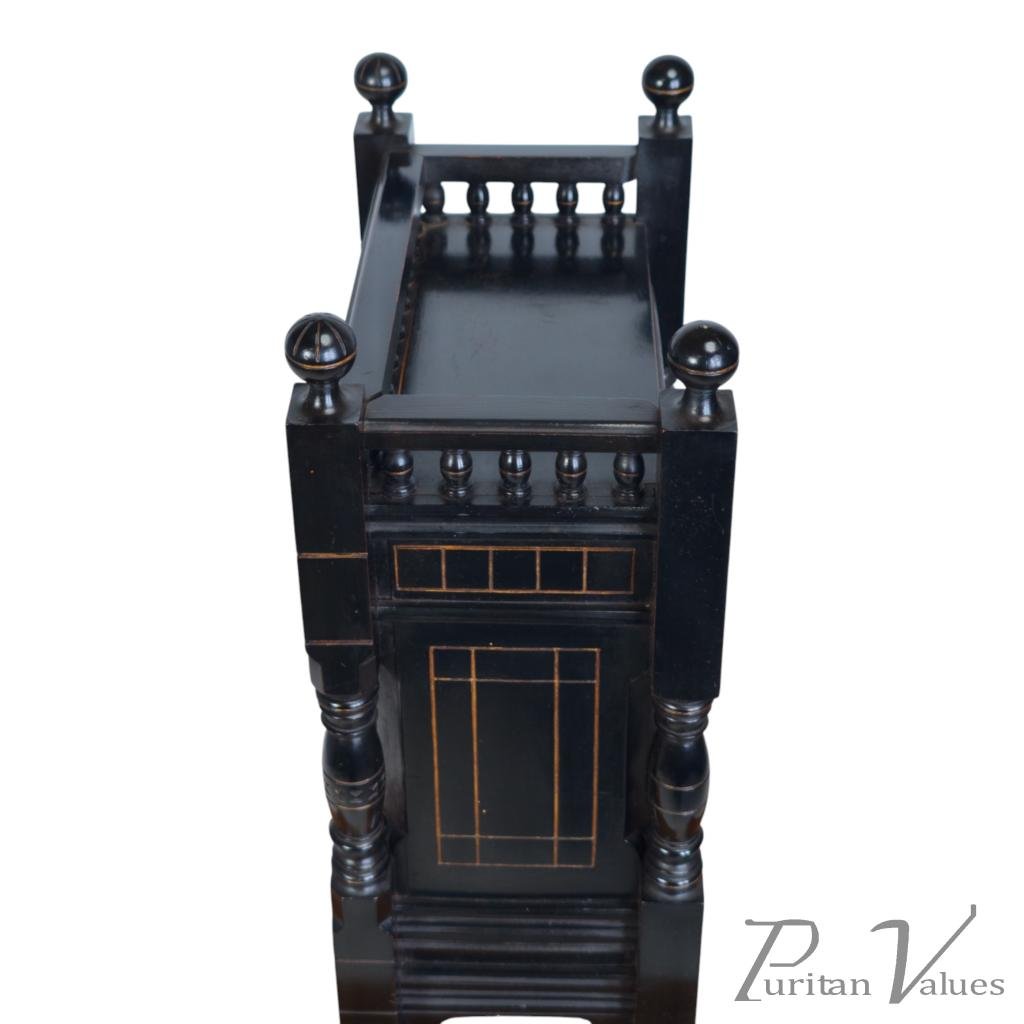
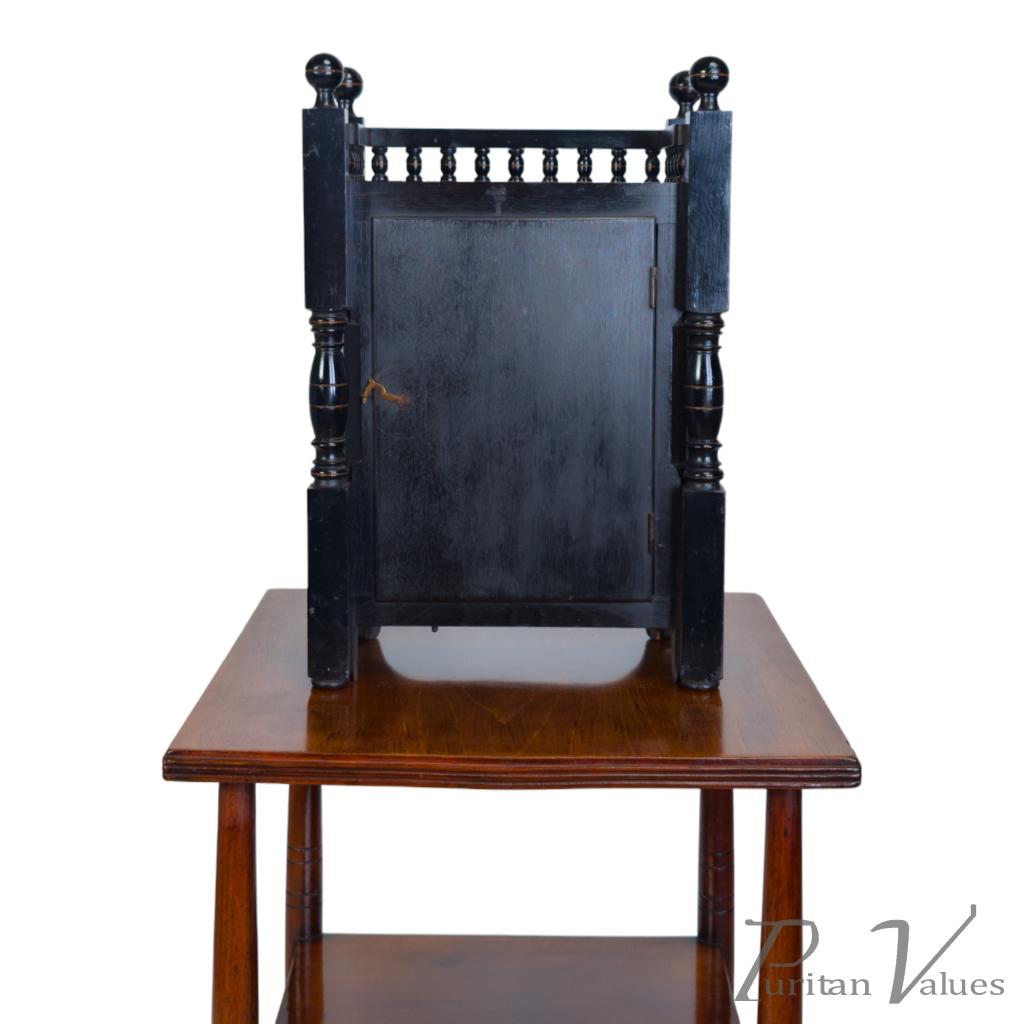
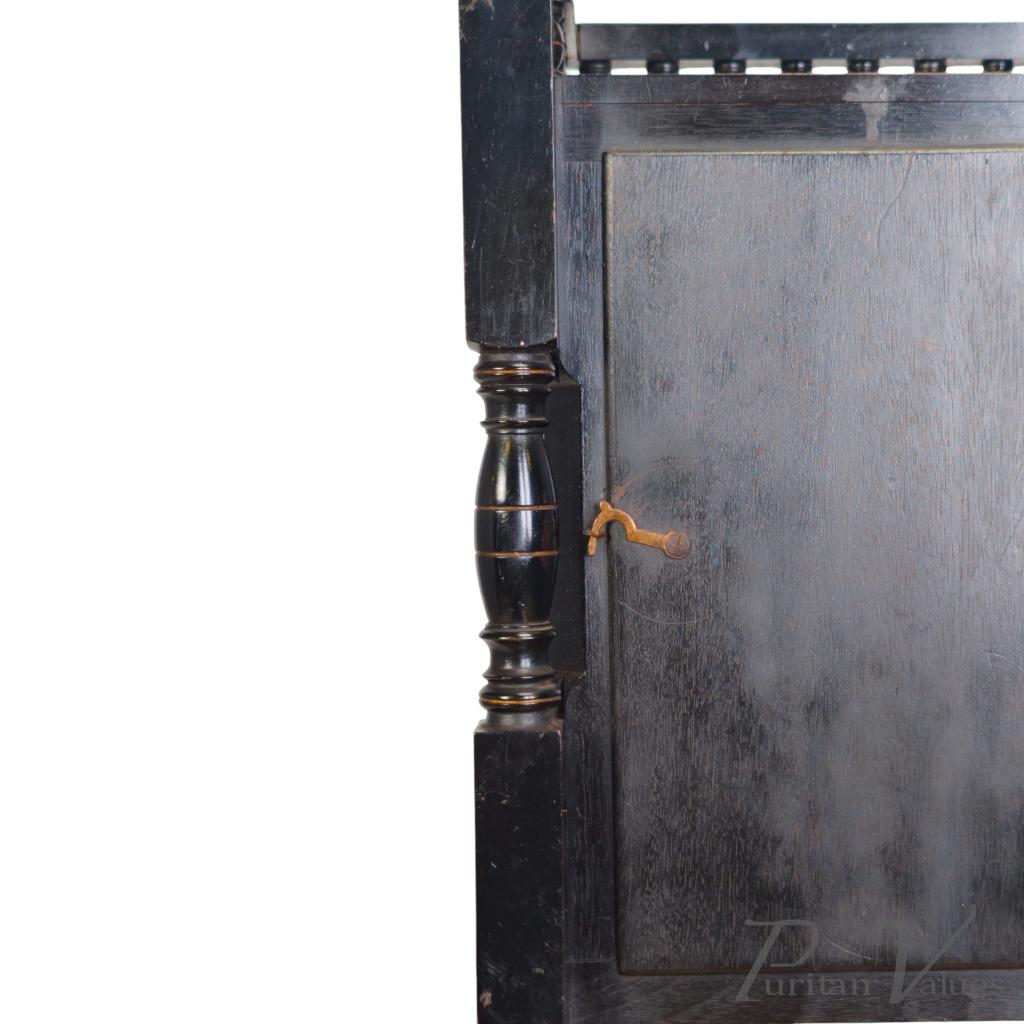
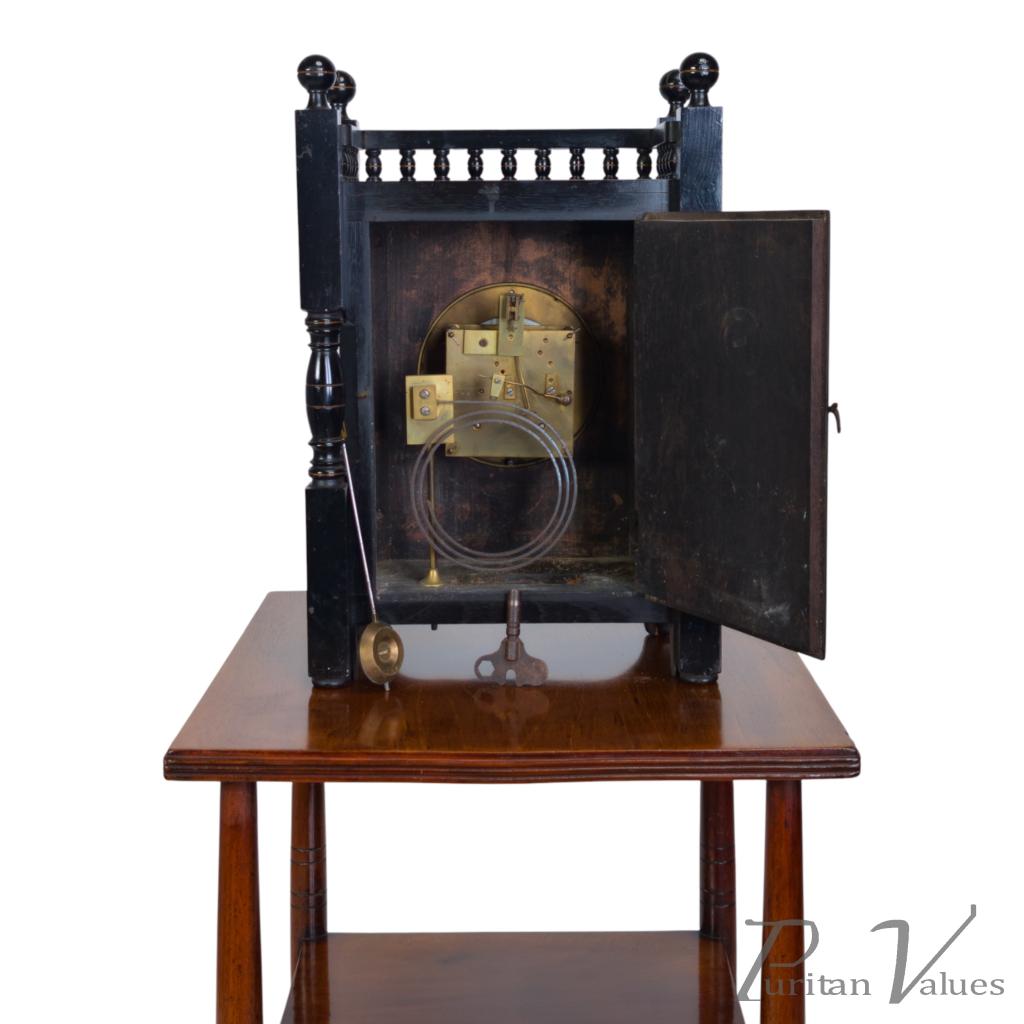
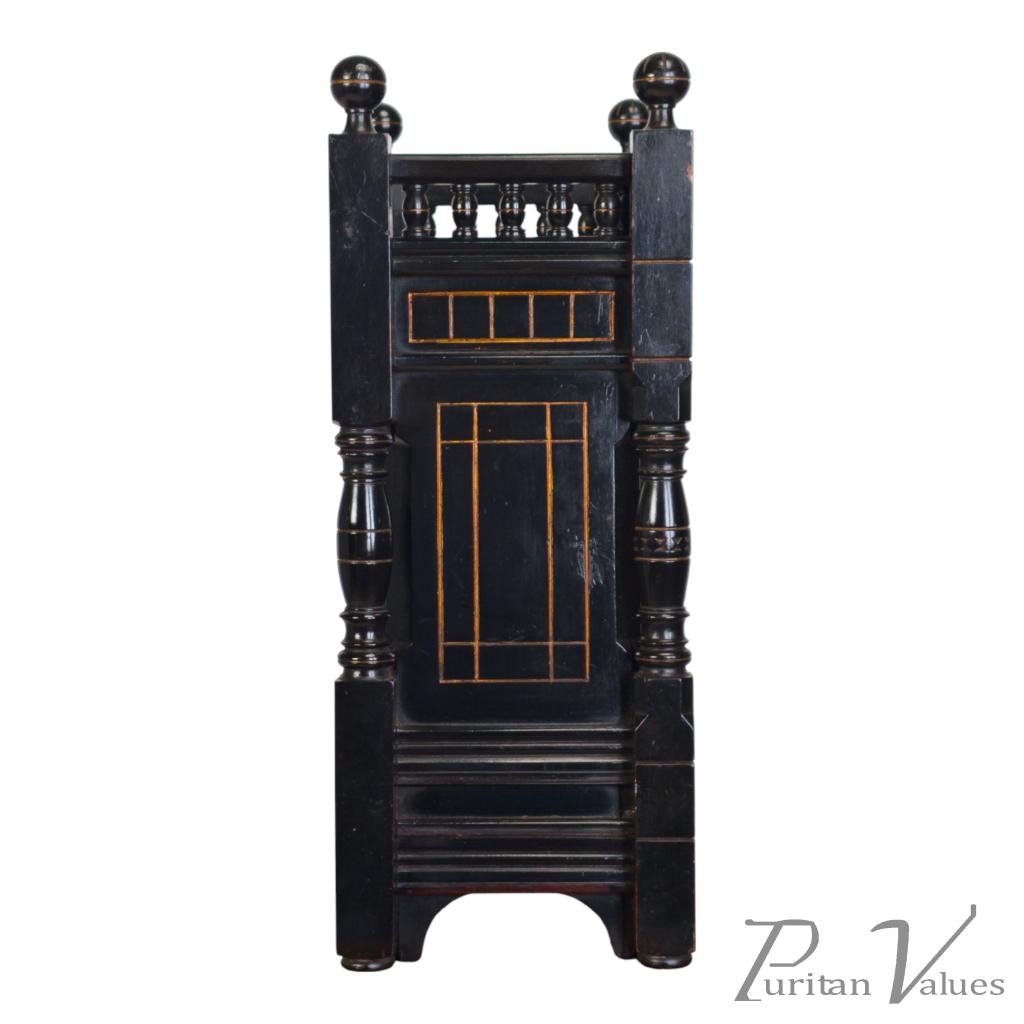
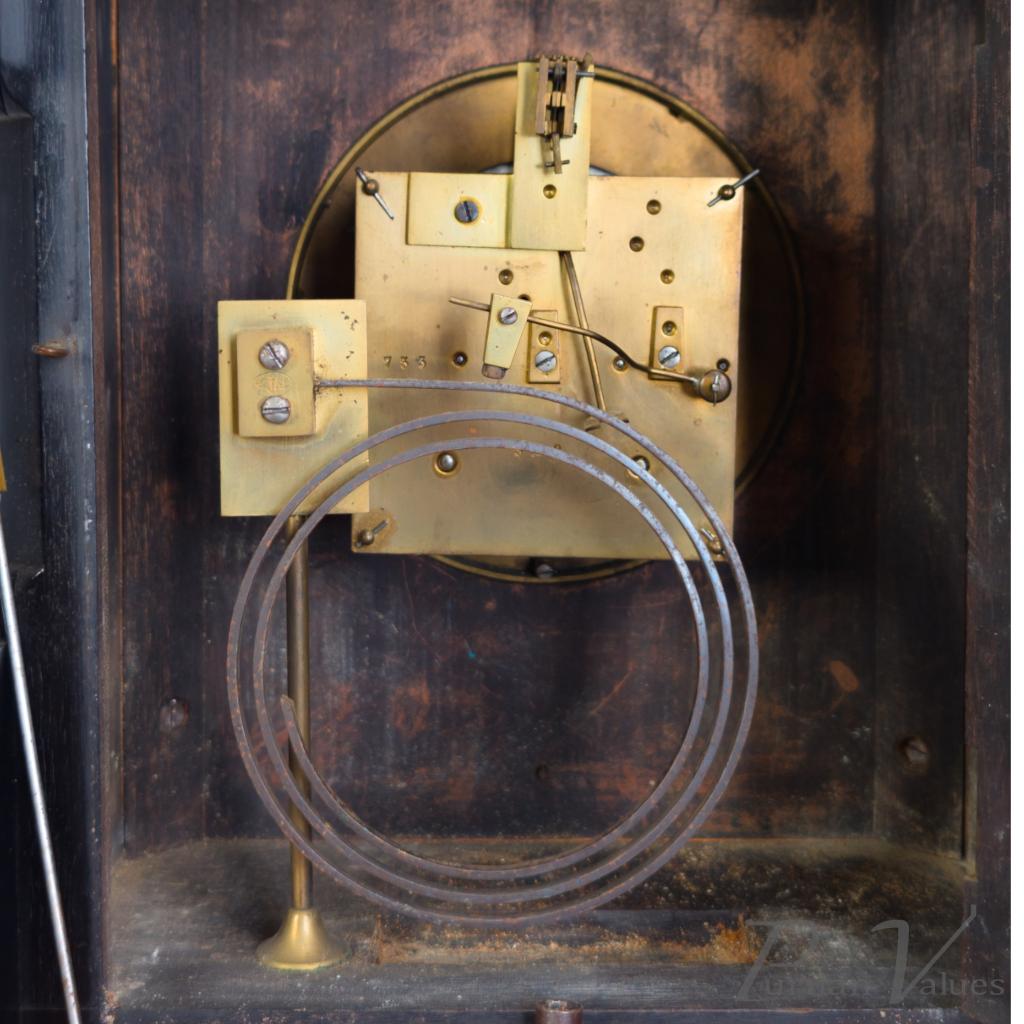
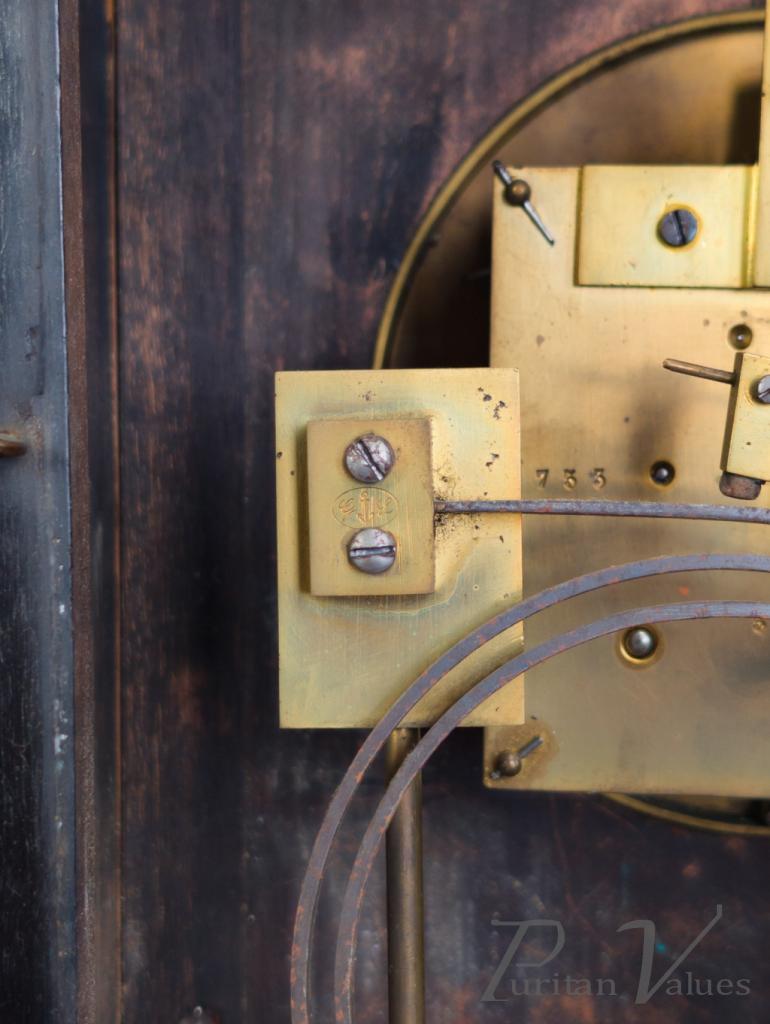
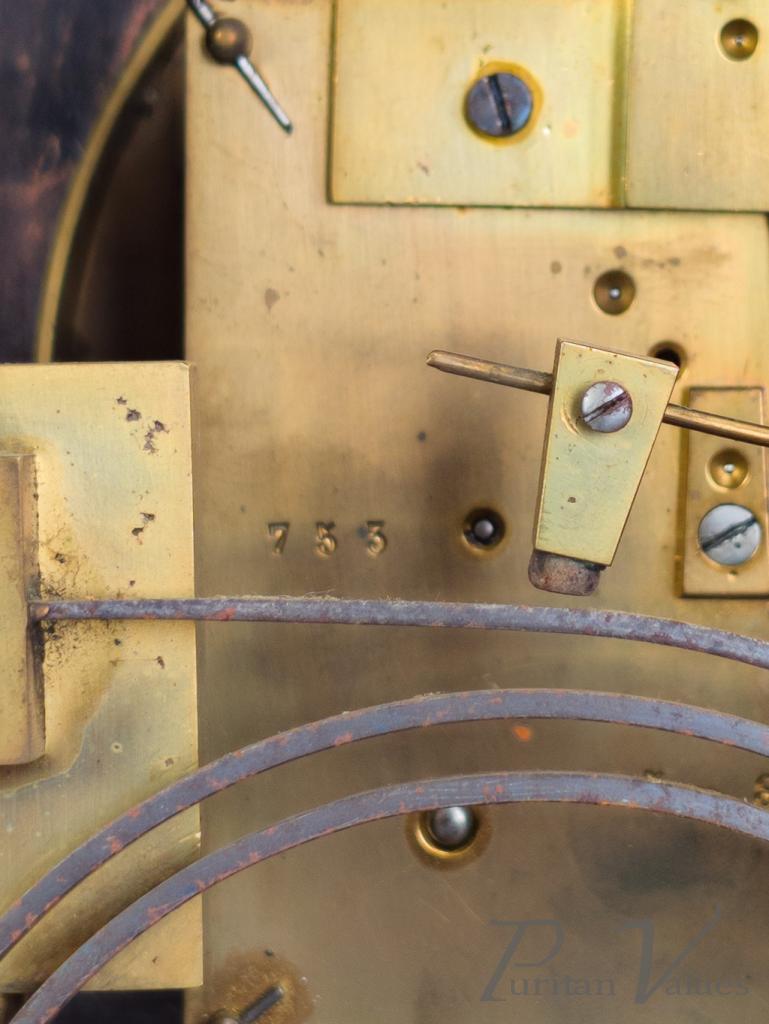
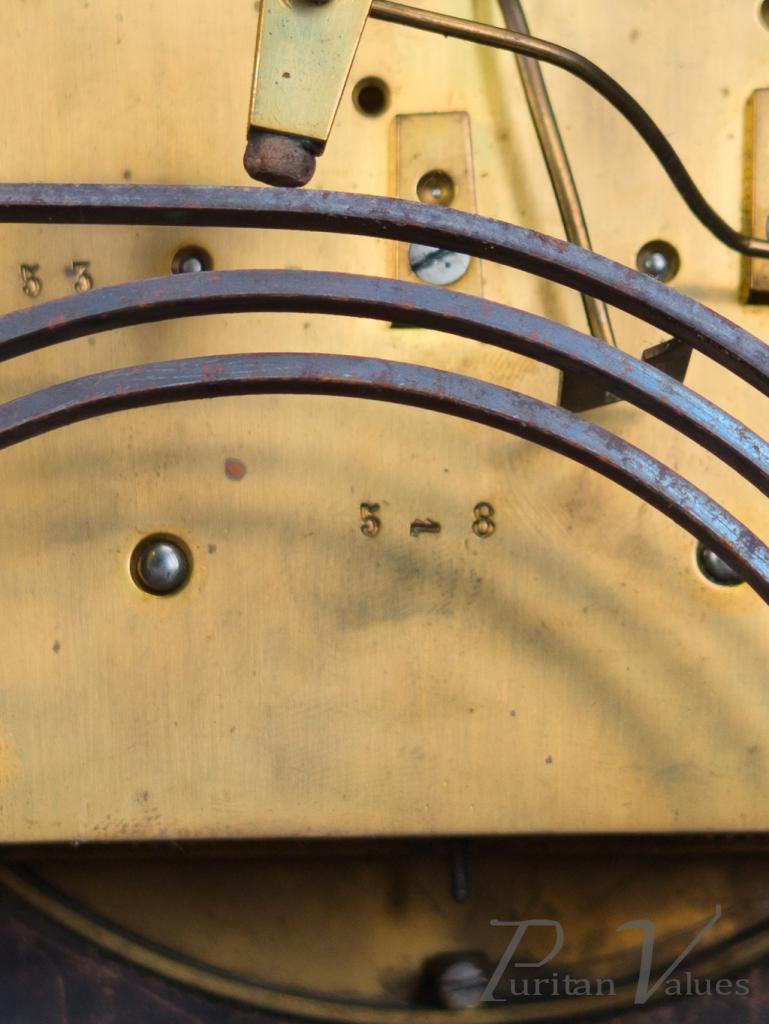
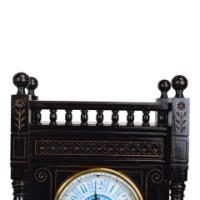
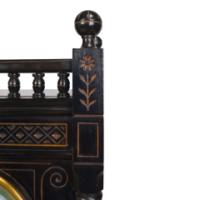
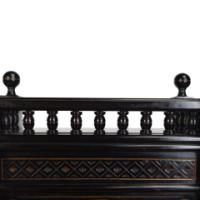
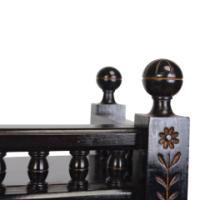
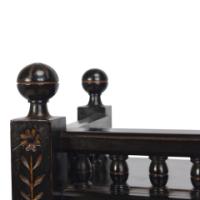
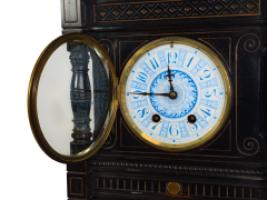
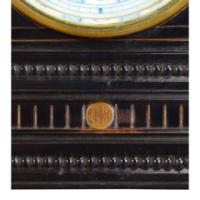
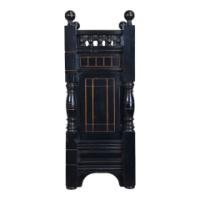
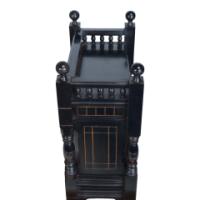
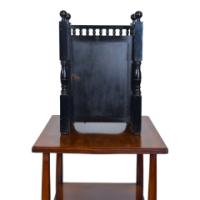
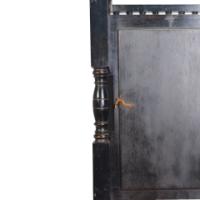
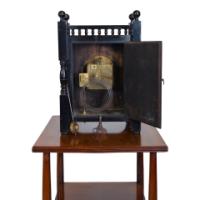
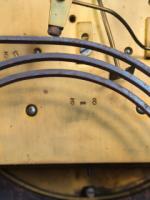
The rectangular case is framed by turned corner posts rising to ball finials above a shallow gallery of repeating baluster forms. The upper frieze carries a band of geometric carved detail with gilded accents, and the front elevation is defined by fine incised lines that mark the structural divisions of the case. Below, a second band of carved beading sits above an arched footed base. The circular dial is set within a gilt brass bezel and features a hand-painted blue and white enamel face with stylised numerals arranged around a central sunflower motif. A rear door opens to the brass movement with pendulum and winding key, and the overall composition reflects Talbert’s structured decorative vocabulary, with ebonised surfaces enlivened by controlled gilded linear work.
The clock forms part of the furnishing programme created for the Midland Grand Hotel at St Pancras, London. Designed by Sir George Gilbert Scott and built over eight years between 1868 and 1876, the hotel’s escalating interior costs led the Midland Railway to place responsibility for the furnishings with Gillow and Co, who produced much of the original furniture and fittings, many to designs by Bruce Talbert. The clocks, however, were specifically tendered out and made by Howell and Co of Regent Street, including the present example. Gillow and Co employed leading designers of the period such as Charles Bevan, H W Batley, Robert Edis, George Freeth Roper and E W Godwin. Talbert and Bevan are noted for introducing the Modern Gothic or medieval decorative style into Gillow and Co’s core production, a vocabulary reflected in the disciplined geometry of this clock. Gillow and Co also commissioned Edward William Godwin to design the ceiling paintings above the hotel’s double stair, depicting the Virtues, namely Humility, Liberality, Industry, Chastity, Temperance, Truth, Clarity and Patience, rendered in medieval-inspired dress. Within this broader decorative scheme, the clock aligns closely with the aesthetic direction established across the Midland Grand Hotel during its completion.