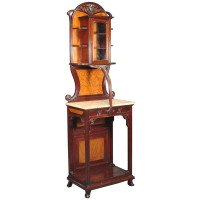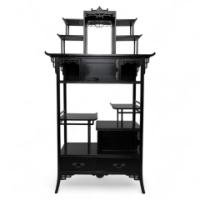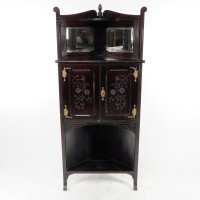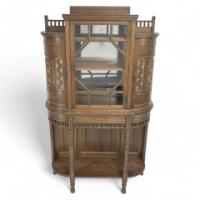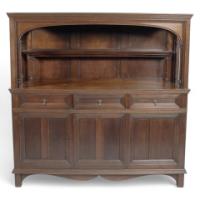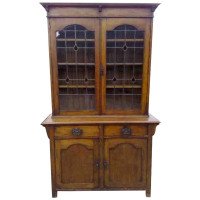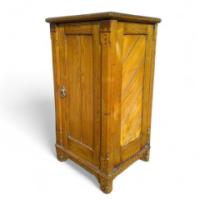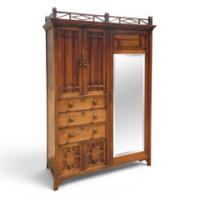
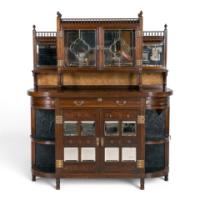
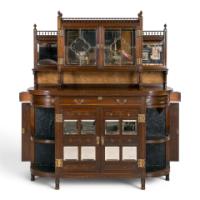
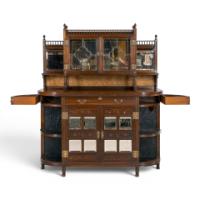
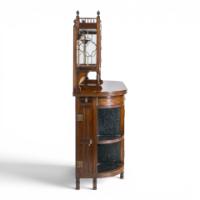
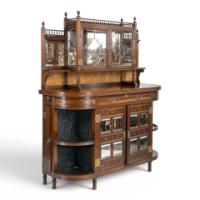
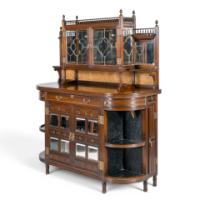
E. W. Godwin Attributed, Probably Made by Collinson and Lock, Rosewood Sideboard
Price on Application
This item is price on application due to its rarity and importance.
Width: 56.1 in (142.5 cm)
Depth: 19.69 in (50 cm)
1880-1889
About this piece
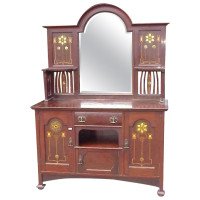
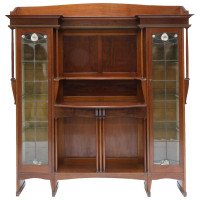
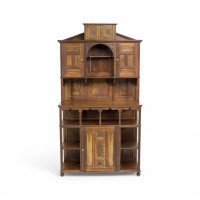
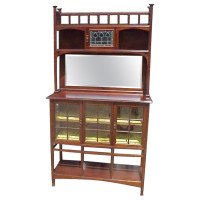
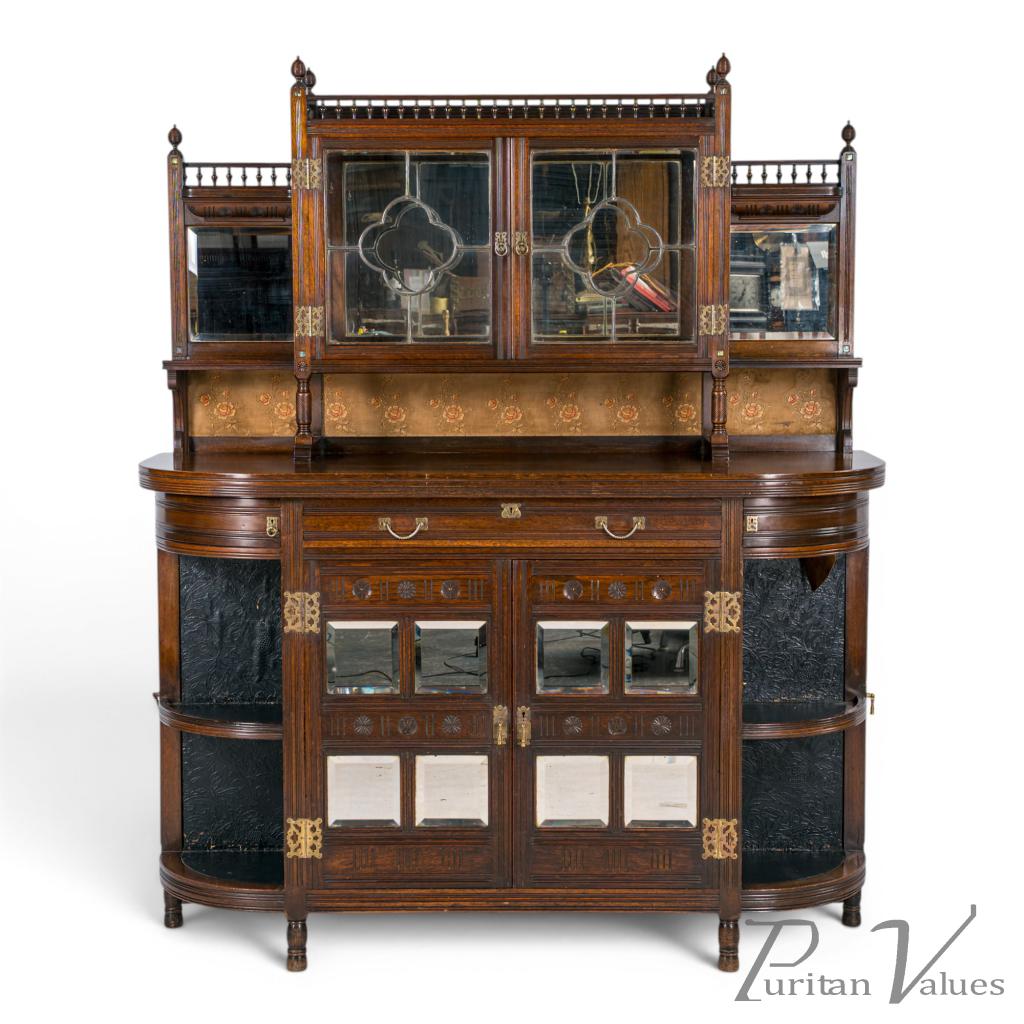
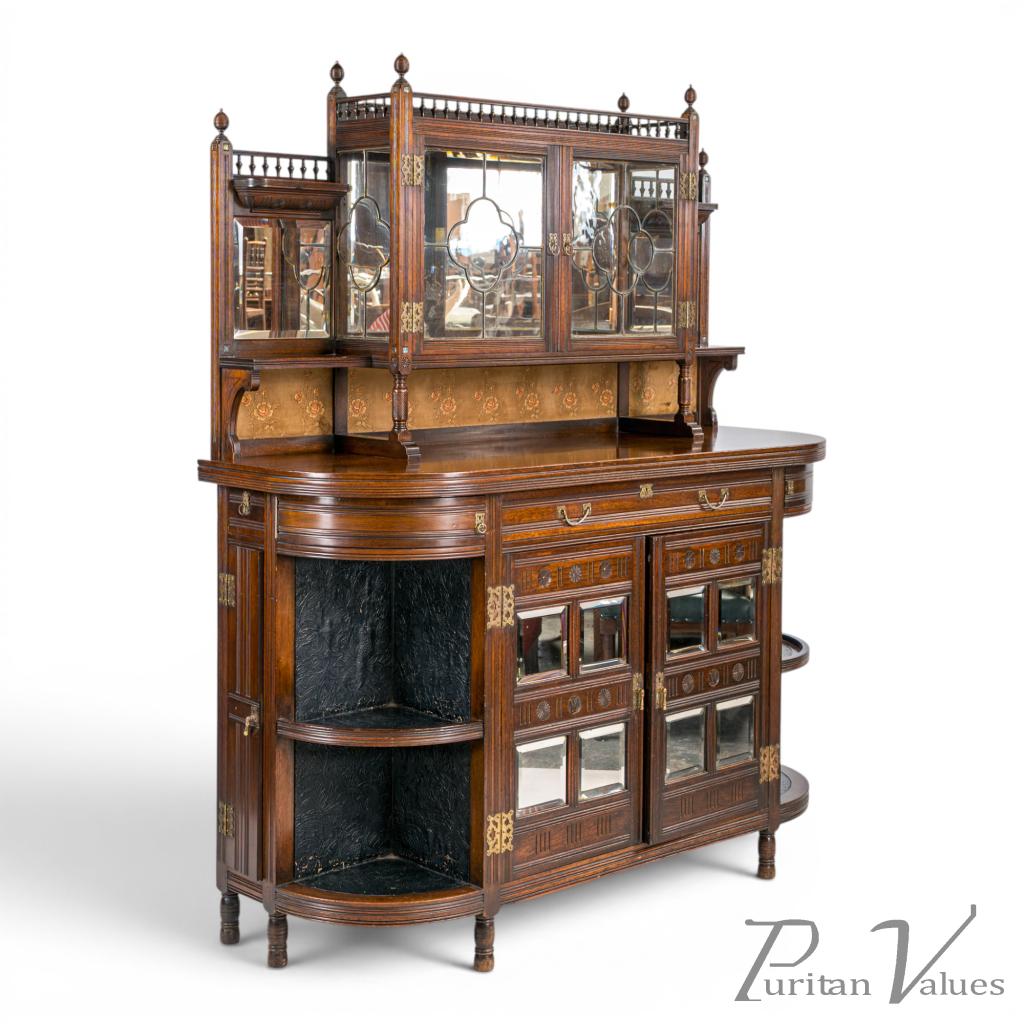
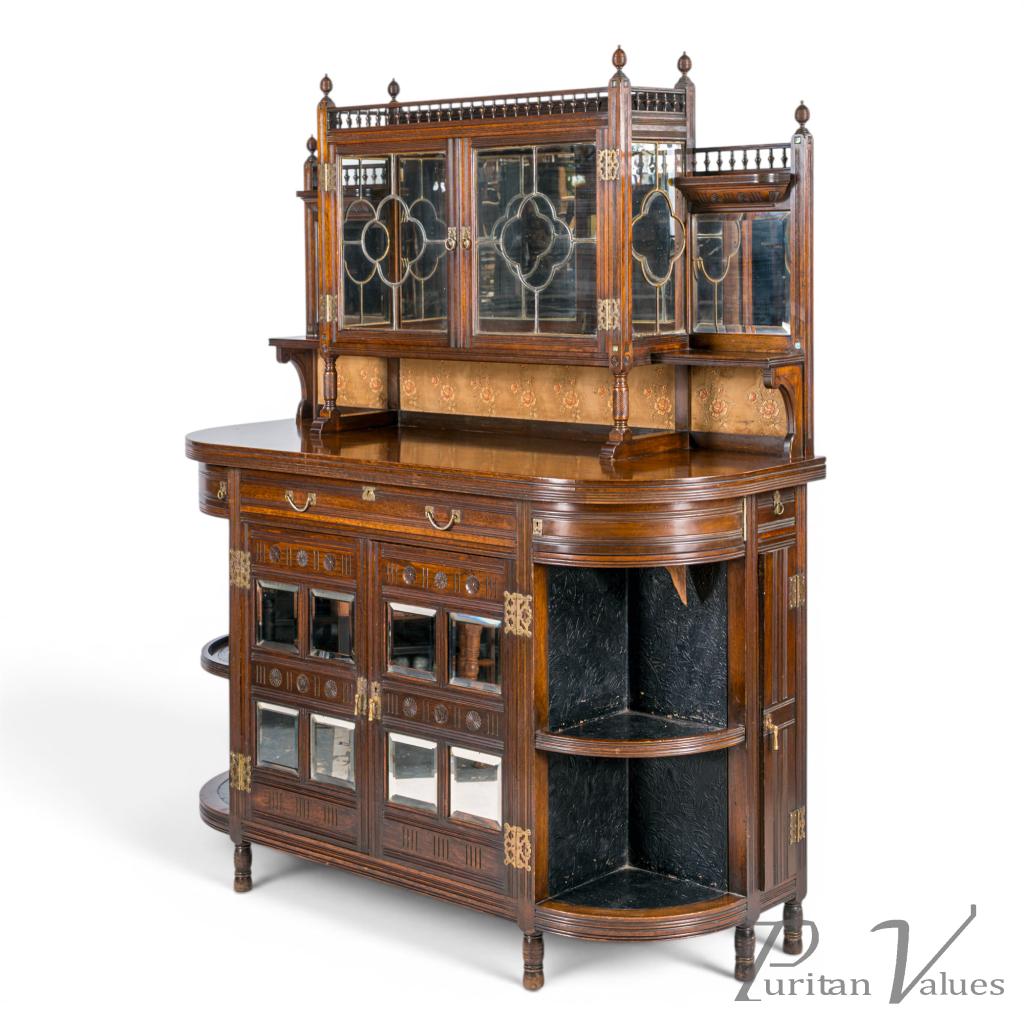
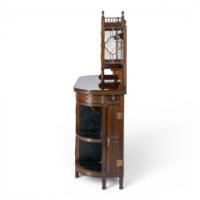
Attributed to E. W. Godwin and probably made by Collinson and Lock, this rosewood sideboard is aligned to the Aesthetic Movement (c.1860 to c.1900), c.1880.
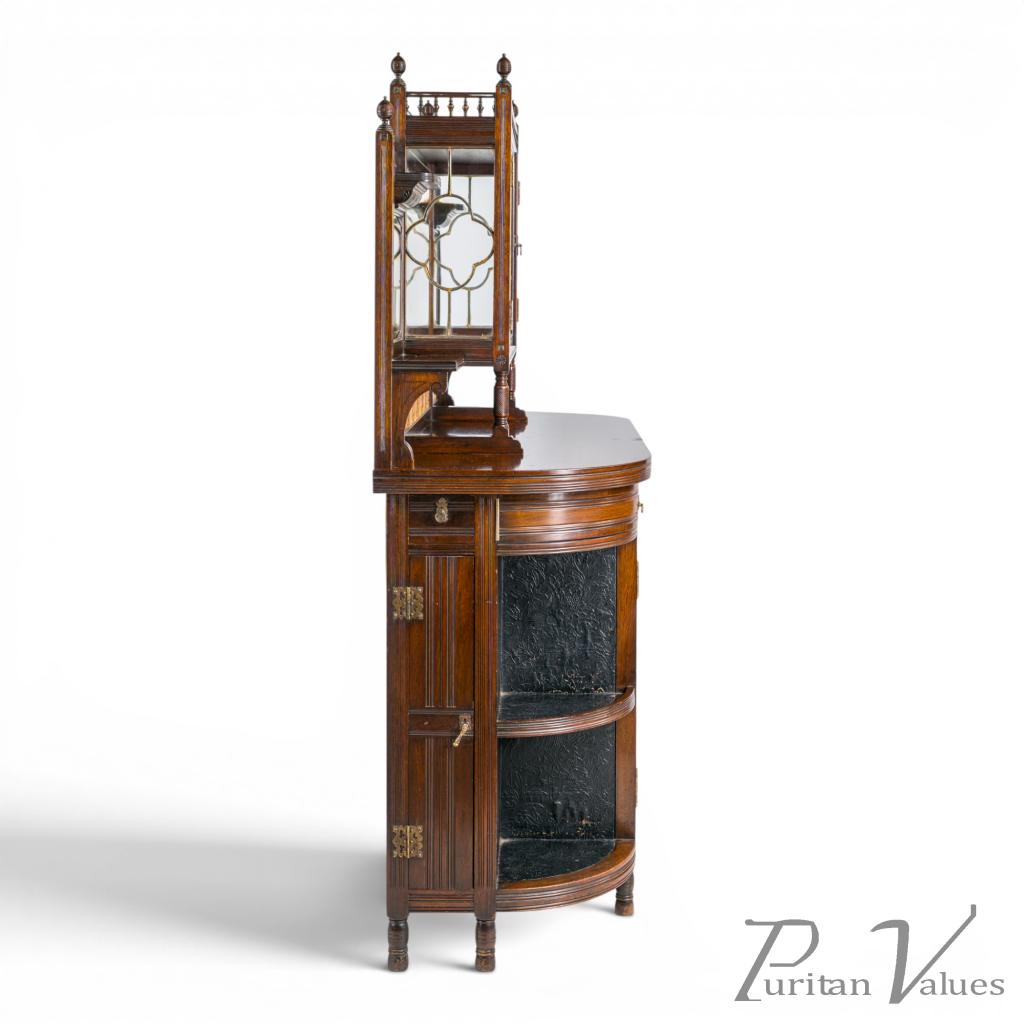
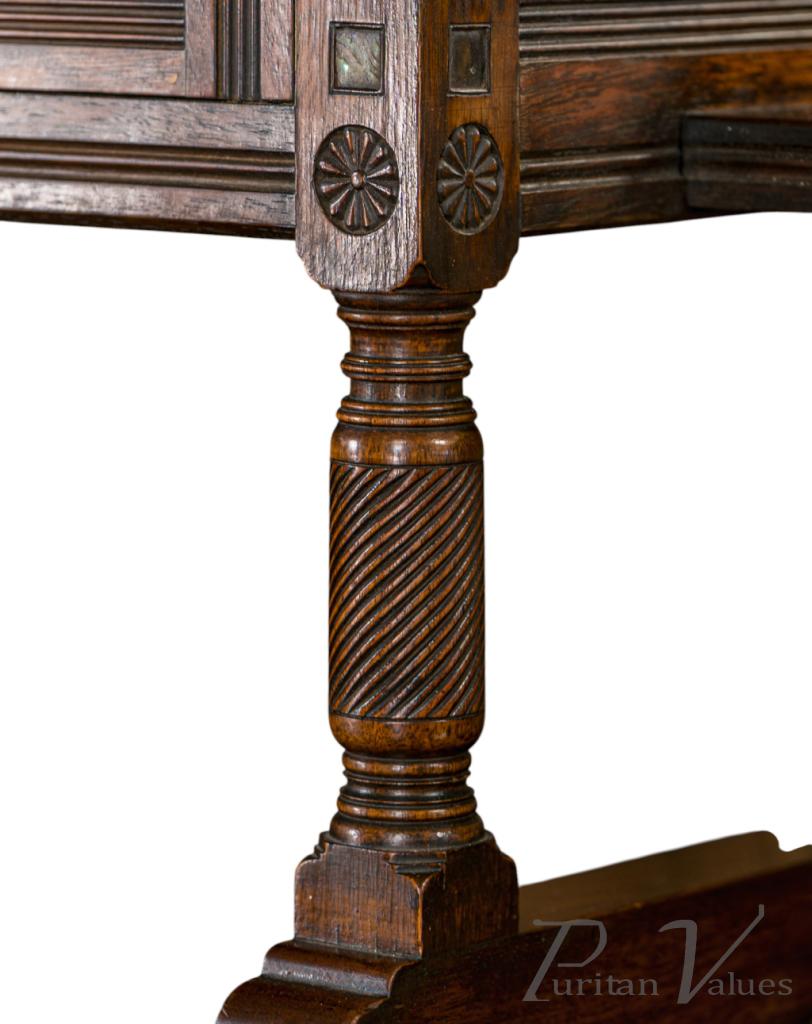
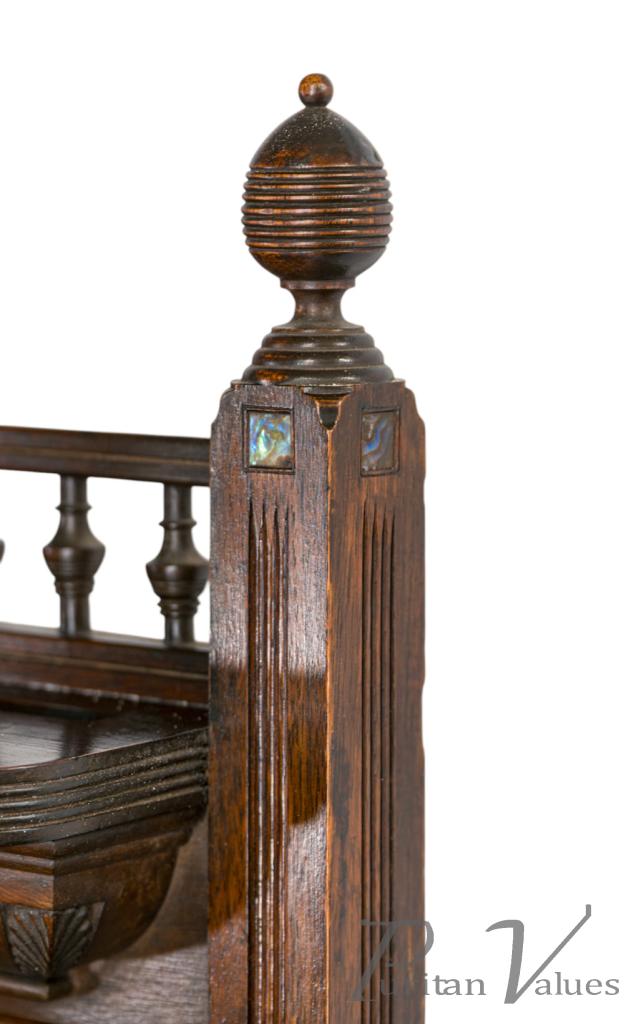
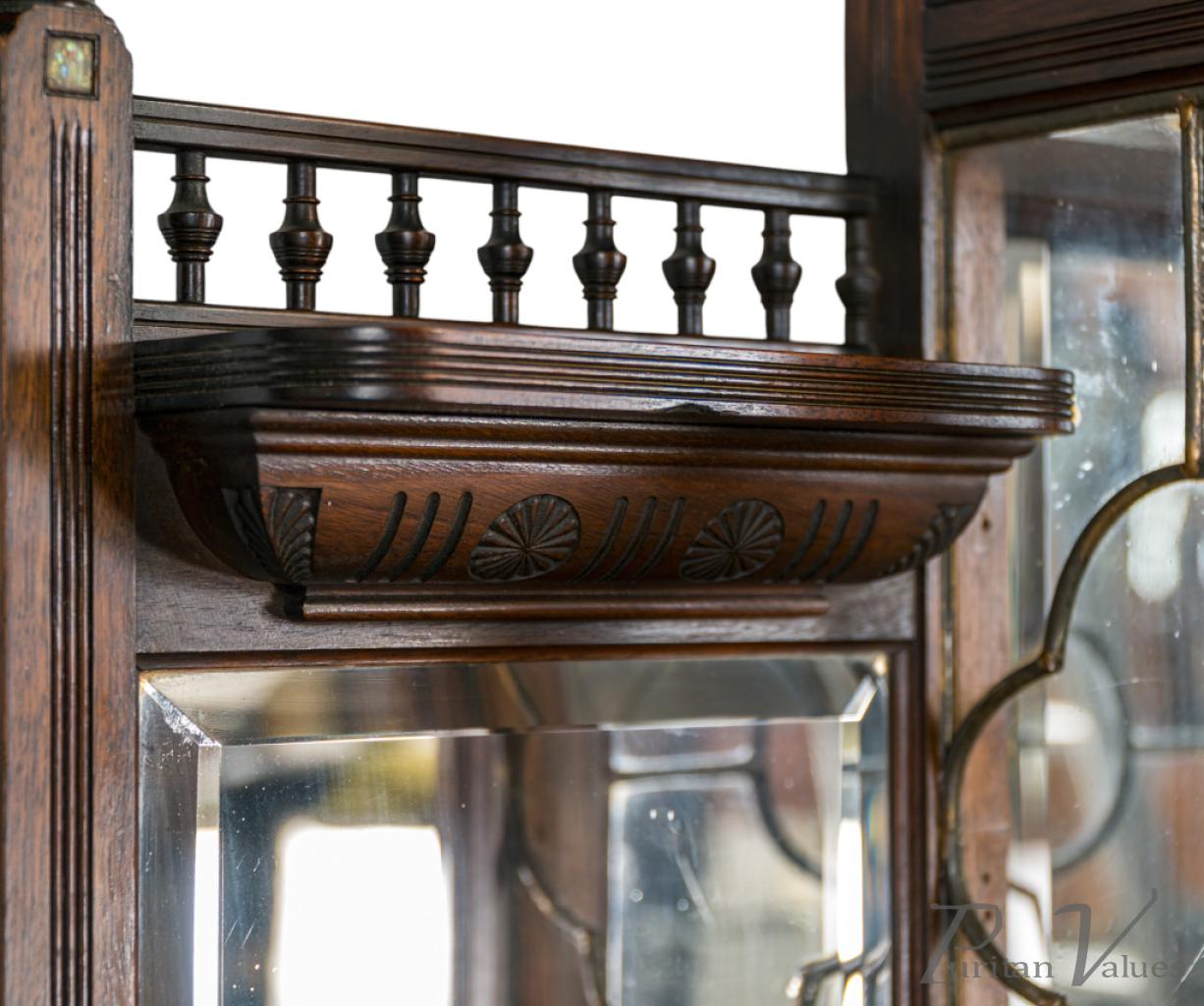
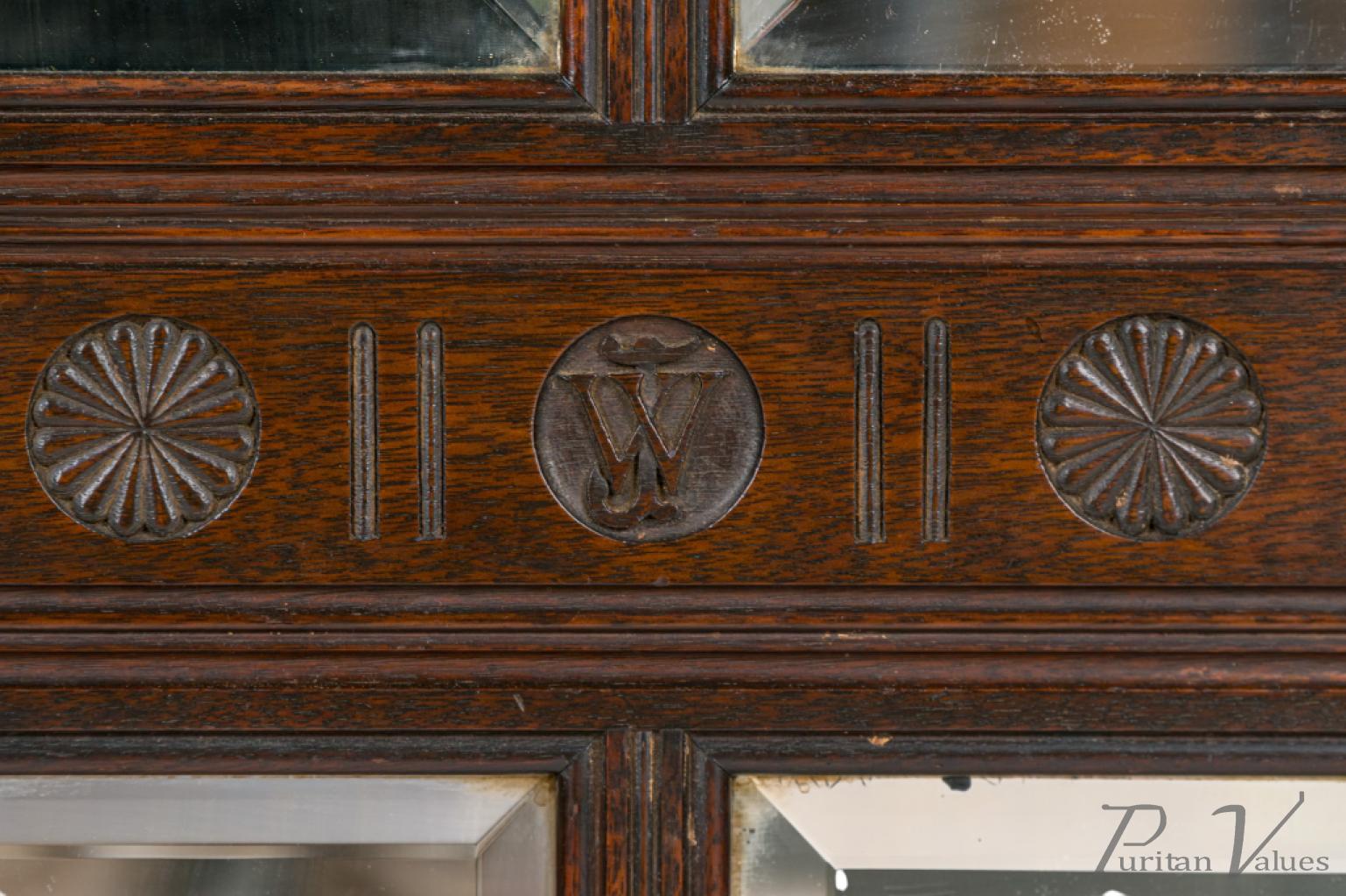
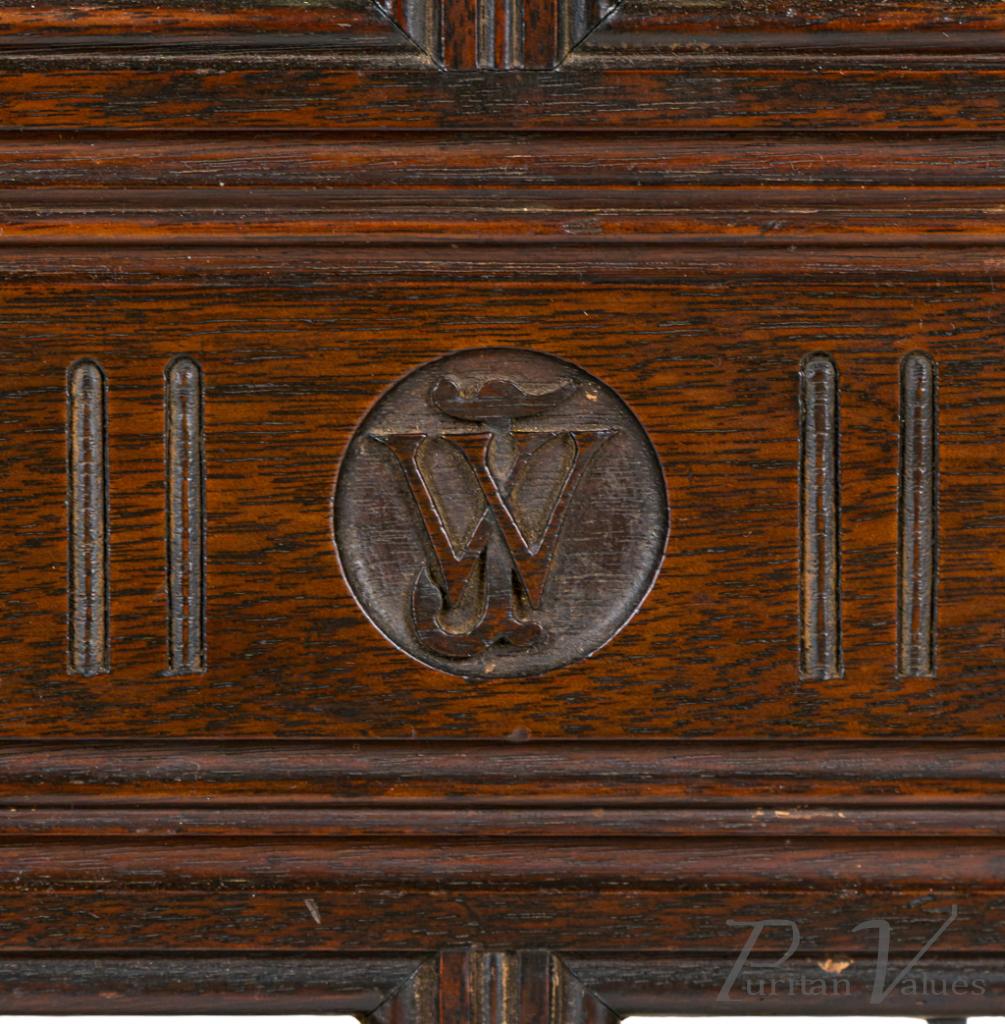
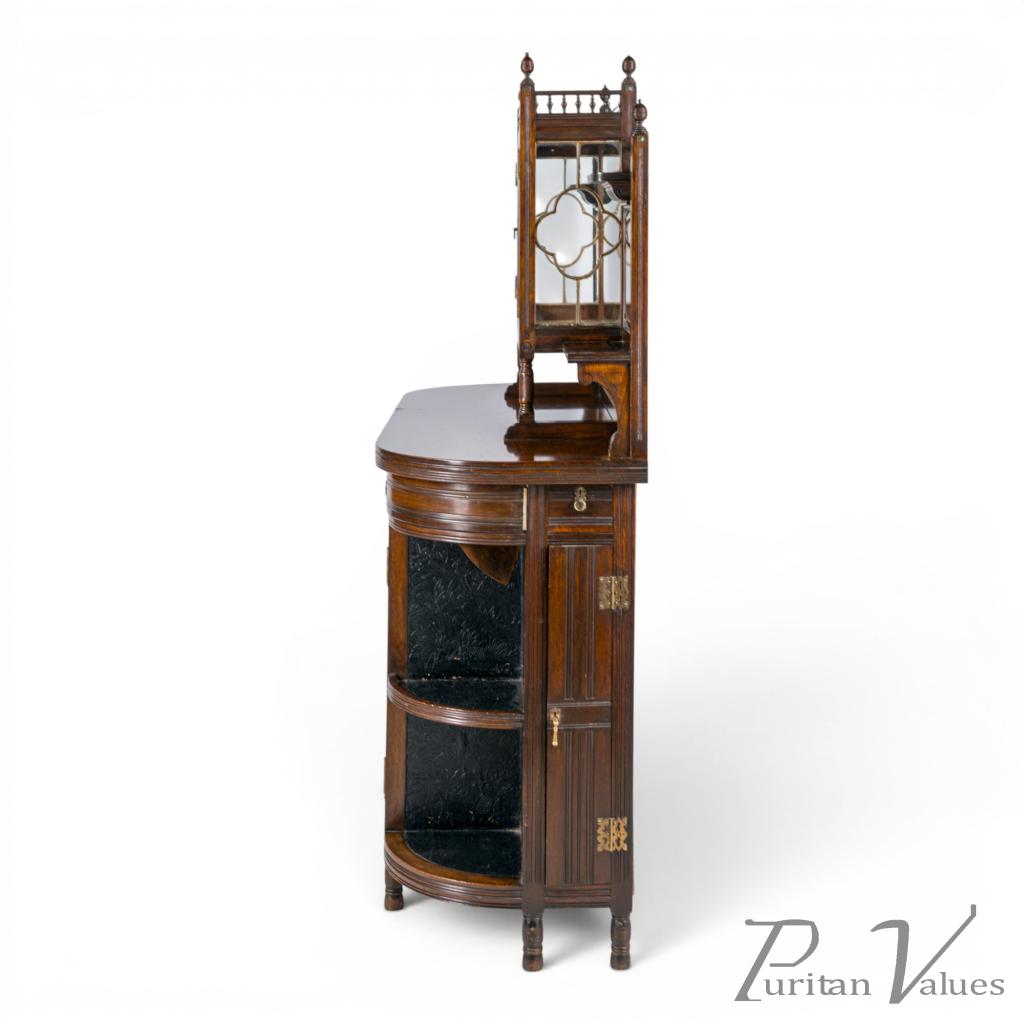
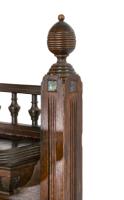
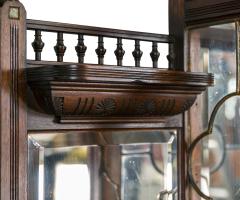
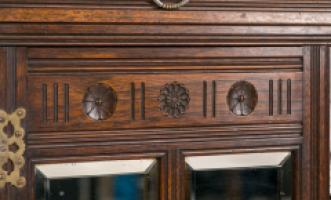
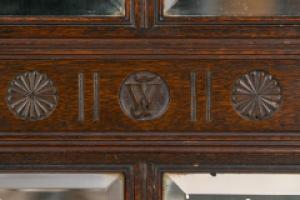
The upper display area is surmounted by a turned gallery, with finely turned and incised finials decorated just below with small inset squares of abalone. It is flanked by small protruding shelves for display, each carved with circular floral devices separated by vertical incised line details, with bevelled mirrors and shelves below, inset with abalone to the lower corners. The upper glazed mirror back display cabinet has glass reminiscent of Japanese cloud decoration, with further inset abalone squares to the tops of the turned supports on each side, resting upon the large work area with curved sides.
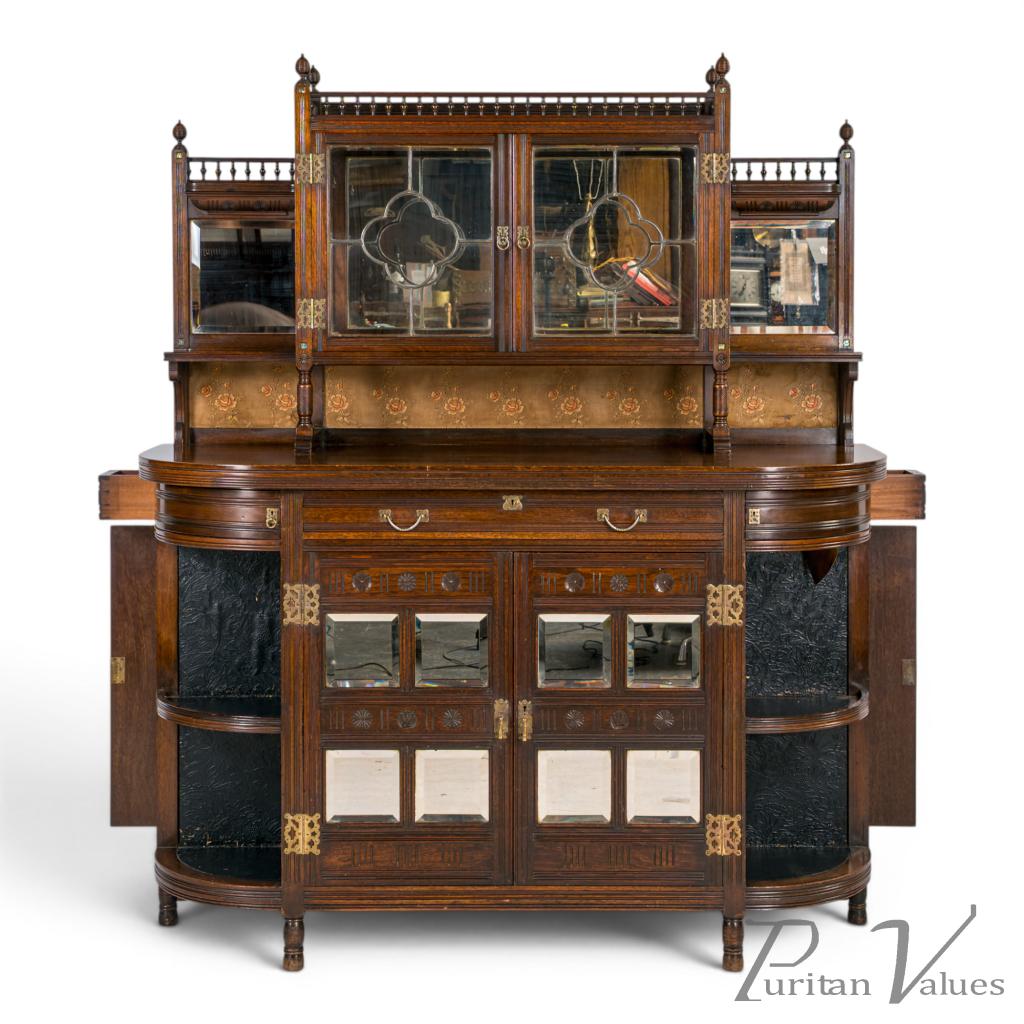
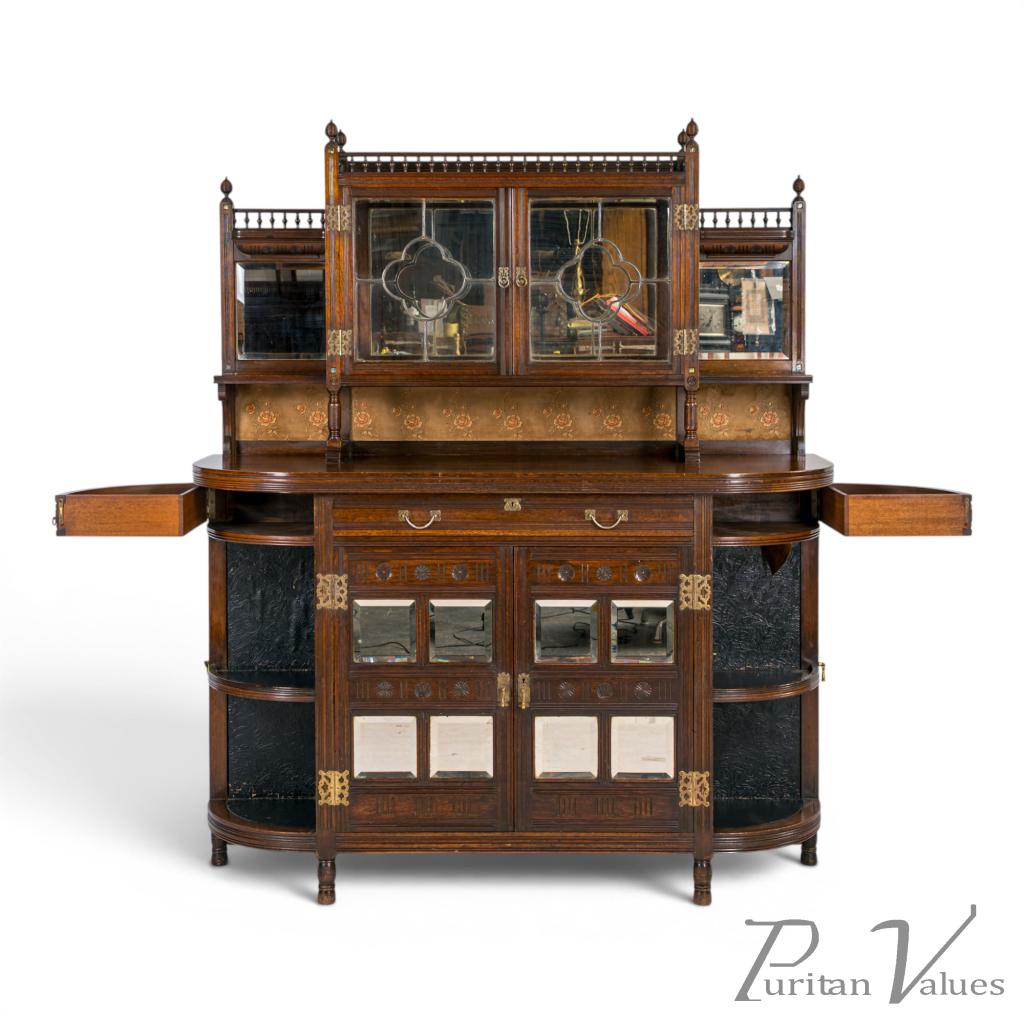
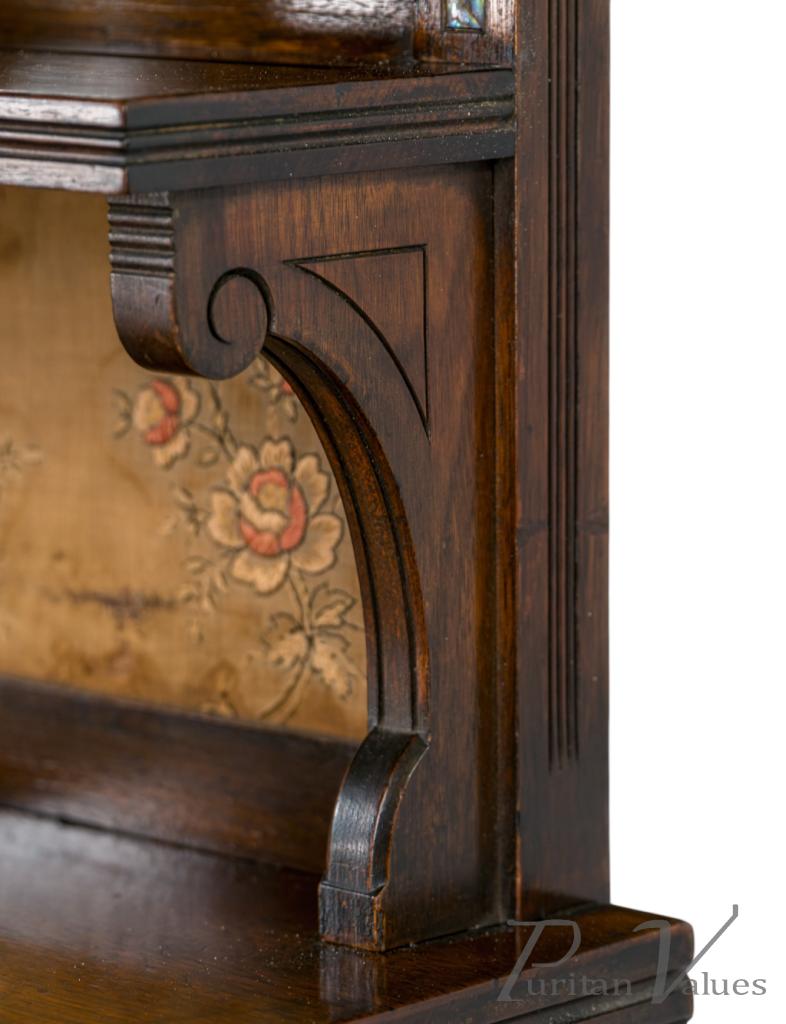
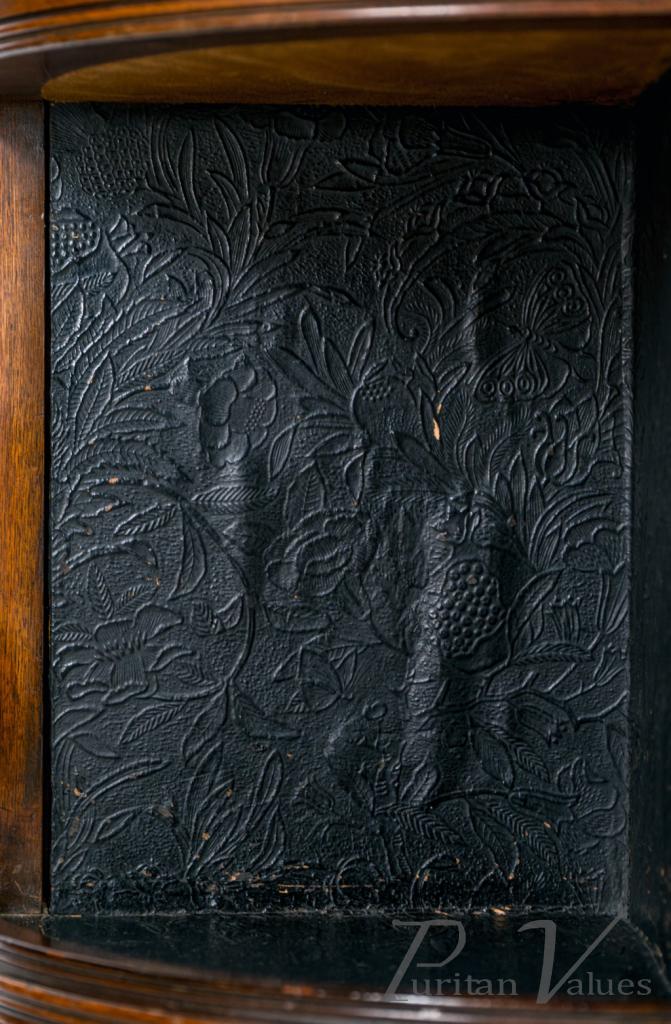
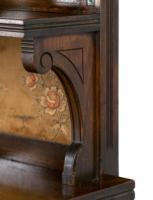
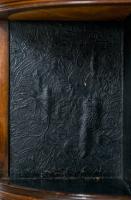
To the back is the original gold silk panel, decorated with repeating roses. The base is rather sophisticated and designed with specific purposes in mind. To the back at each side is a small drawer above a tall thin cupboard door, with comparable set-back cupboard and drawer arrangements recorded in Susan Weber Soros.* These are joined by open demi-lune corner shelves decorated with embossed Japanese-style leather paper.
Above are the unusual curving corner drawers, which Godwin also used on a corner cabinet, although with inward curved drawers. A similar feature also appears on another cabinet attributed to Godwin and stamped Collinson and Lock.**
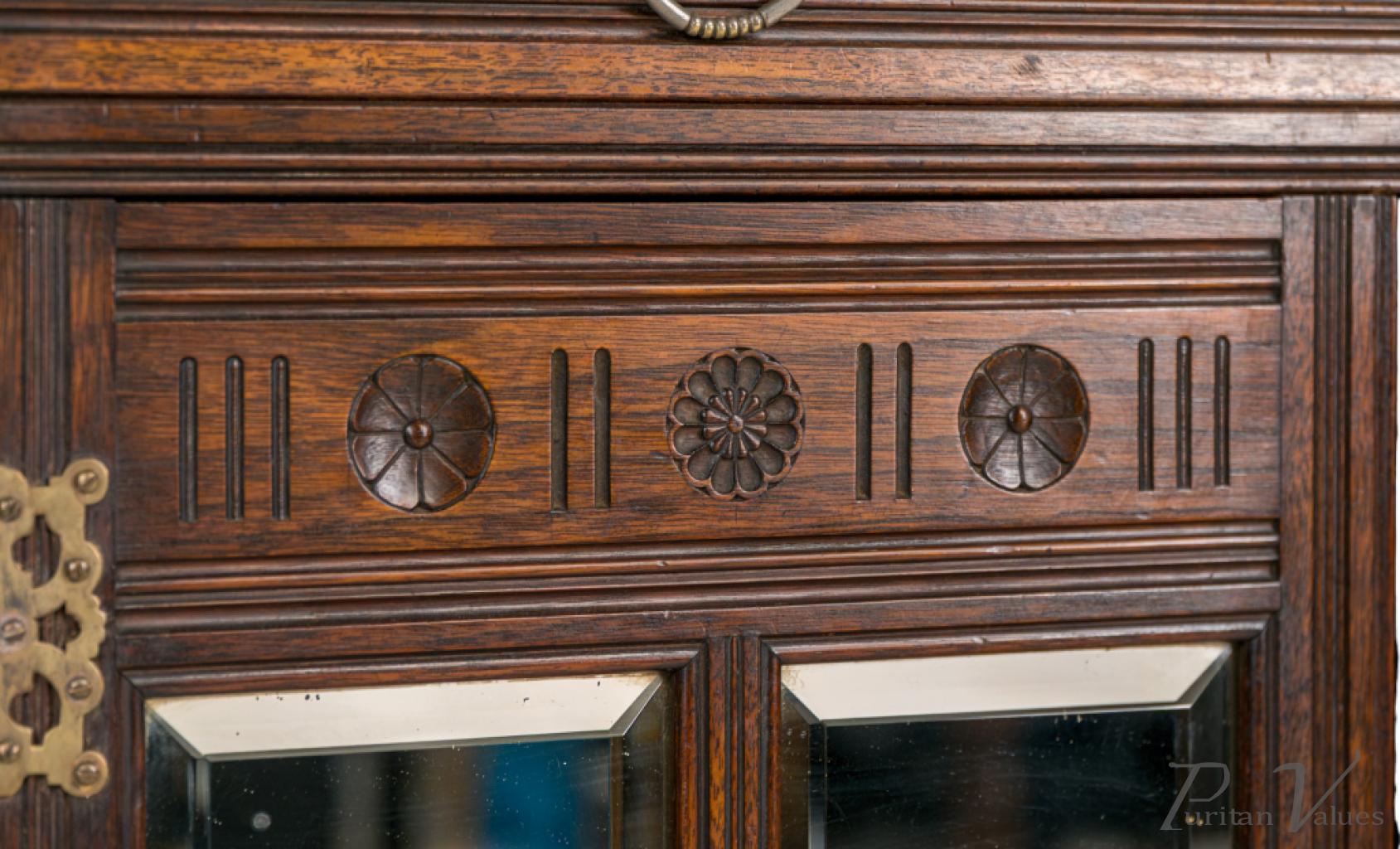
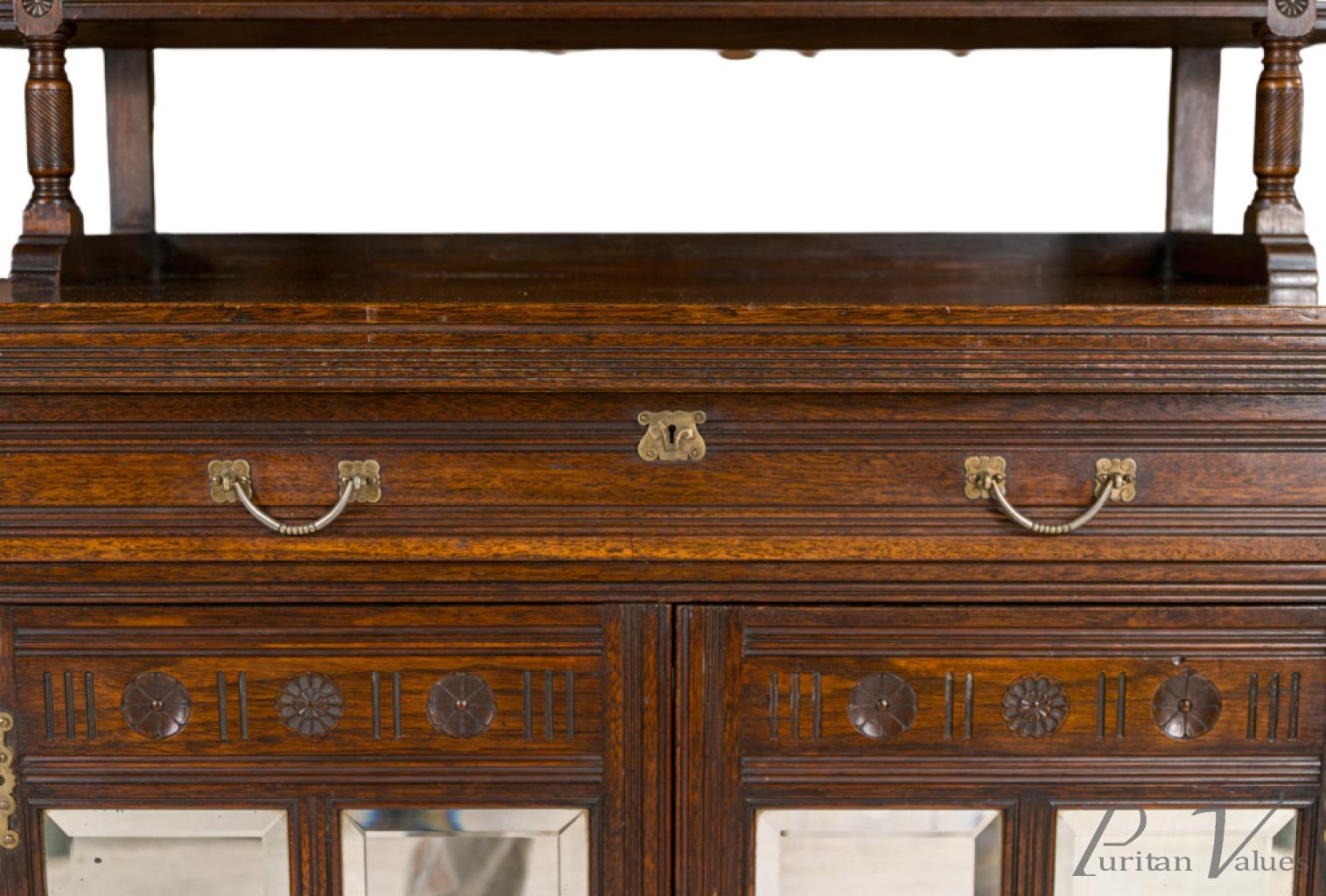
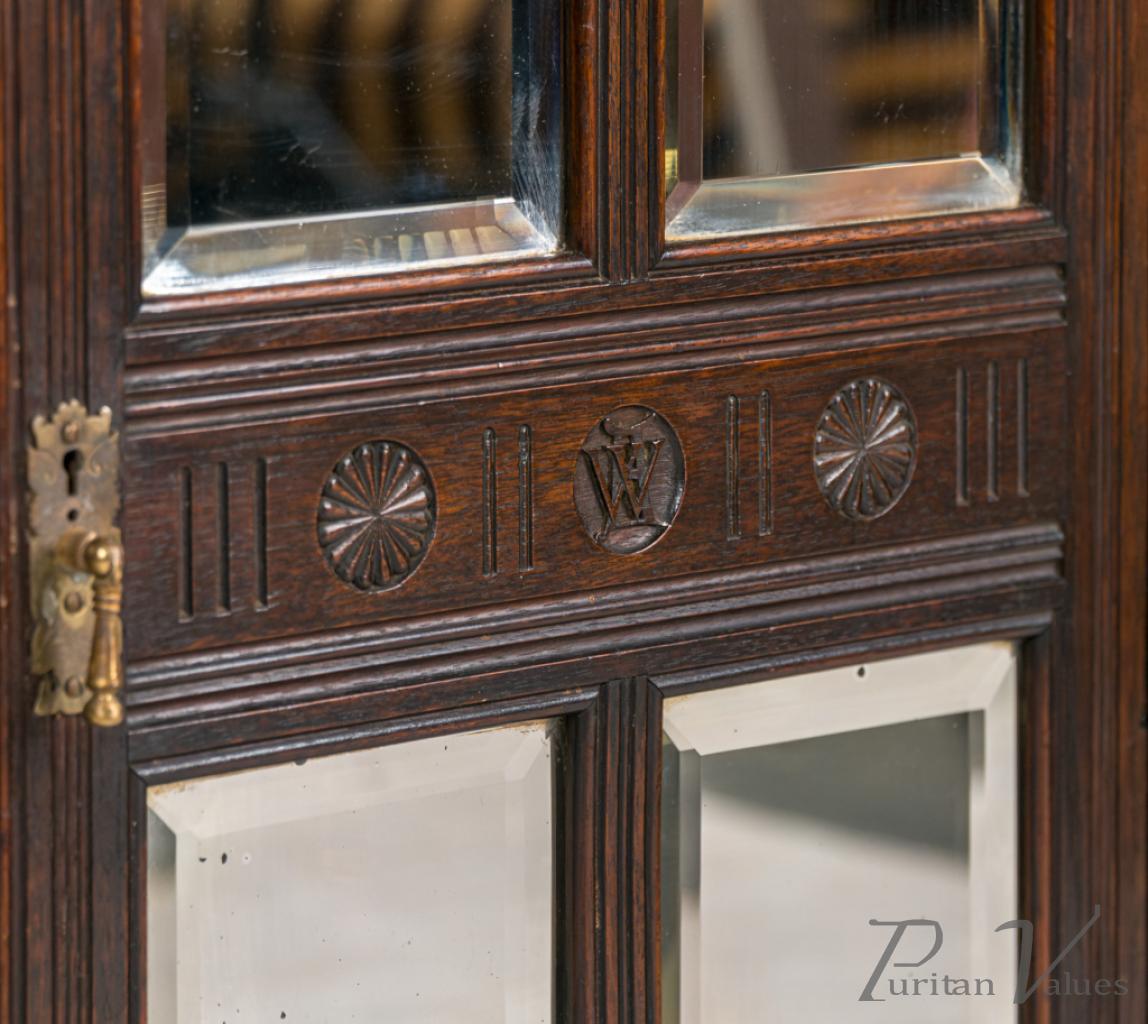
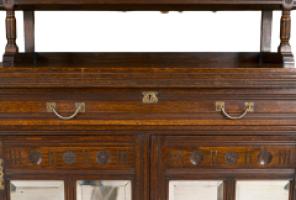
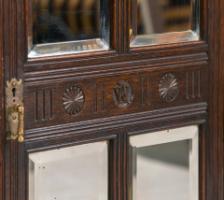
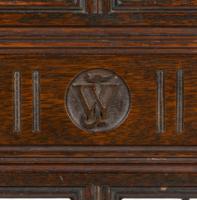
The front section has a long drawer, with twin doors below, each decorated with carved circular floral devices divided by incised horizontal lines. There are four bevelled mirror panels to each side and three banks of incised horizontal lines to the lower doors. The carved roundels and rosette devices relate closely to decorative details recorded on Godwin furniture, including painted rosettes, similar gilt devices on chairs with embossed leather designed for Dromore Castle, and related carved devices on a sideboard and wardrobe.***
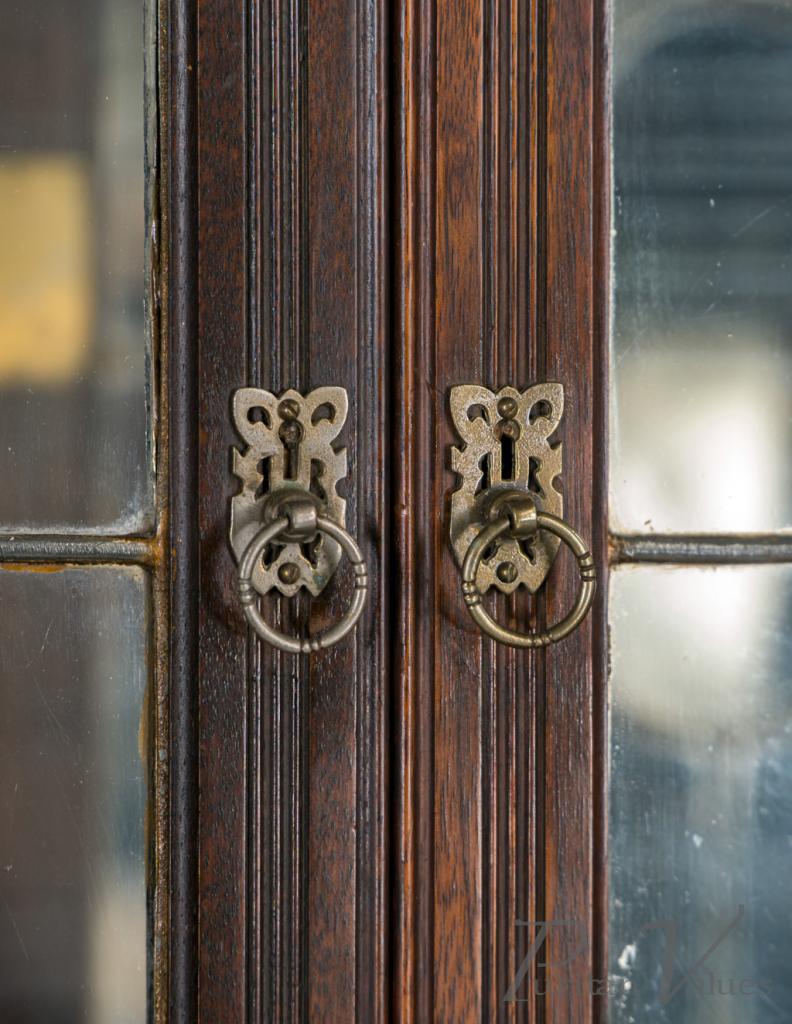
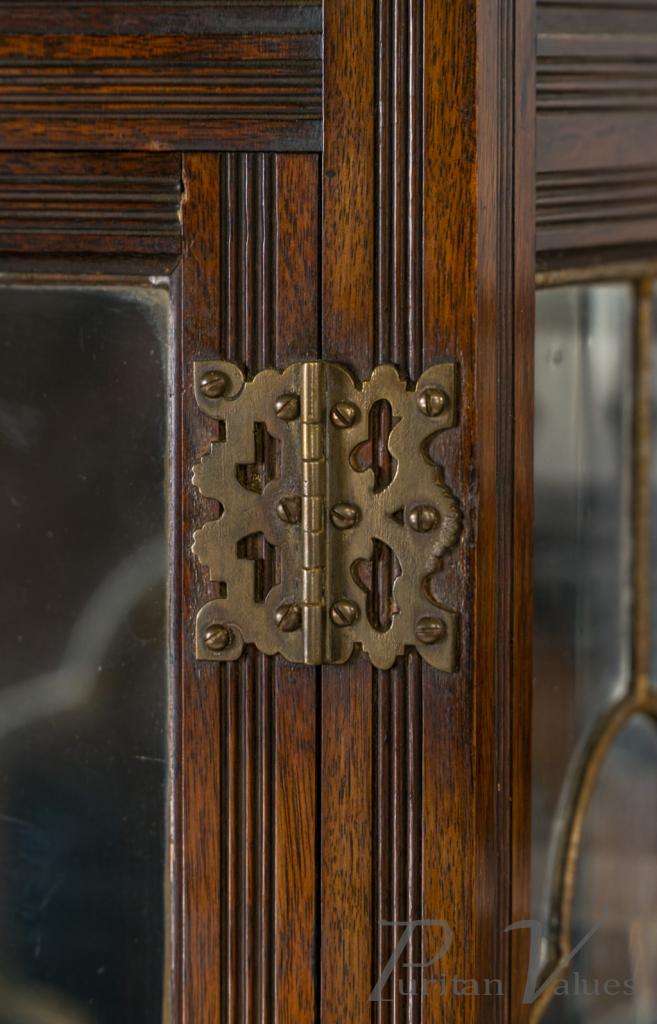
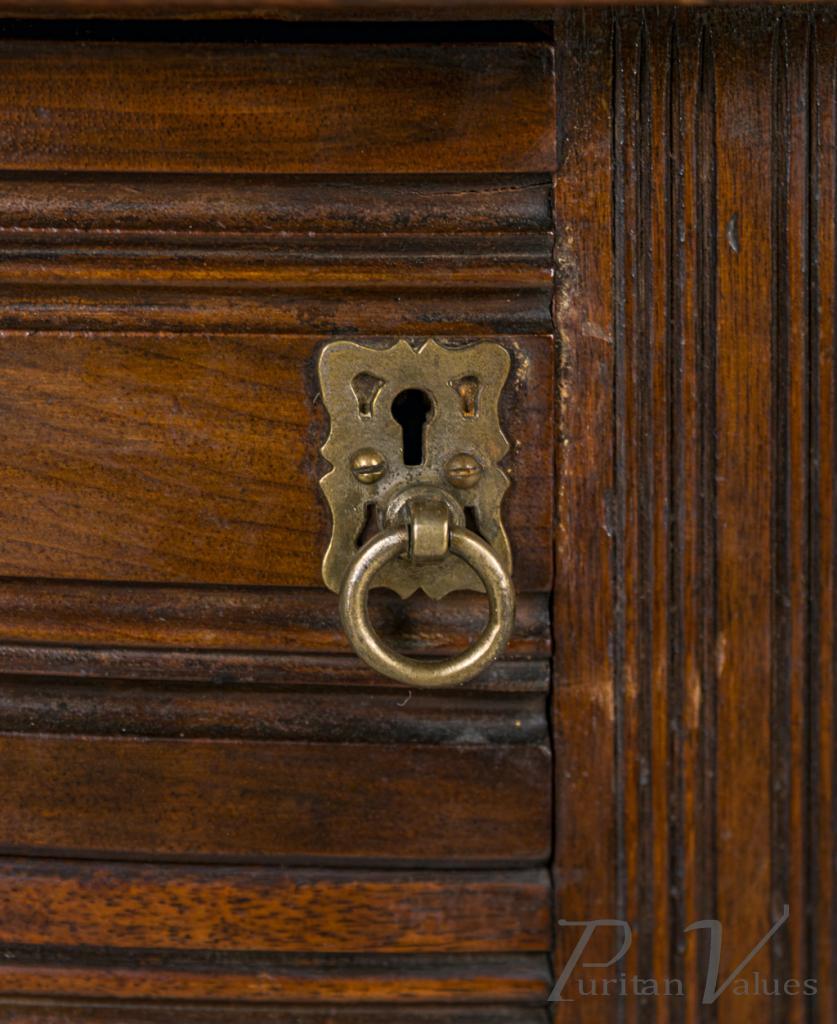
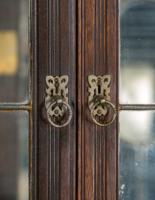
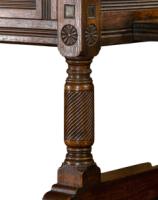
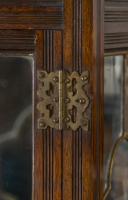
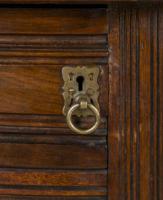
The sideboard has high-quality Aesthetic brass handles, hinges and escutcheons, and stands on six Thebes-style feet, typical of Godwin’s fascination with multi-leg furniture. The sophisticated design of this sideboard, with so many elements of design pointing to Godwin’s hand, and the use of rosewood, suggest a firm attribution to Godwin and Collinson and Lock.****
References / Provenance * See Susan Weber Soros, The Secular Furniture of E. W. Godwin , page 221, illustration 354, and the design for a dressing table and a sketch of a sideboard on page 211, illustrations 336 and 336.2. For a similar set-back cupboard, see page 194, illustration 314. For a similar set-back drawer, see page 196, illustration 316.
- * For unusual curving corner drawers used by Godwin, see Blairman and Sons catalogue on E. W. Godwin, figures 6 and 7. See also another cabinet attributed to Godwin and stamped Collinson and Lock.
- ** For related painted rosettes and decorative devices, see Soros, page 183, illustration 304.g, page 184, illustrations 304.i and 305, including similar gilt devices on chairs with embossed leather designed for Dromore Castle. For related carved devices on a sideboard and wardrobe, see page 214, illustration 340, and page 228, illustration 370.
- *** Attribution note: the attribution is based on the combination of Godwin-related design elements, rosewood construction, Aesthetic brass fittings, cloud form glazing, abalone inset detail, curving corner drawers, Thebes-style feet and comparison with documented and attributed Godwin furniture.