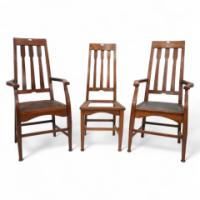
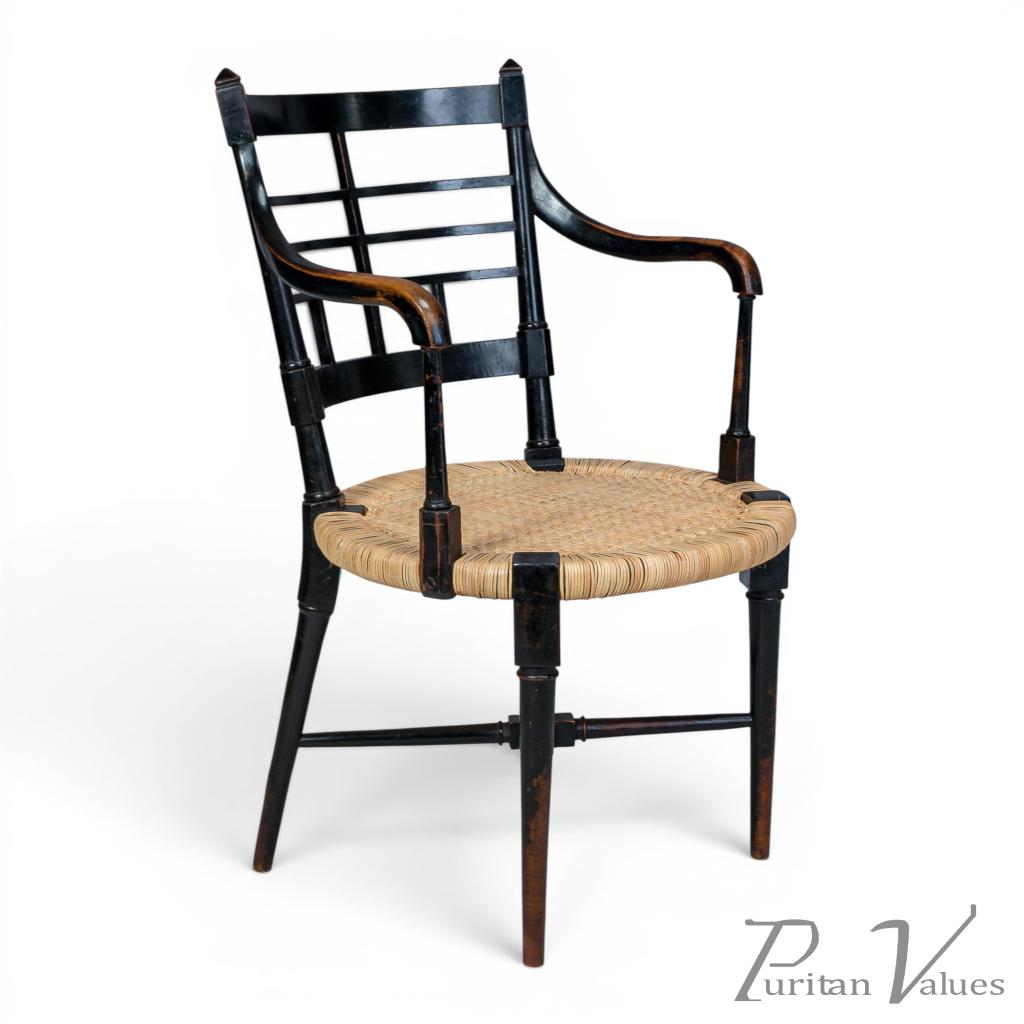
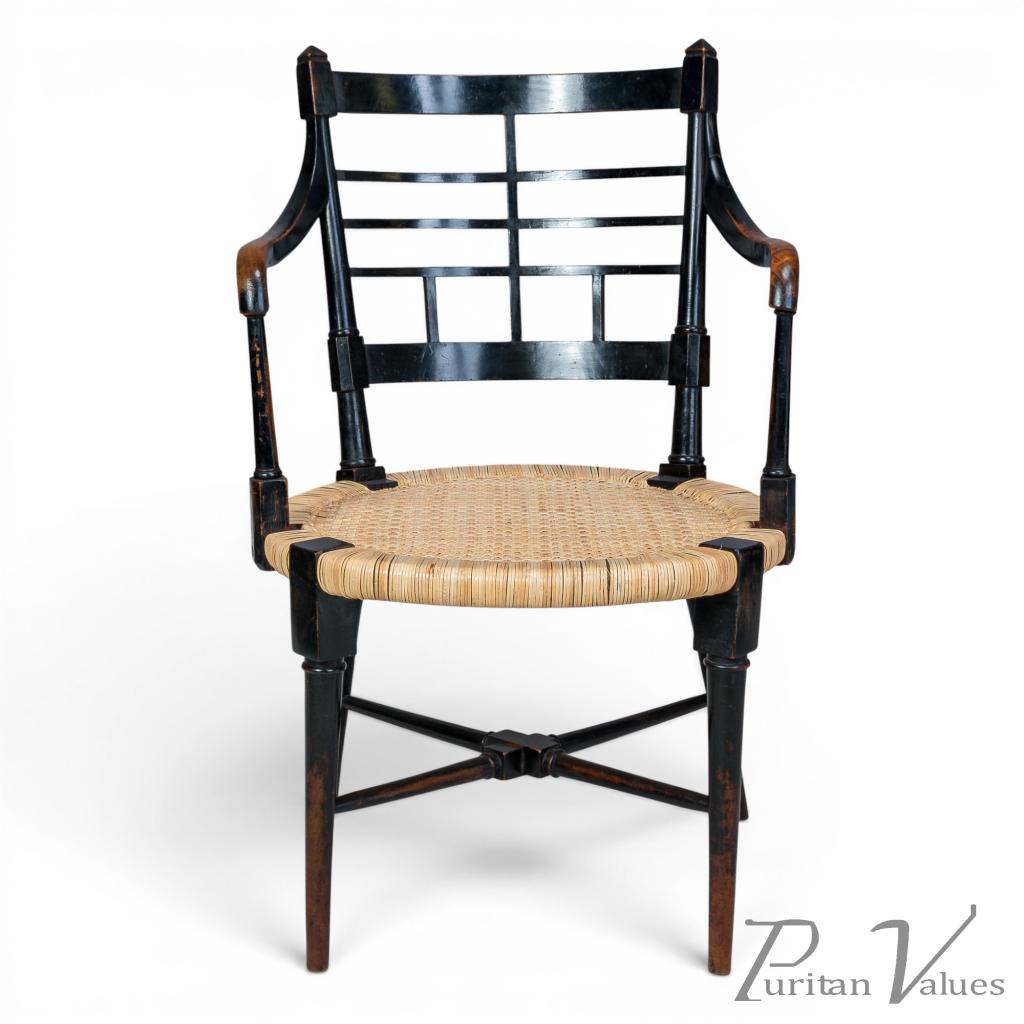
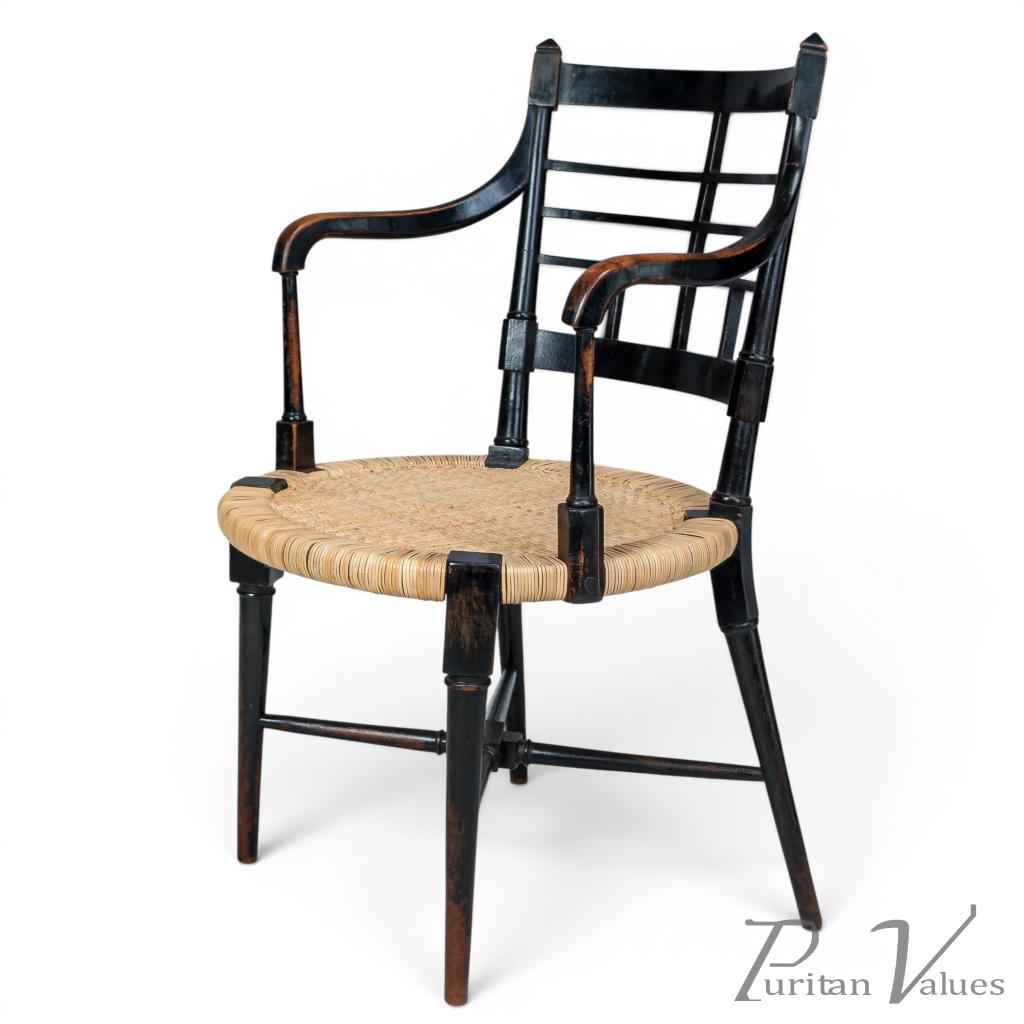
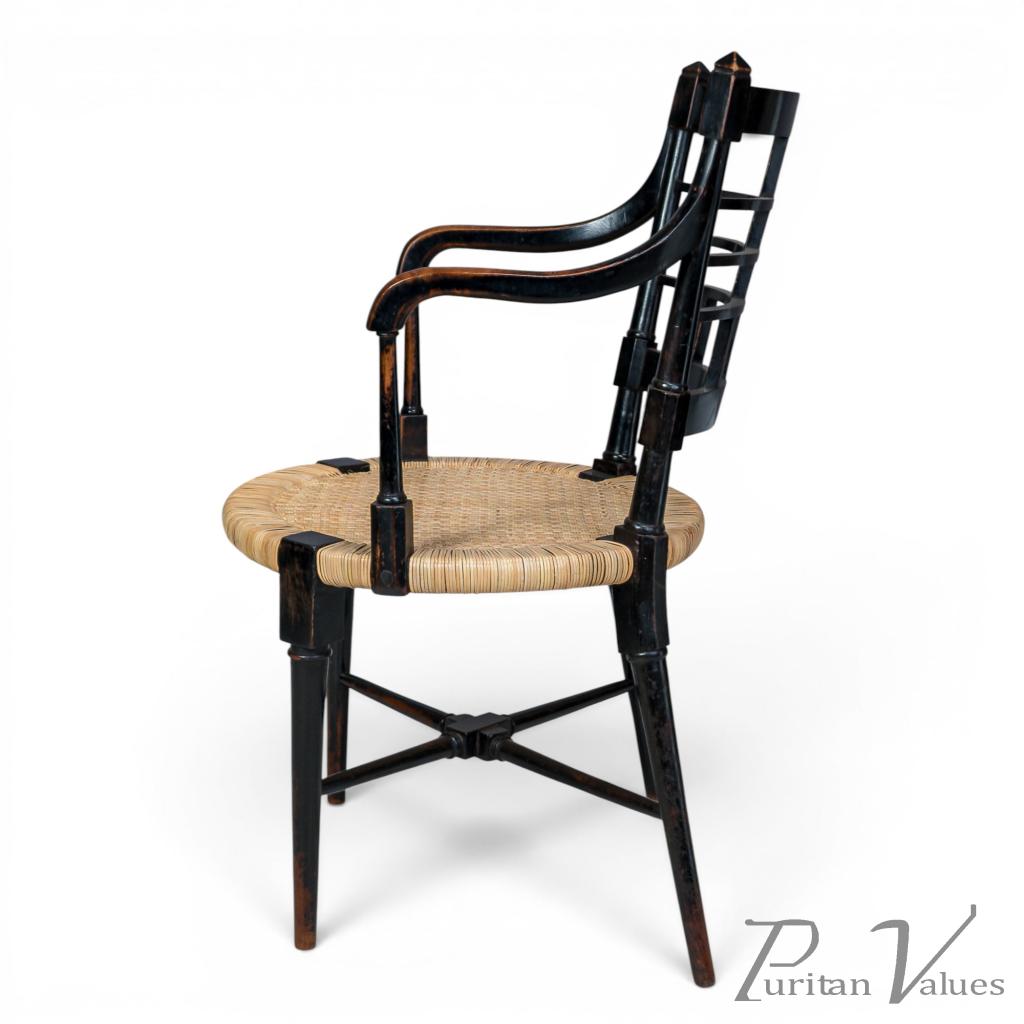
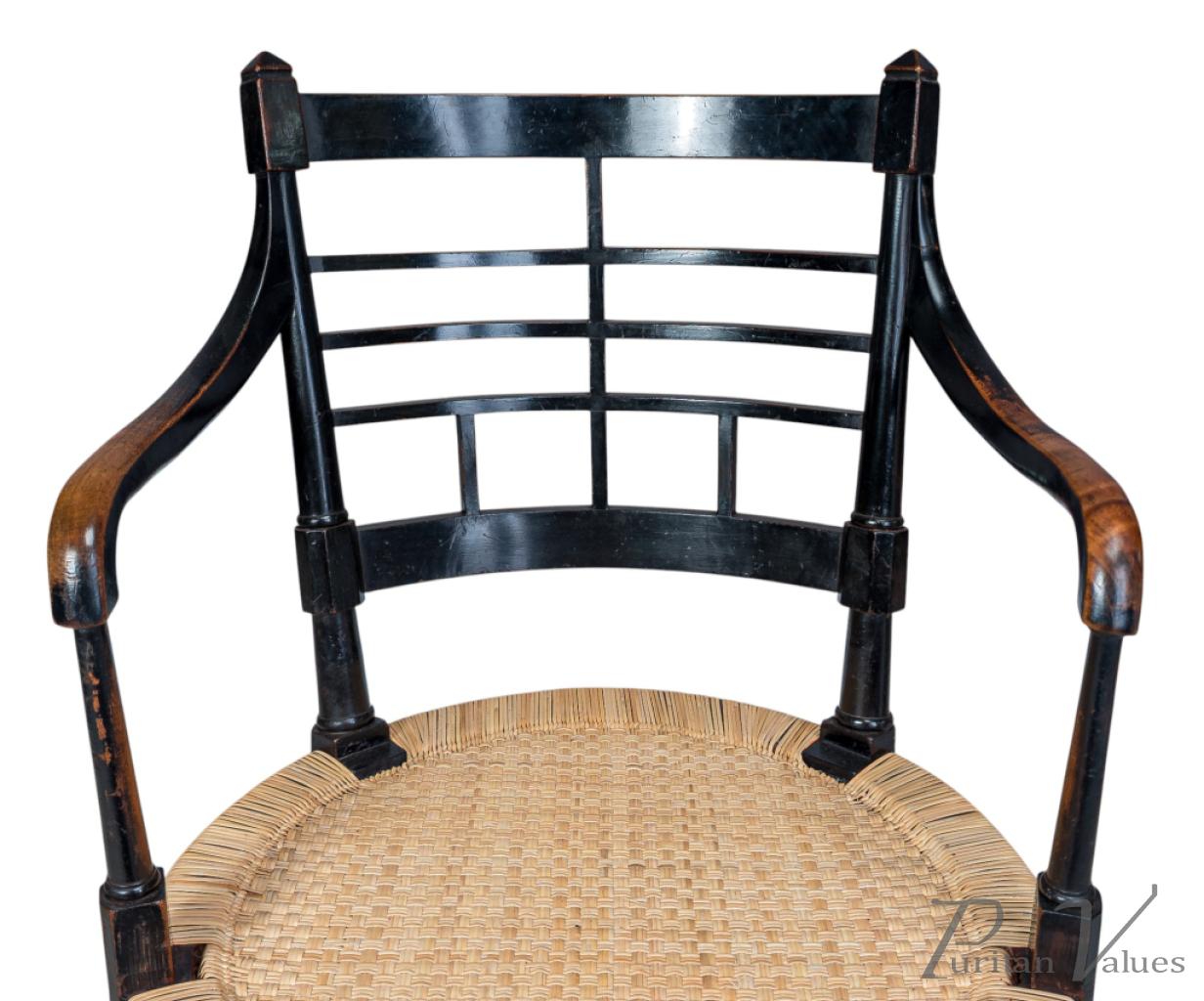
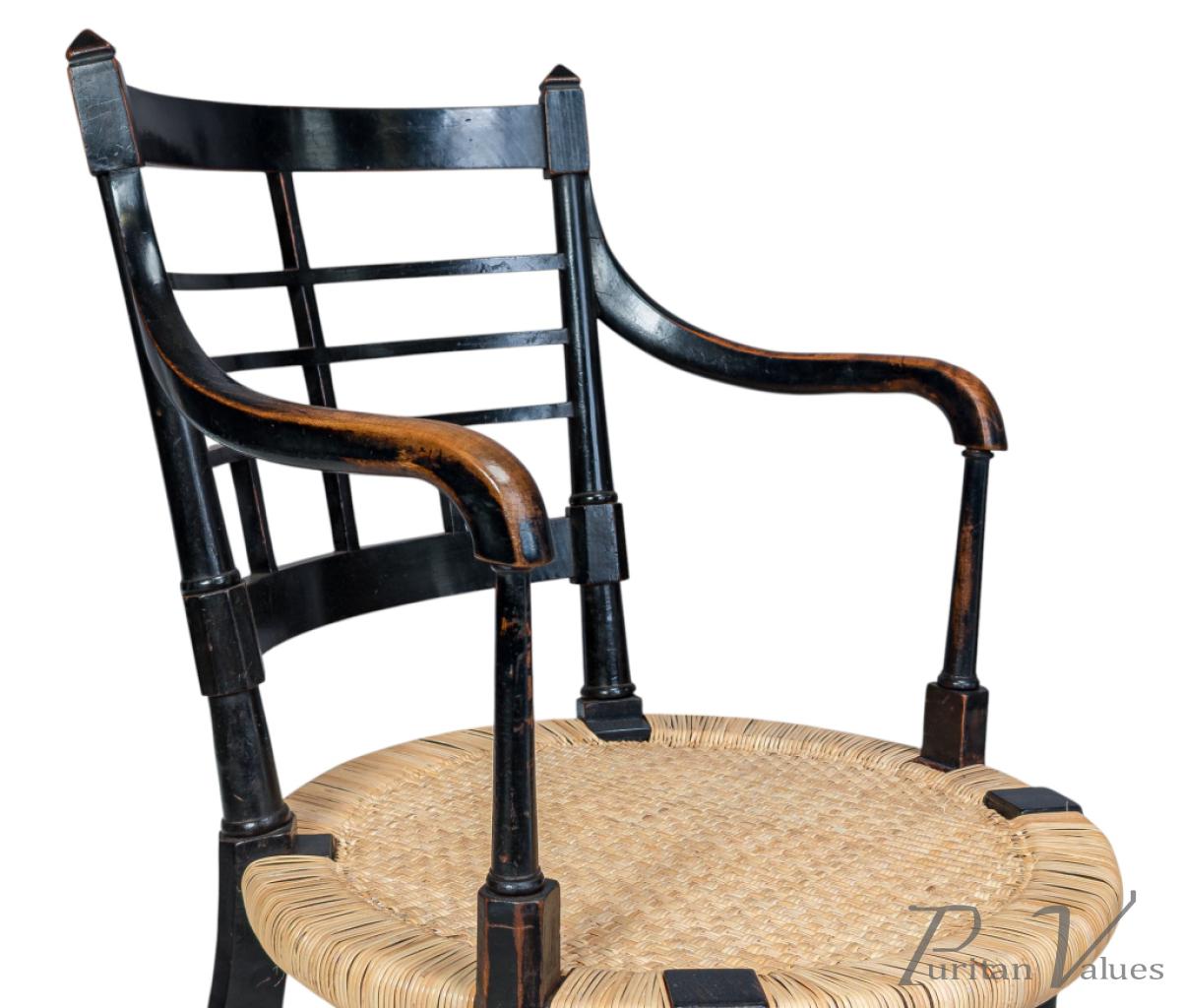
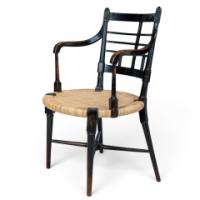
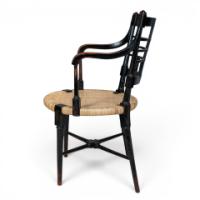
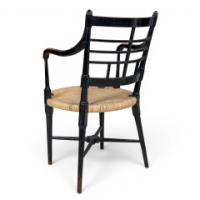
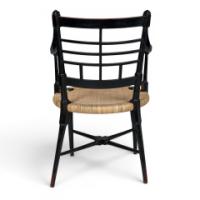
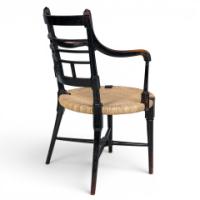
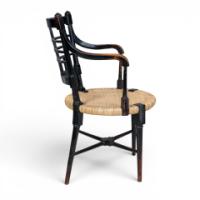
E. W. Godwin for William Watt, Old English Ebonised Beech and Cane Armchair
Price on Application
This item is price on application due to its rarity and importance.
Width: 21.26 in (54 cm)
Depth: 23.23 in (59 cm)
Seat height: 16.535442 in (42 cm)
Arm height: 26.9685185 in (68.5 cm)
1870-1879
About this piece
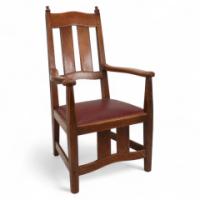
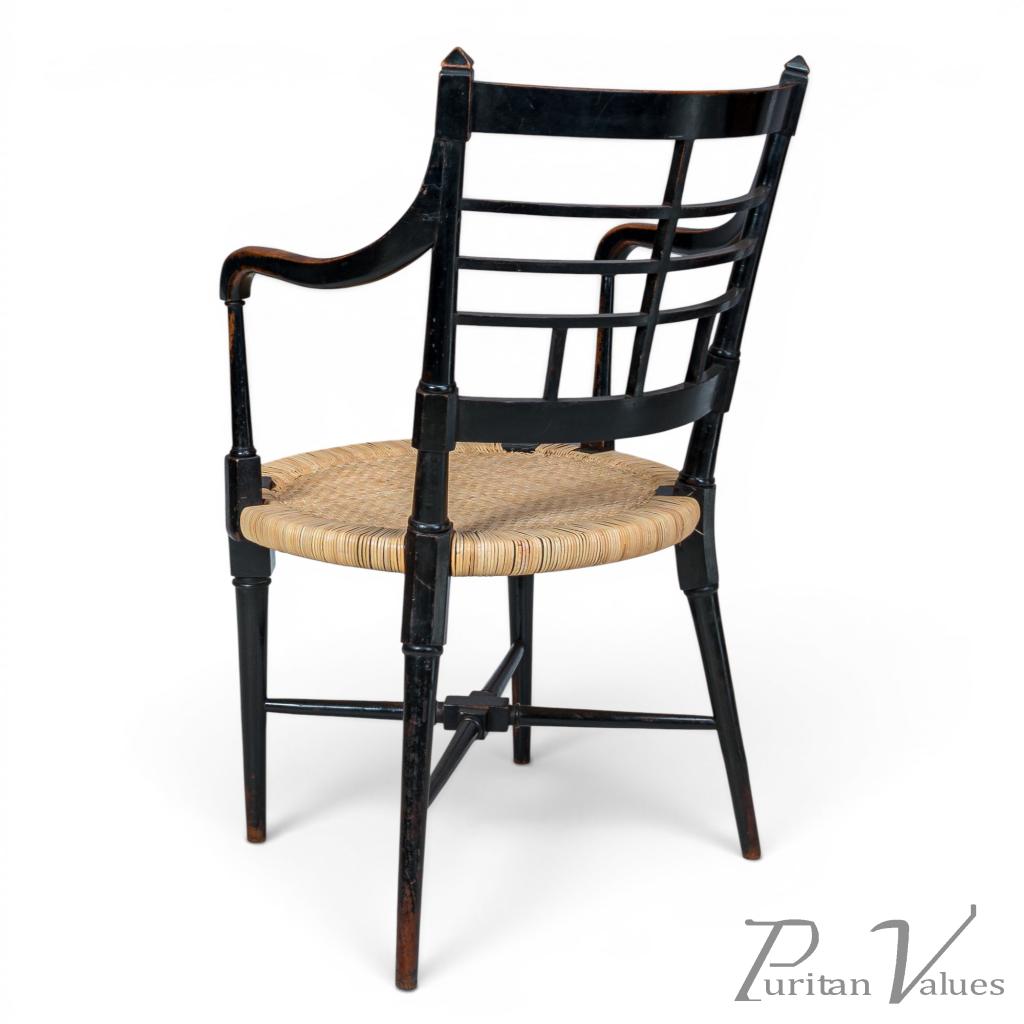
This Old English or Jacobean armchair by E. W. Godwin for William Watt is aligned to the Aesthetic Movement (c.1860 to c.1900), c.1877.
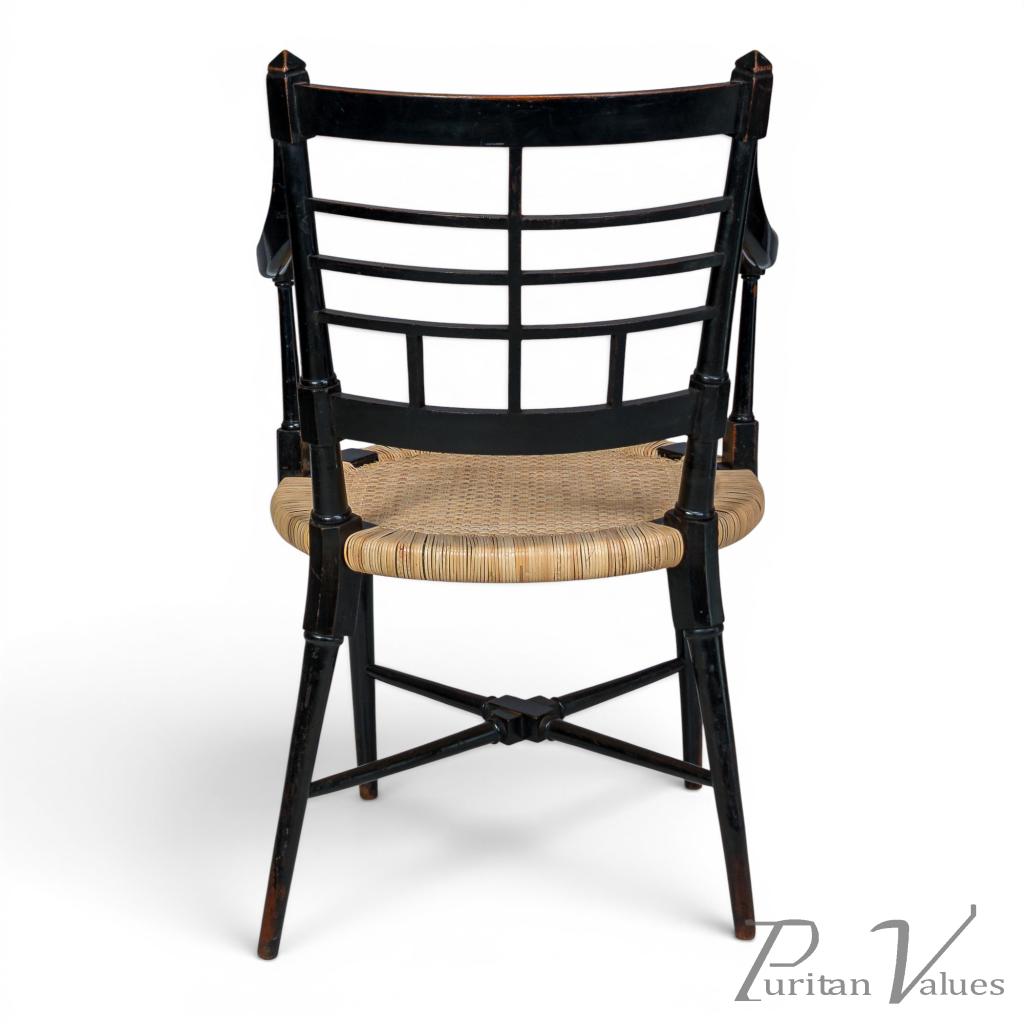
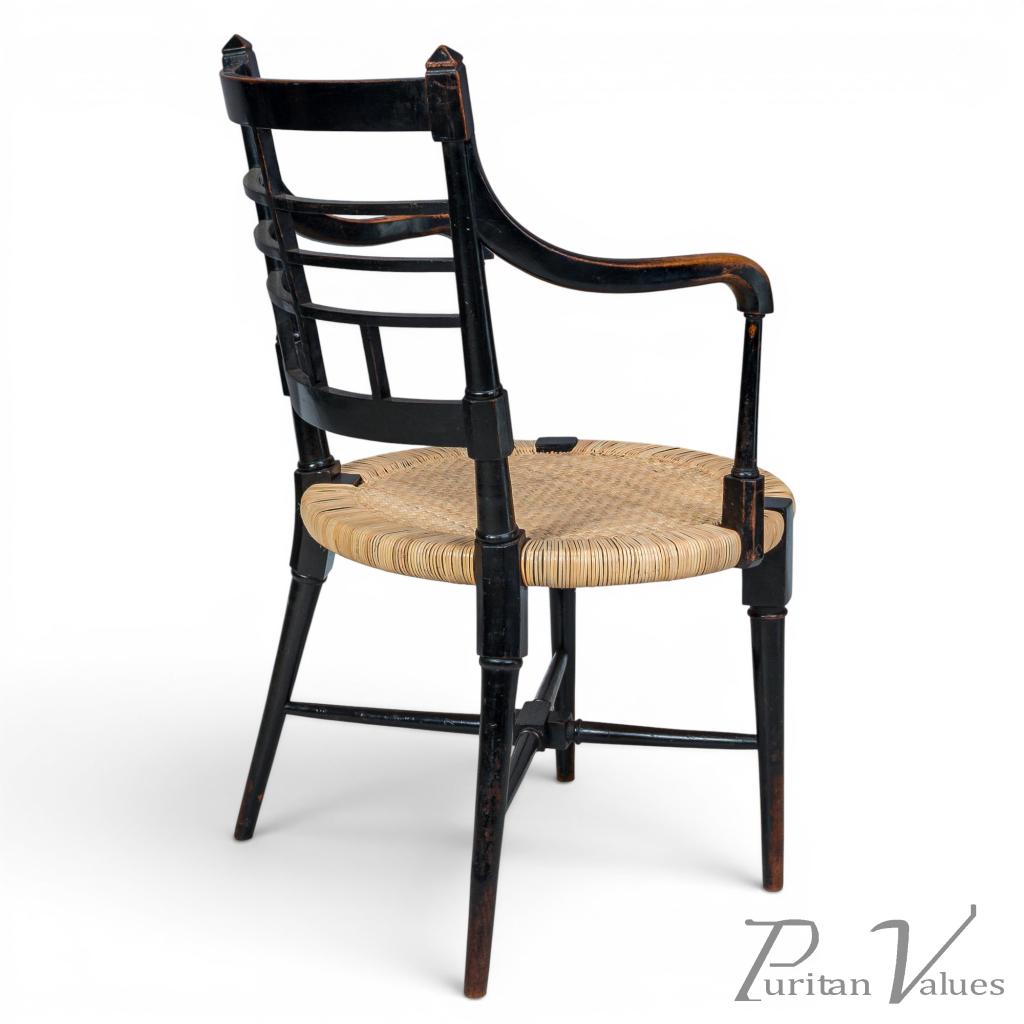
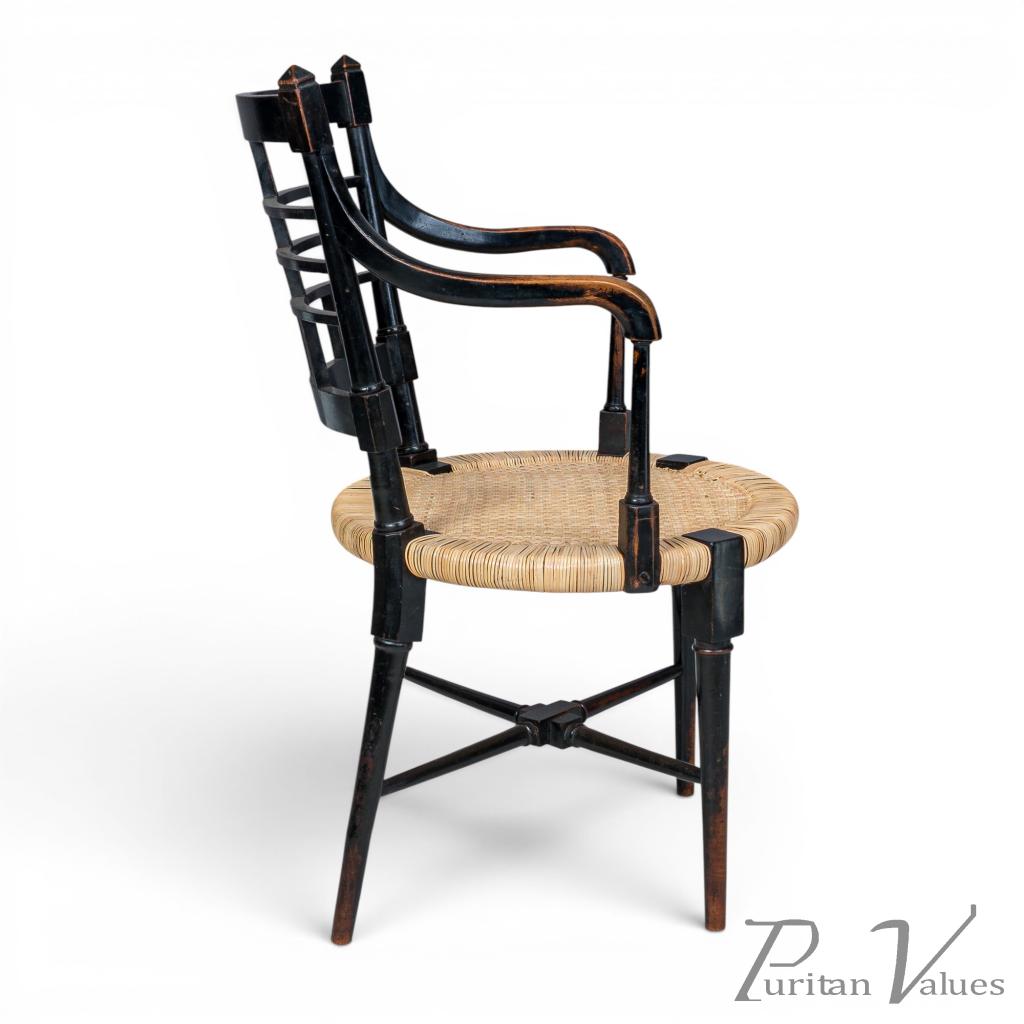
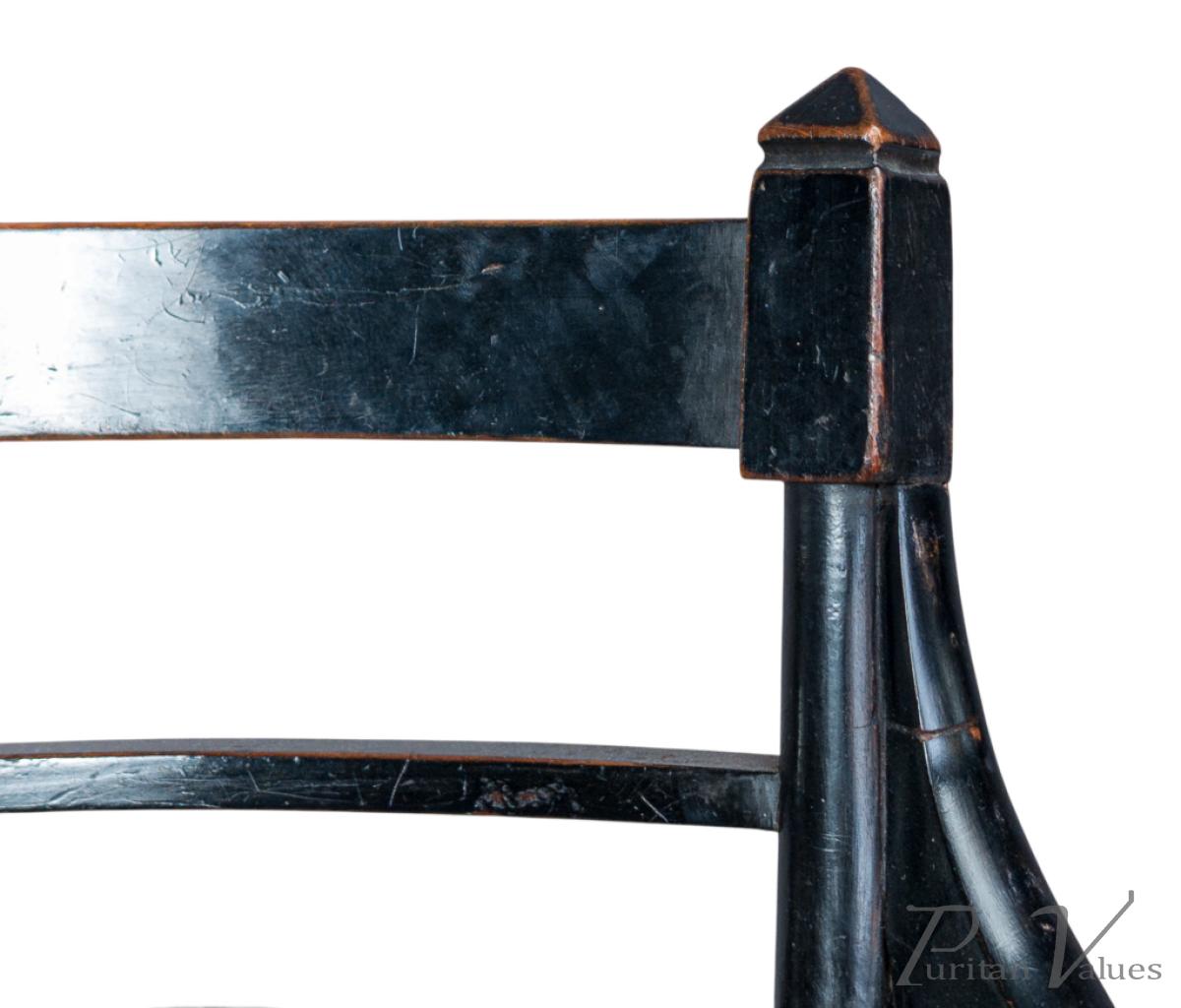
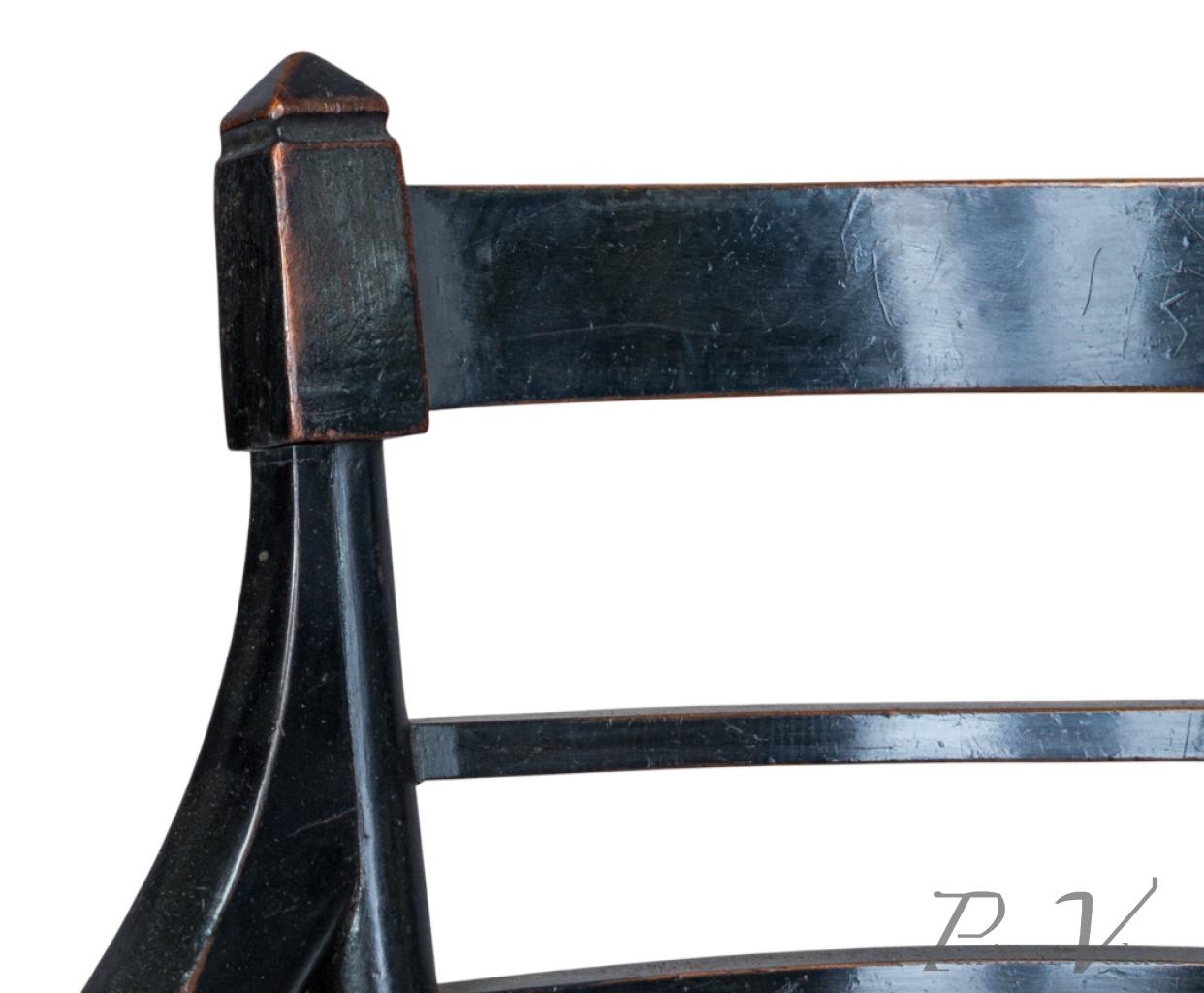
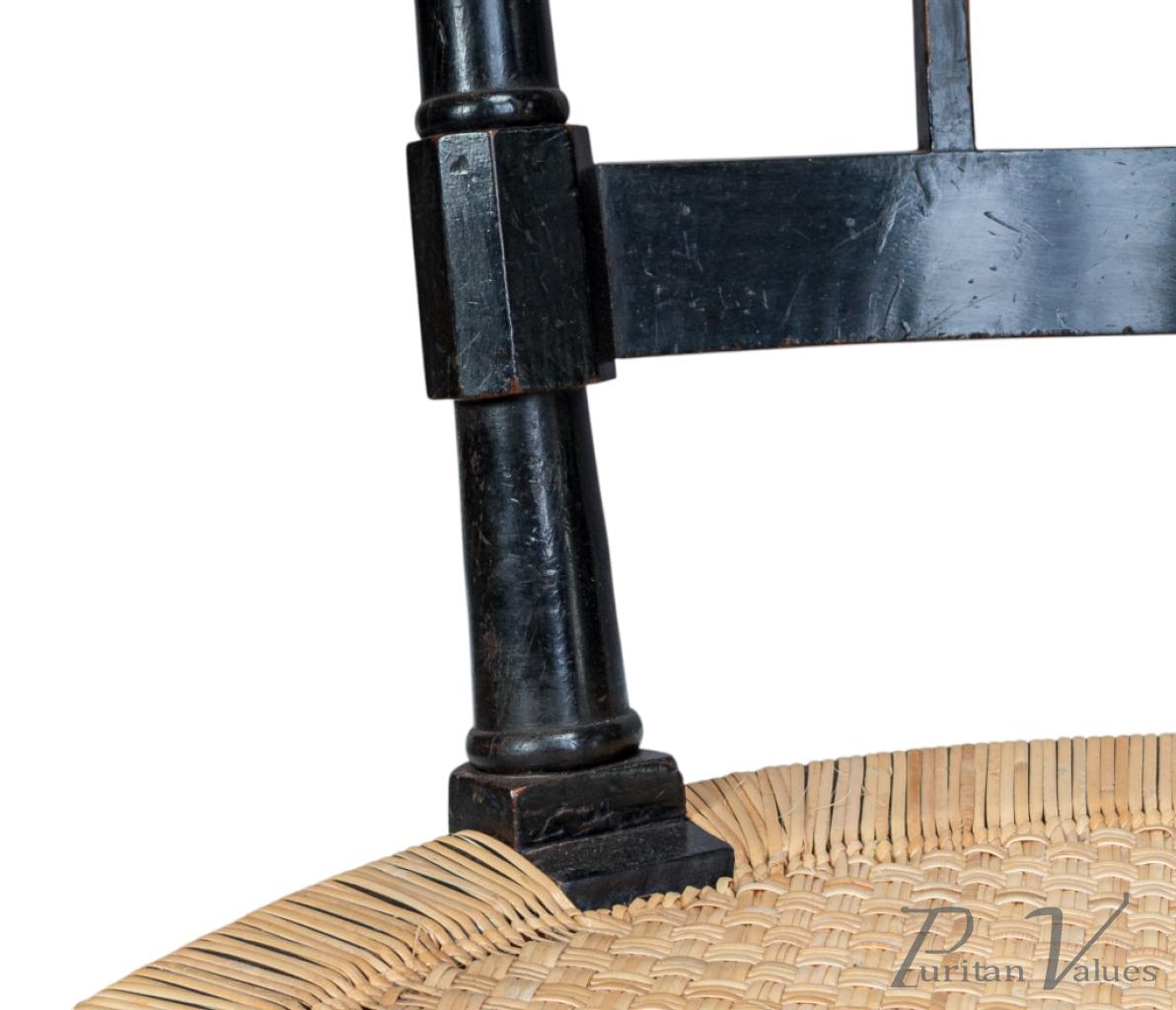
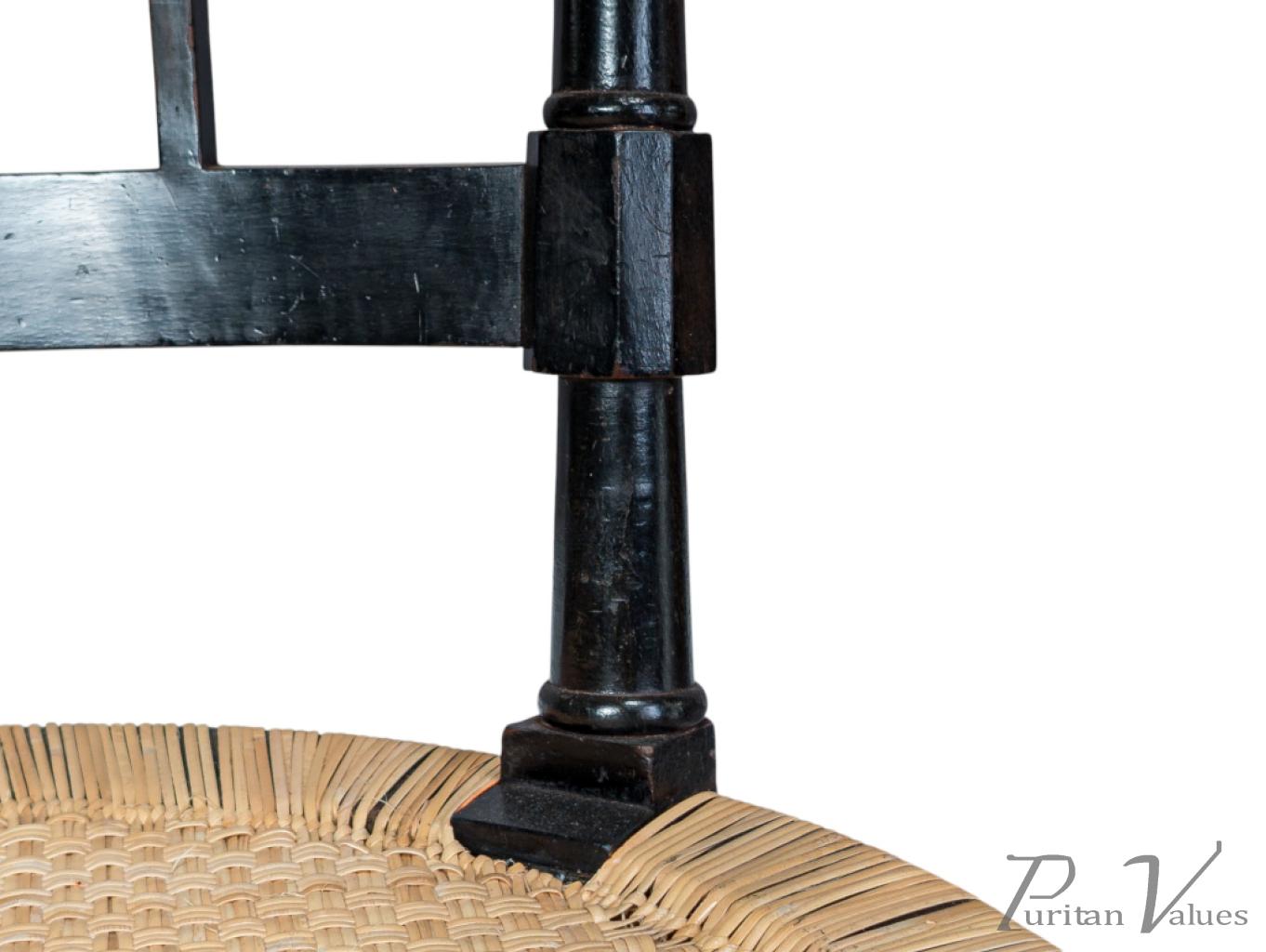
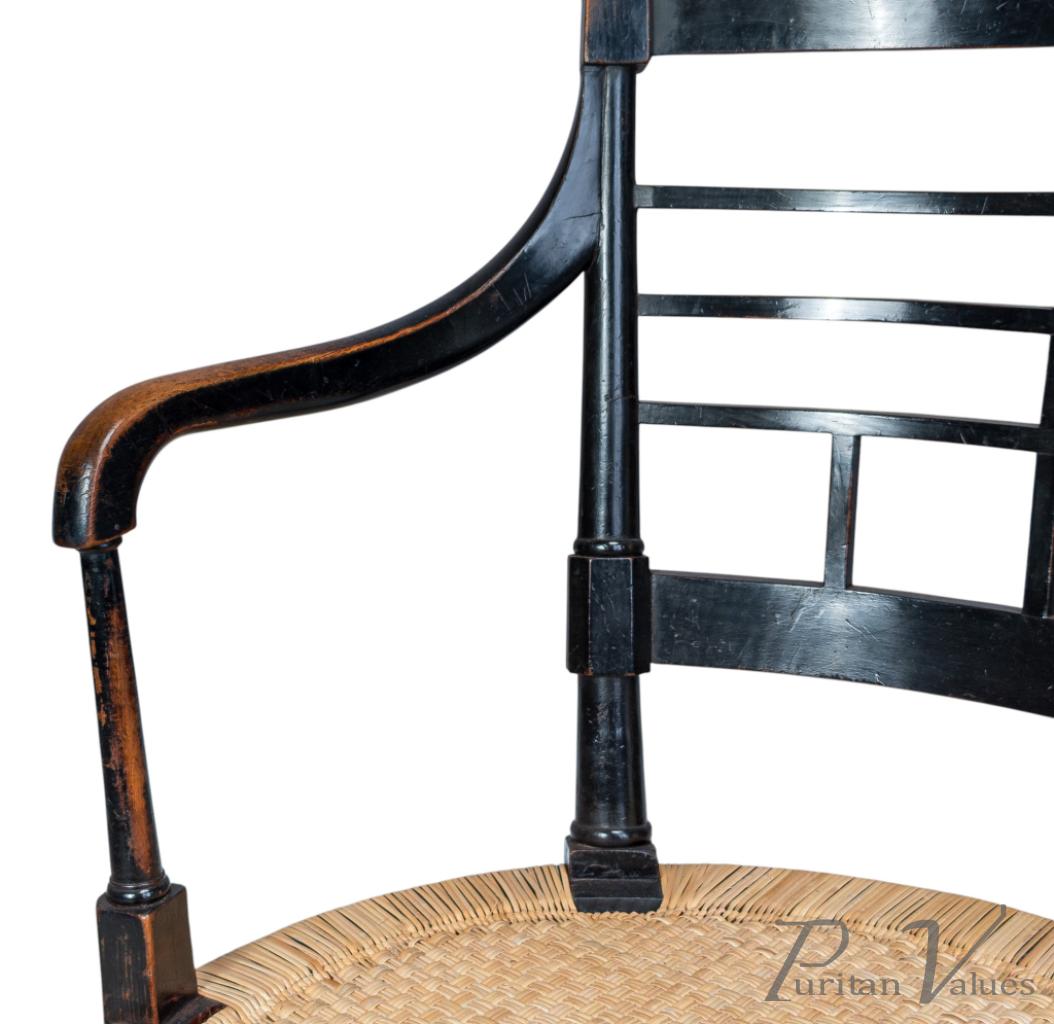
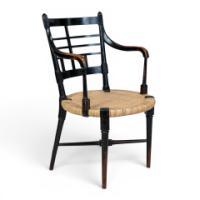
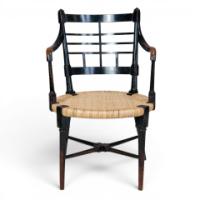
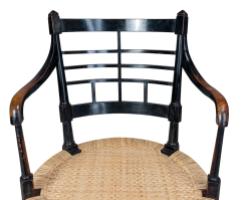
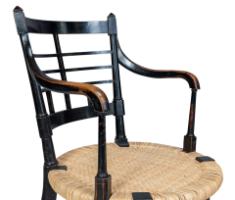
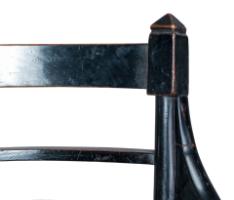
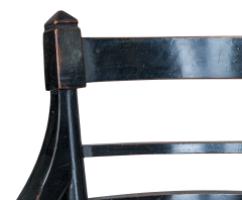
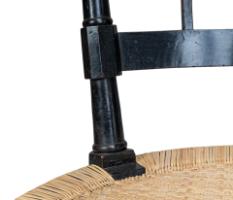
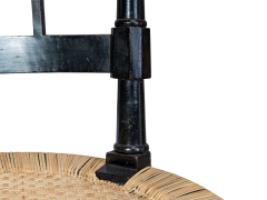
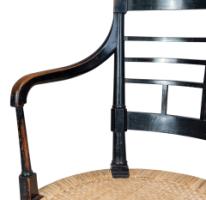
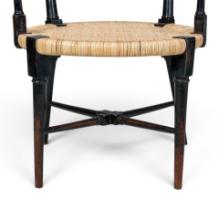
The chair has a strong architectural frame, with a broad curved top rail, open geometric back and square capped rear posts. The back is arranged with horizontal rails and upright divisions, giving the chair a more structured Old English or Jacobean character than Godwin’s lighter spindle-back designs. The arms sweep forward in a shallow curve and finish over slender turned front supports, with square blocks used at the main junctions of the frame.
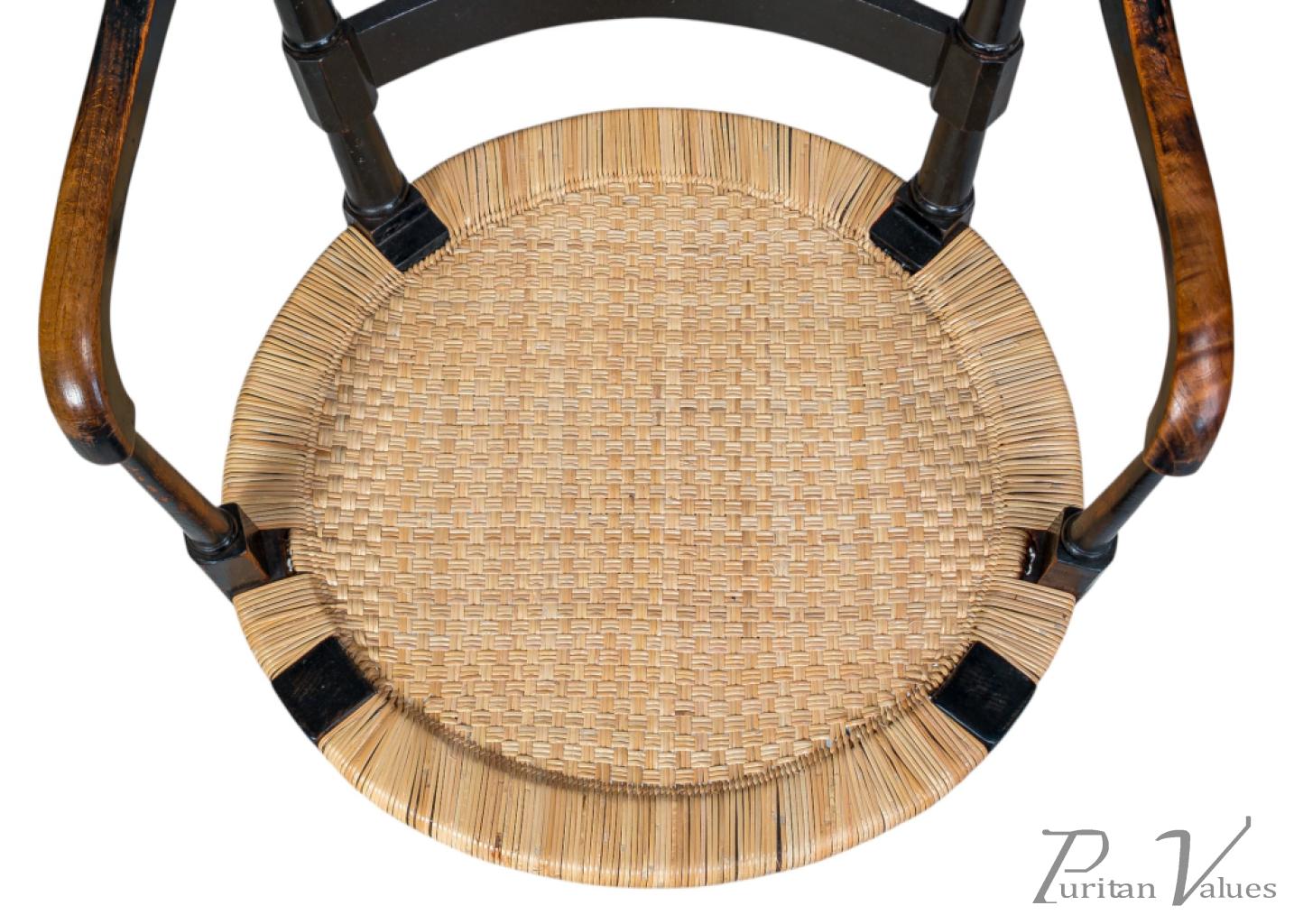
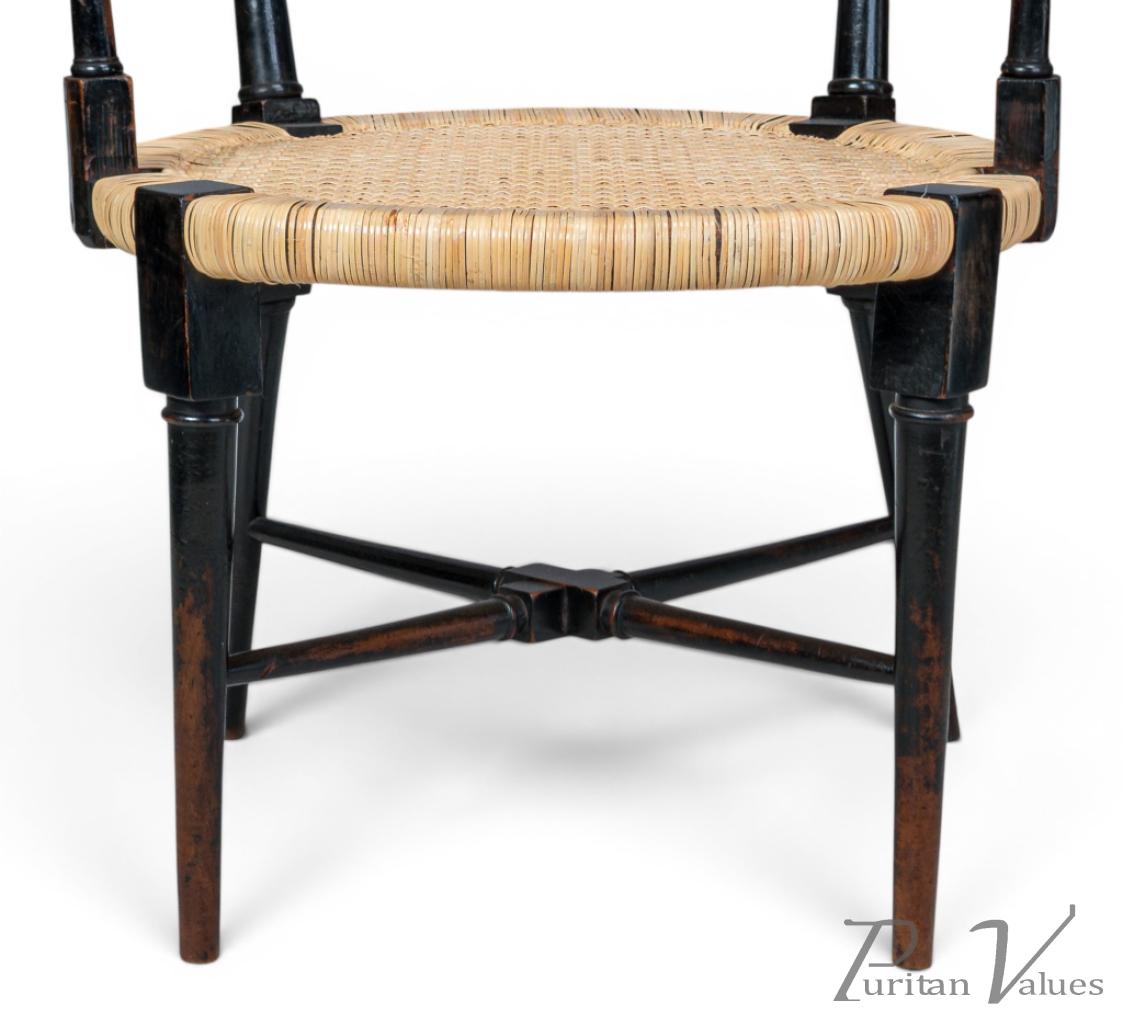
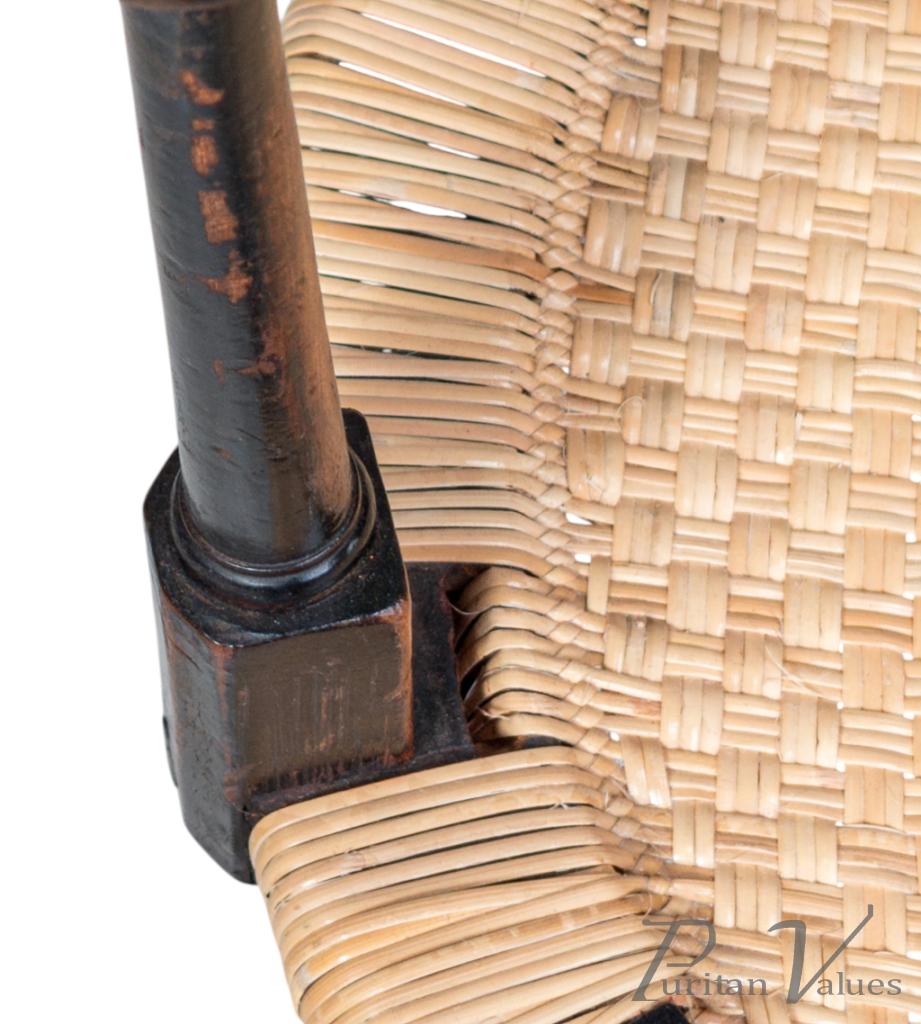
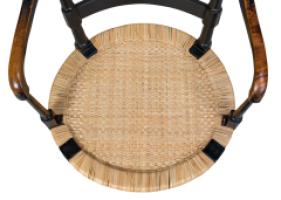
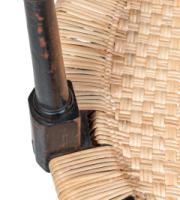
The most unusual feature is the wrap-around cane seat. Rather than being set within a conventional seat frame, the cane passes around the rounded front edge and continues into drilled holes in the seat rail, following the line of the circular seat. This gives the chair a softer, more continuous seat profile while retaining the clean, hygienic cane surface that Godwin preferred for chair seating.
These armchairs were made in different variations, with differing seat and stretcher arrangements. Two sketches of this armchair are used in William Watt’s Art Furniture catalogue of 1877, one upholstered and one in cane. This early version has a wrap-around cane seat, rather than the usual cane seat set within the seat frame. It loosely follows the principle of rush seating of the period, but with drilled holes to the seat frame made specifically for cane, and is not one I have come across before on this model, or on any other type of Victorian cane seat chair, and could possibly be an early experimental prototype.