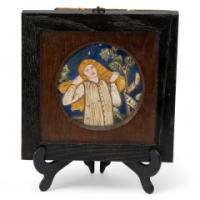
Morris & Co., Designed by Edward Burne Jones in 1861-1862. A Rare Arts & Crafts Pre-Raphaelite Hand Painted Tile Depicting Geoffrey Chaucer's Poem,'Legend of Good Wimmen'
Price on Application
This item is price on application due to its rarity and importance.
Width: 7.87 in (20 cm)
Depth: 0.39 in (1 cm)
1880-1889
About this piece
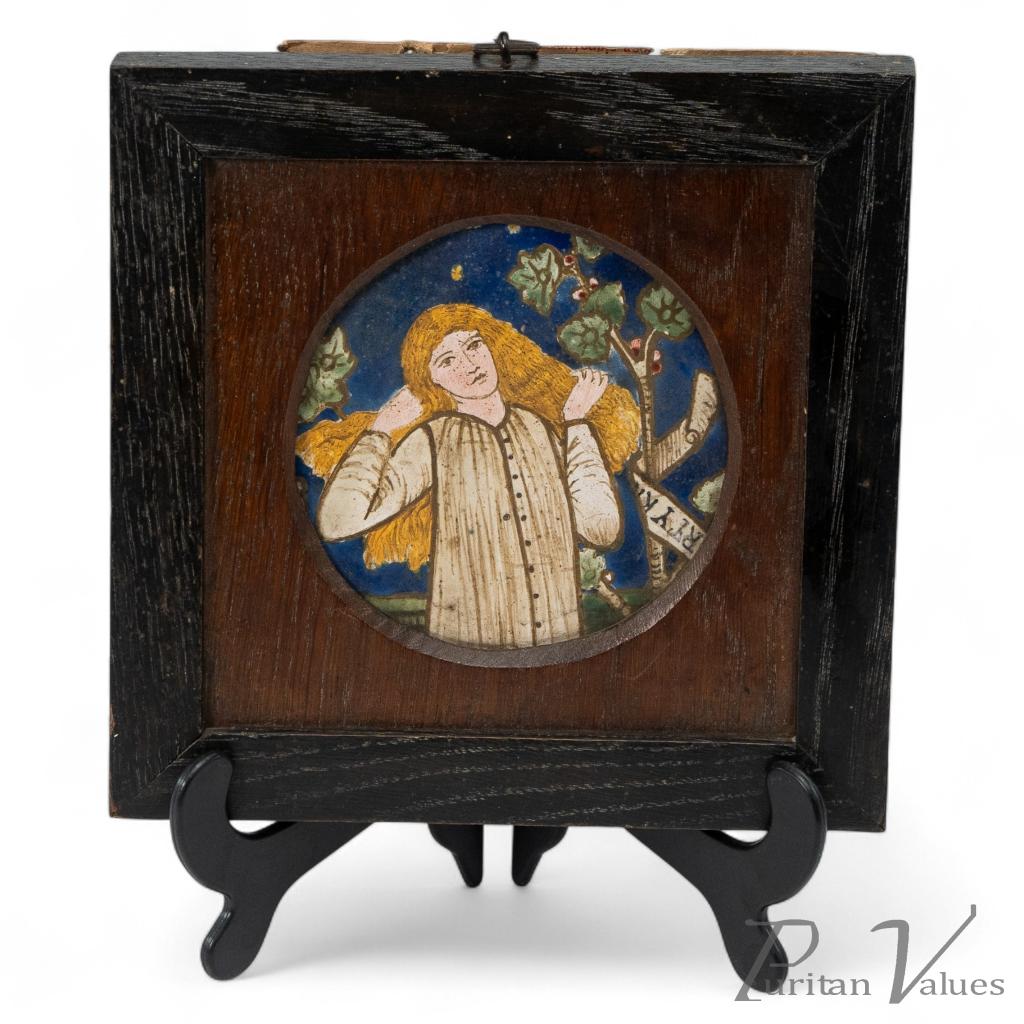
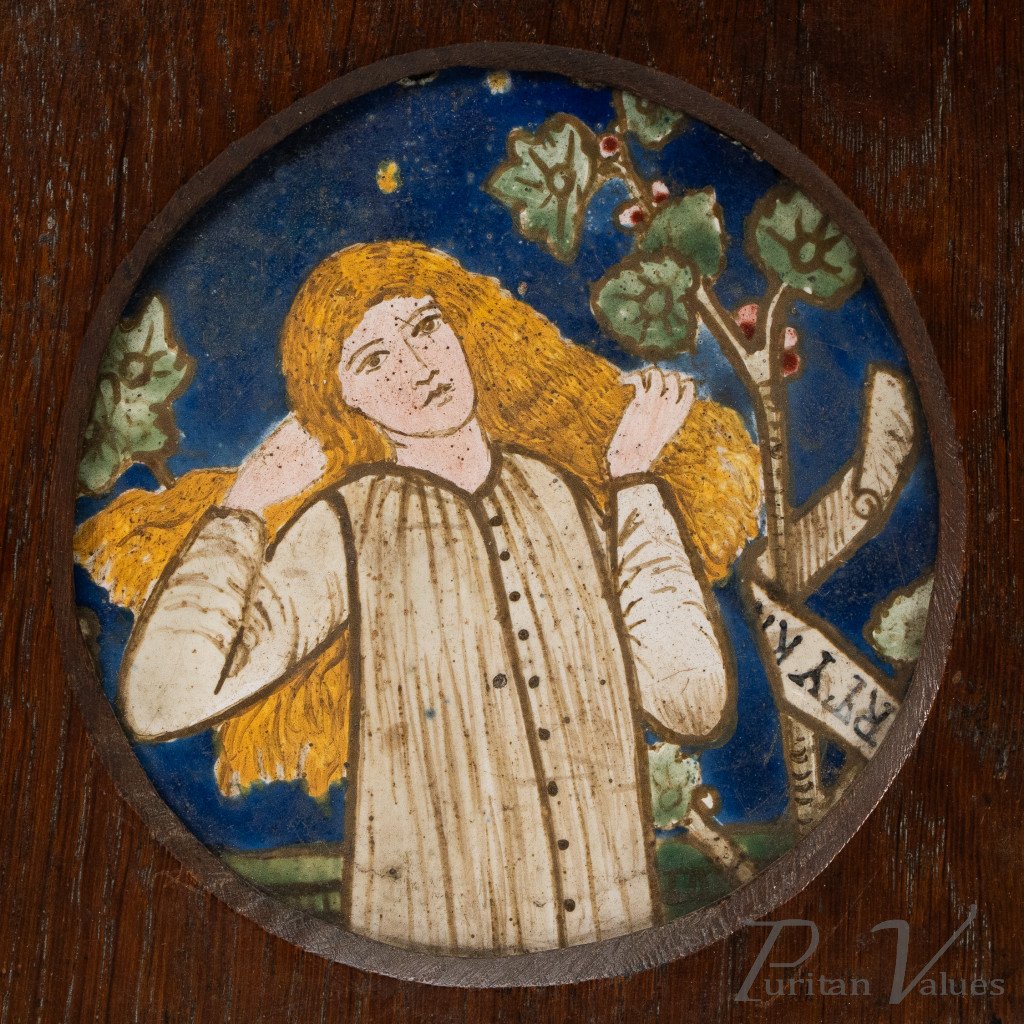
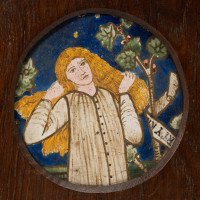
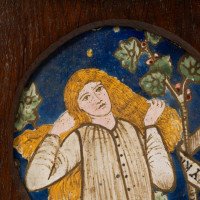
'THISBE' A hand-painted tile. Designed and possibly hand-painted by Edward Burne-Jones in 1861–1862 for Morris and Co.
A rare Arts and Crafts Pre-Raphaelite hand-painted tile depicting Geoffrey Chaucer's poem, The Legend of Goode Wimmen.
This is the upper part of a two-tile panel.
The inscription in the banner to the right of her head, taken from a two-tile panel, would read "IMAGO THISBES BABYLON / MARTYRIS".
This is Latin and translates as: "The Image of Thisbe of Babylon, Martyr."
In the poem, Chaucer profiles twelve mythic women who were completely faithful to their lovers, even unto death. Thisbe’s story is a famous tragedy: Pyramus was deeply in love with Thisbe, but they were forbidden to marry by their parents. They agreed to meet at a tomb outside Babylon. Thisbe arrived first and was frightened away by a lioness, accidentally dropping her veil. When Pyramus arrived and found her bloodied veil, he thought she was dead and took his own life. When Thisbe returned, she found his body and committed suicide with the same sword.
The tile's inscription depicts Thisbe as a mythological character and a secular "martyr" who died for true love.
A complete two-piece tile panel sold at Christie's, London for £16,450 in 2000:
https://www.christies.com/en/lot/lot-1920173?ldp_breadcrumb=back
That exact same tile panel is now in the Victoria and Albert Museum and does not have the rich, vibrant colours of the tile we have here:
https://eb-j.org/browse-artwork-detail/Mjc2NzQ=
It seems that 'THISBE' is the rarest of all of the twelve tile designs from The Legend of Goode Wimmen by Edward Burne-Jones.
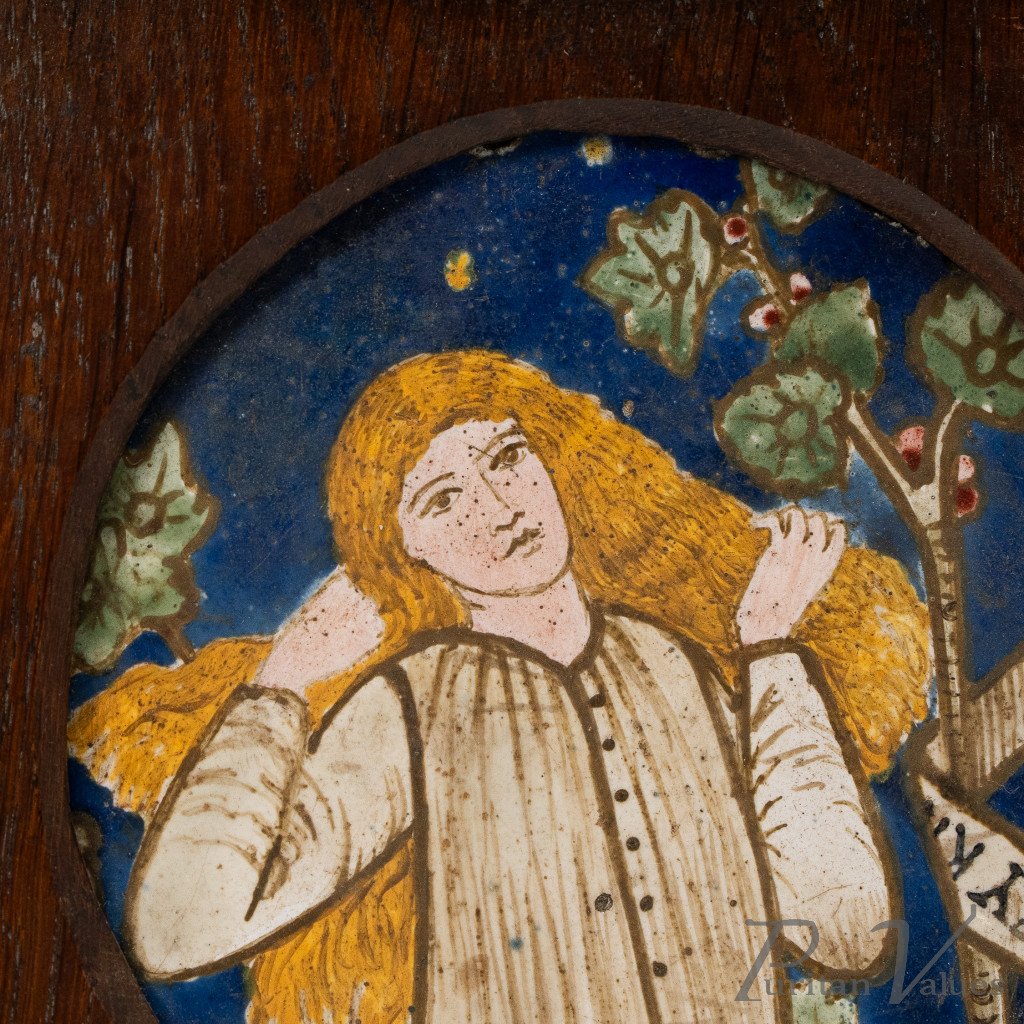
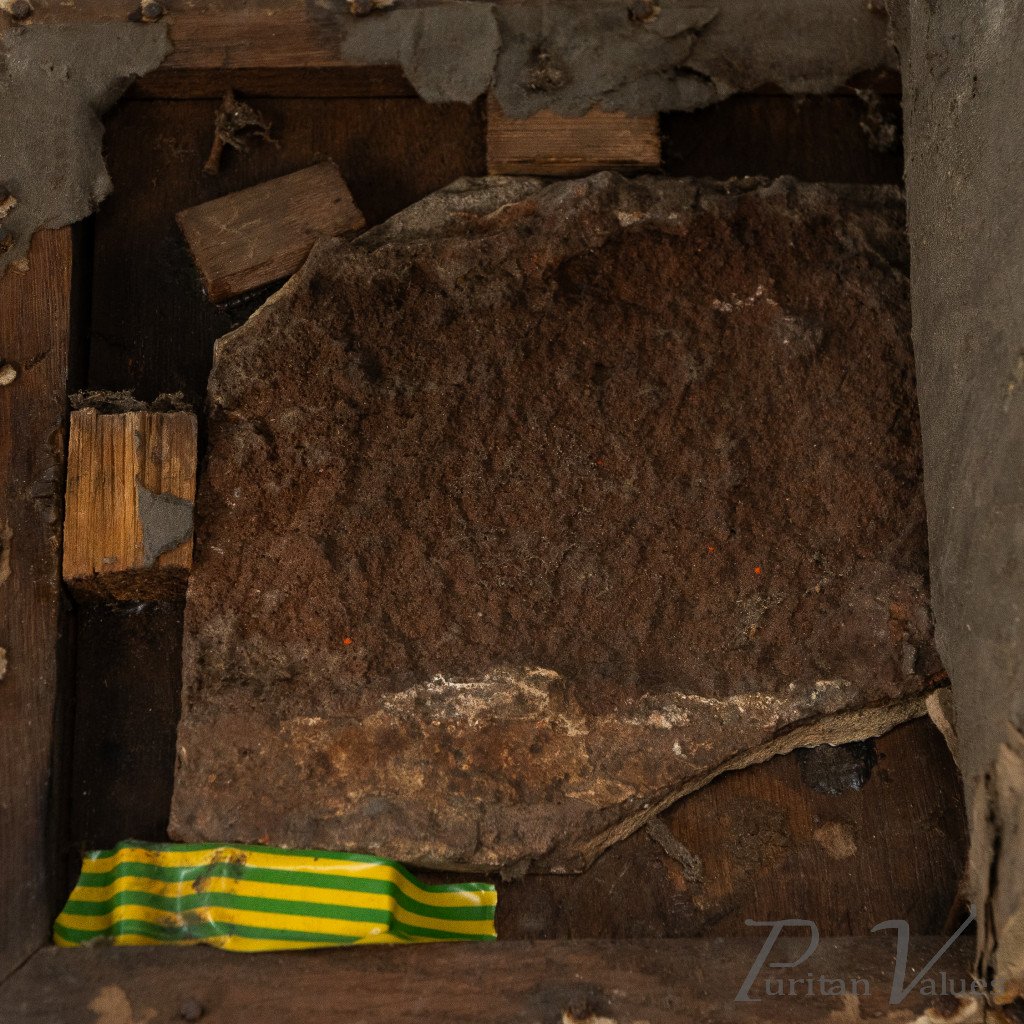
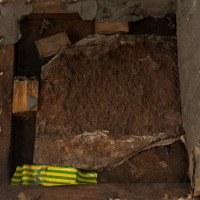
The tile has at some point been damaged and is missing a corner, which we have shown in one of the images. It seems reasonable to suggest that this is why it had a circular frame specially made for it.
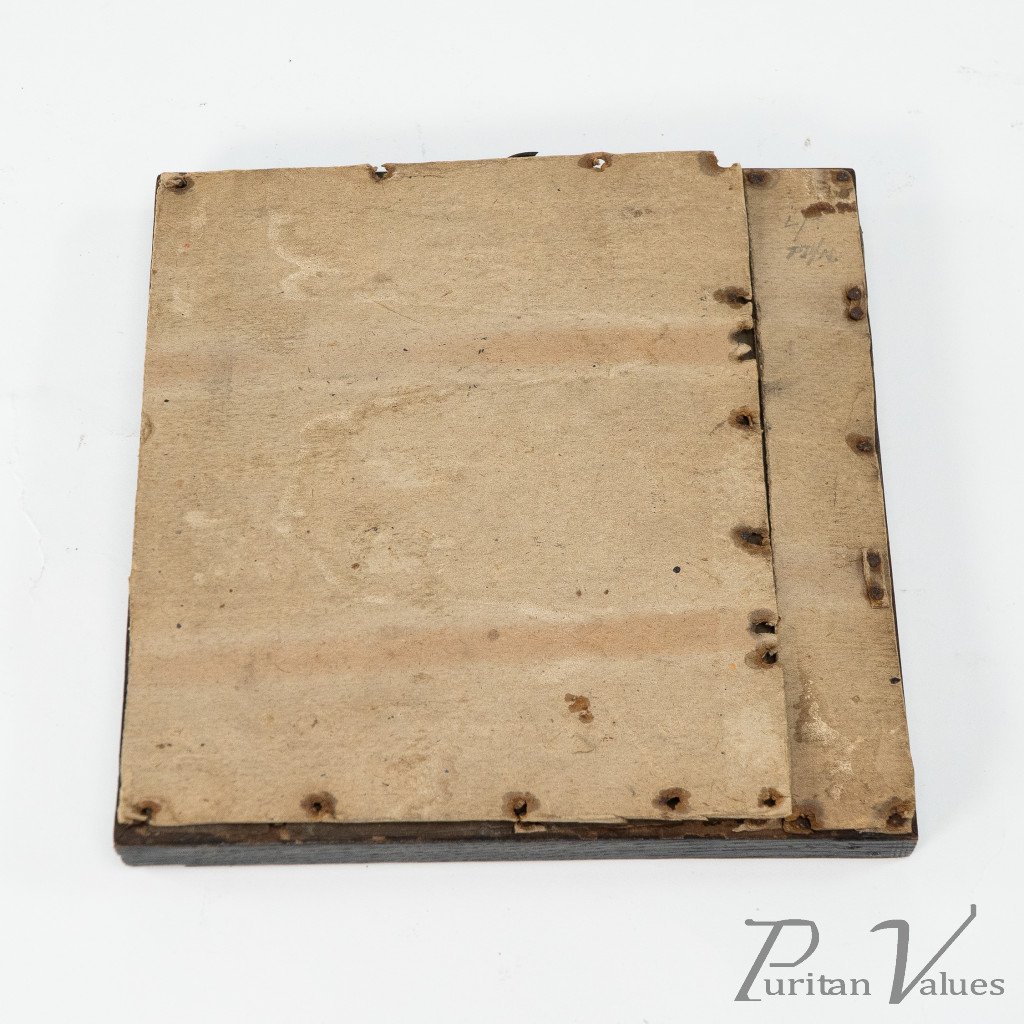
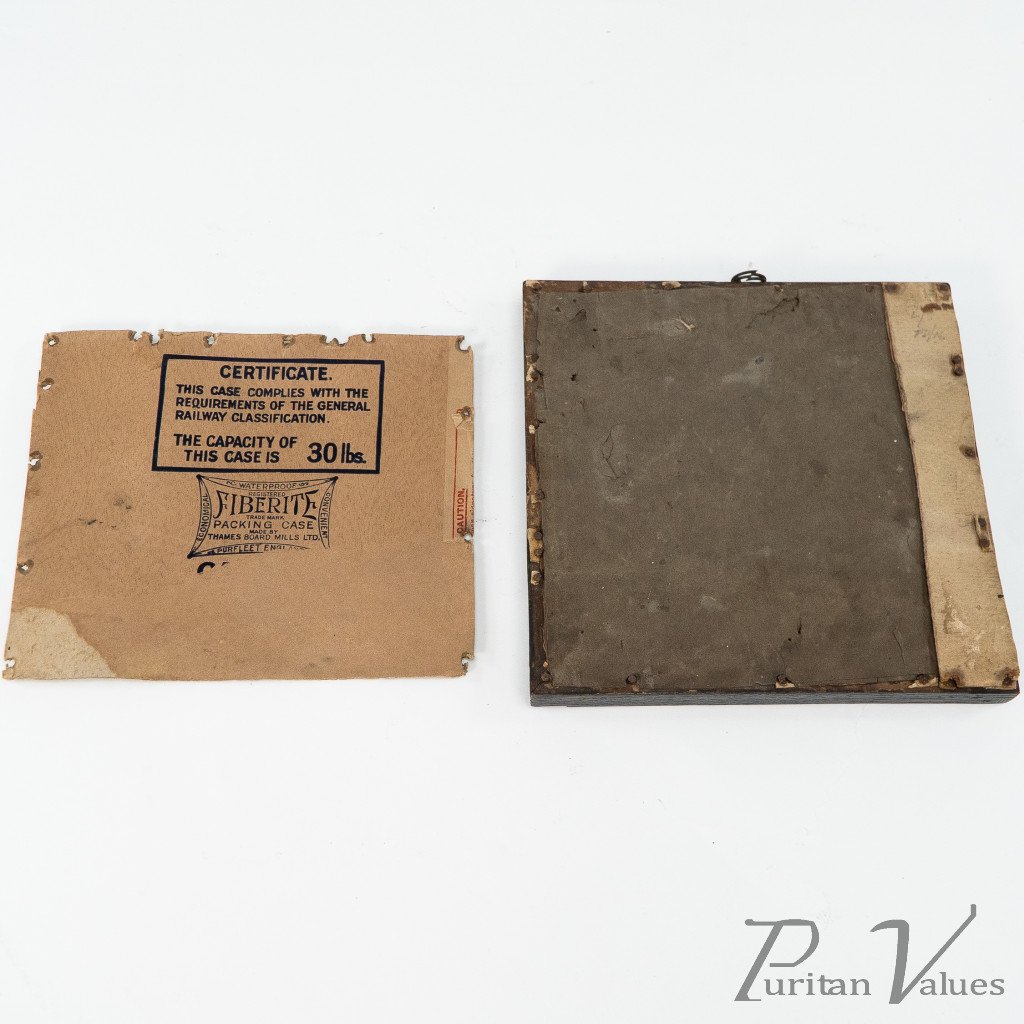
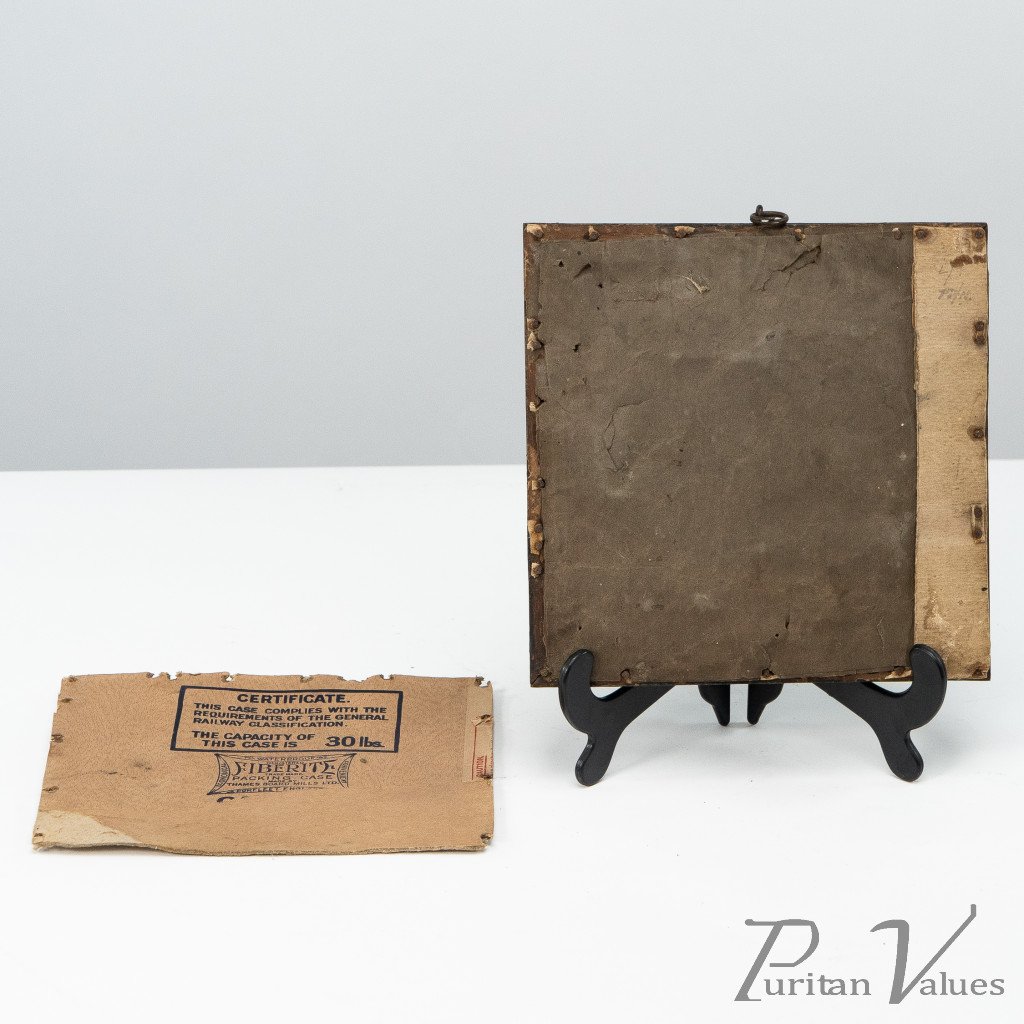
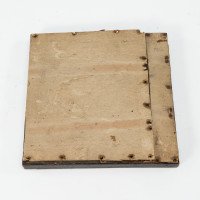
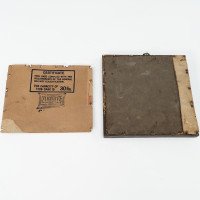
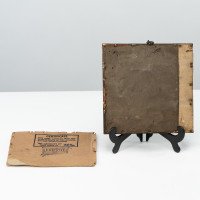
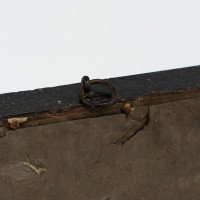
The Fiberite packing we found inside the frame dates back to the 1920s or 1930s, so it is likely this is when the frame was made.