




Arts & Crafts Furniture
“Useful and beautiful”, a celebration of honest materials, handcraftsmanship and design.
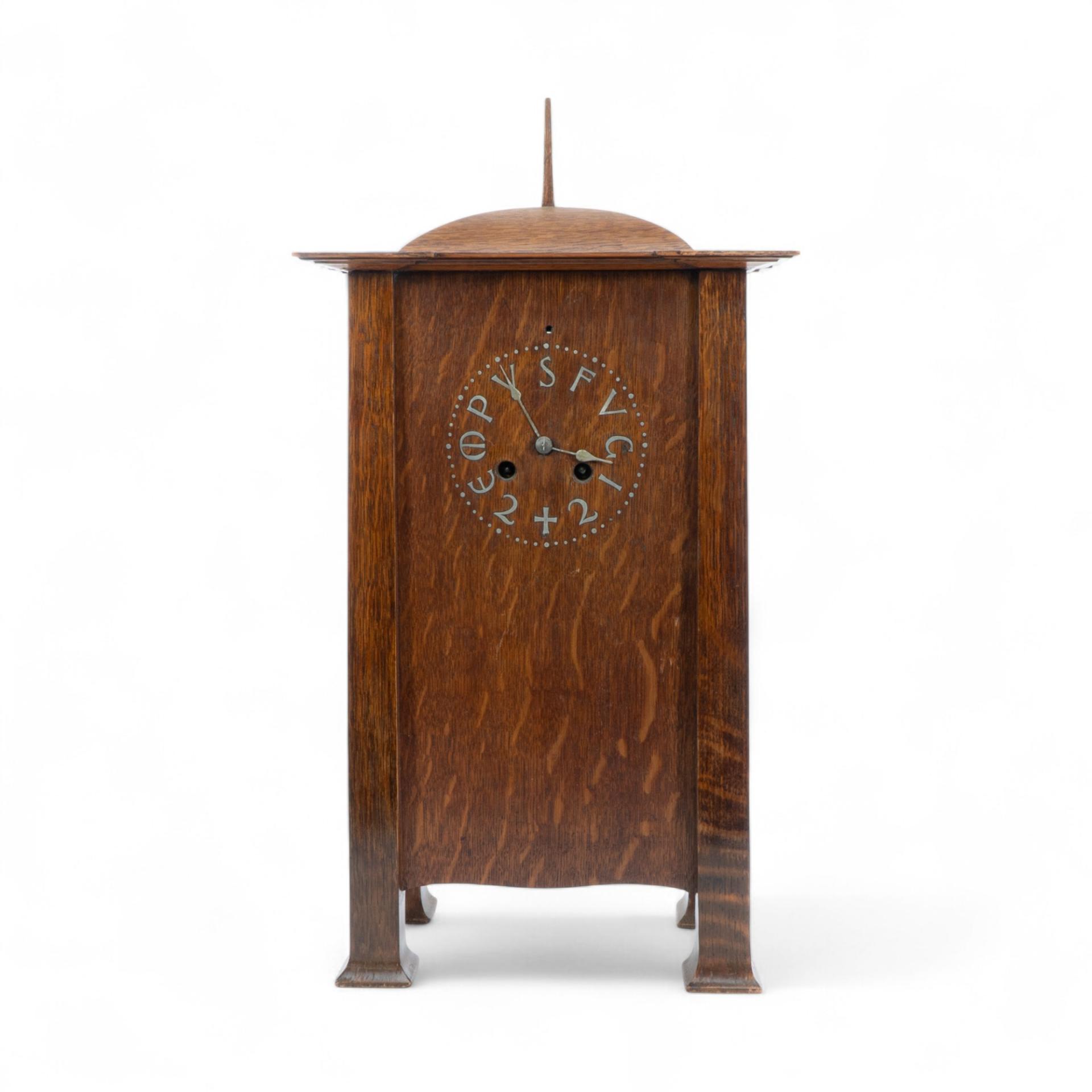
Pictured: C. F. A. Voysey (1857-1941). A rare Arts and Crafts oak mantel clock, the dial inlaid with pewter letters 'Tempus Fugit', enclosing a simple clock movement with striker and pendulum. c. 1902.
Truth to Materials & Craft
The Arts & Crafts Movement came about at a time when much of the furniture being produced in England was heavily decorated, often with very little thought given to the way it was made. Designers such as William Morris believed in honesty in design and construction, and that the things we surrounded ourselves with in our everyday lives should be useful as well as beautiful.
There was a great appreciation of the materials the craftsmen worked with, particularly English oak, walnut, ash and other native timbers. A good piece of oak, well chosen and beautifully worked, needs very little decoration. Much of the inspiration came from nature, with wonderful floral designs worked into the furniture in copper, pewter and decorative inlays.
Look closely at a good piece of Arts & Crafts furniture and you can see the care that went into selecting the timber and the little details in its construction. Much of the pleasure in owning these pieces is appreciating the skill of the craftsmen who made them, and here we are, over a hundred years later, still enjoying their work.
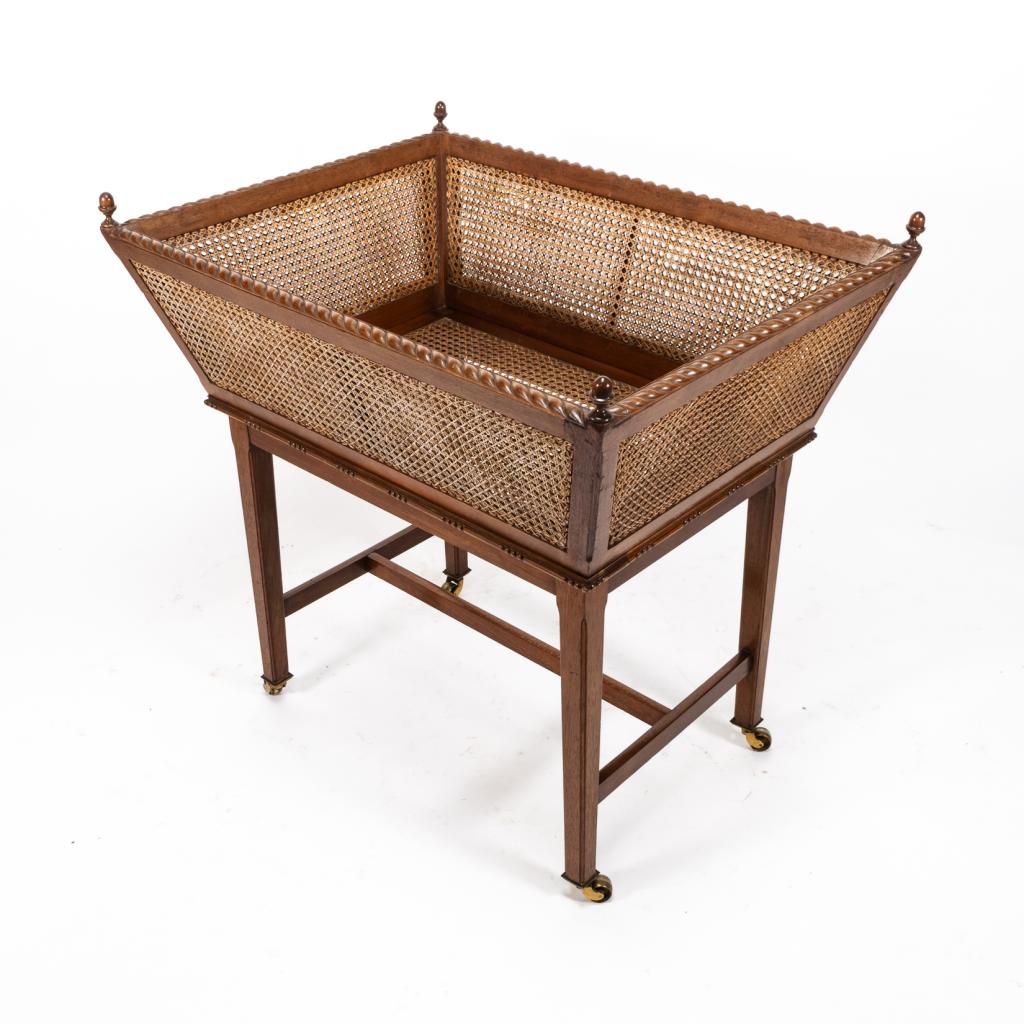
Pictured: A rare newspaper basket in walnut designed by Sir Edwin Landseer Lutyens during the Arts and Crafts movement (1880–1910). Created for his own household use, the basket has a tapering body with a gadrooned top edge and ball mouldings around the base. It stands on square moulded tapering legs united by an H-shaped stretcher, and retains its original brass and ceramic castors. The acorn finials have been replaced.
Published and illustrated in Truth, Beauty and Design: Victorian, Edwardian and Later Decorative Art, Adrian J. Tilbrook and Fischer Fine Art, Exhibition Catalogue, p. 69, fig. 168. Lutyens’ daughter Mary confirmed that this basket was designed for his own use prior to 1919, when the family lived at 13 Mansfield Street, London. Following Lutyens’ death in 1944, it passed to his wife Emily, and subsequently to their daughter Mary in 1966.
“Have nothing in your houses that you do not know to be useful, or believe to be beautiful.”
“Simplicity in design is analogous to sincerity in character… things must be what they seem.”
“Art is the well-doing of what needs doing.”
A short introduction
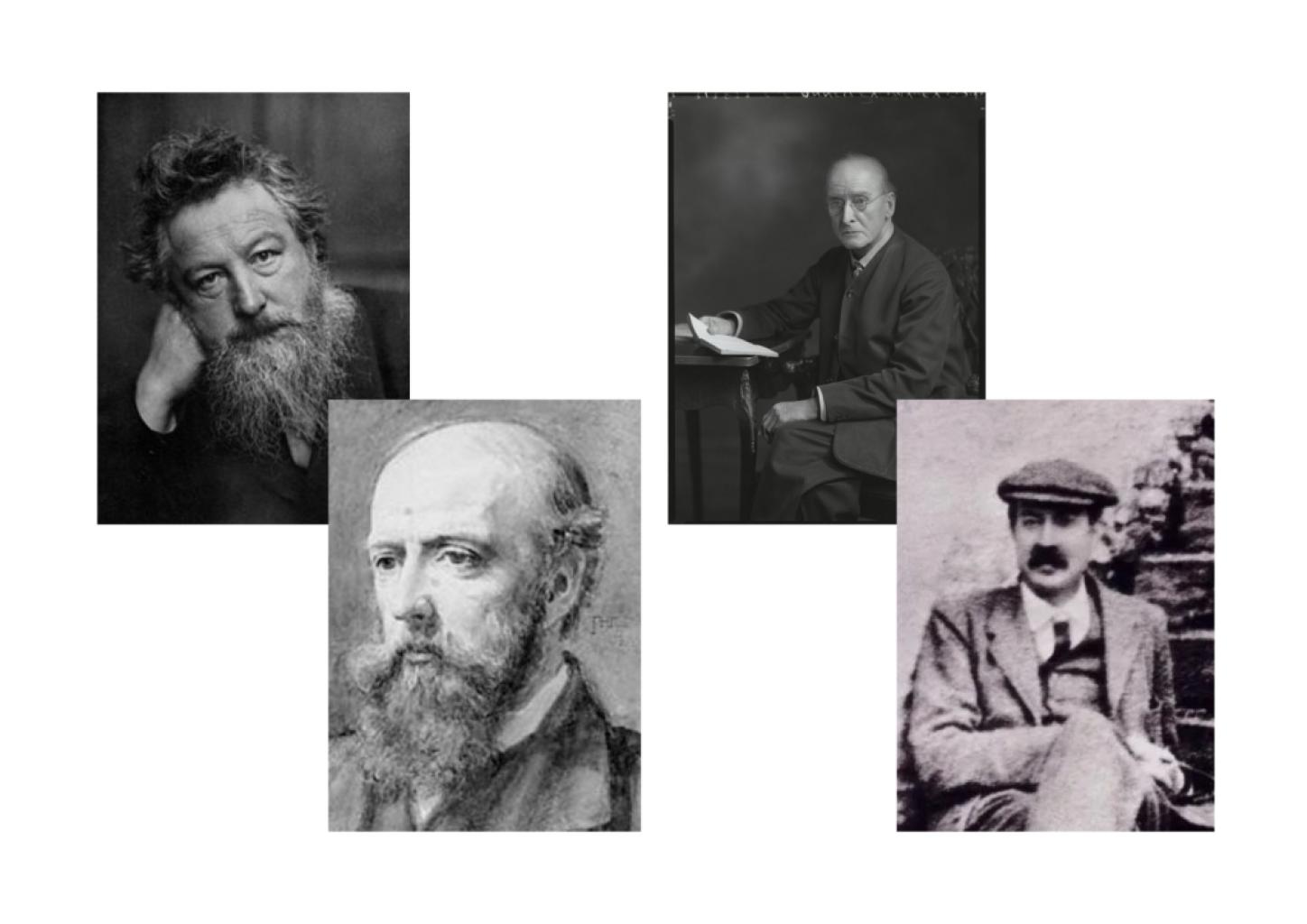
Key Figures in the Arts and Crafts Movement
William Morris (1834–1896)
Generally regarded as the father of the Arts & Crafts Movement, Morris was a designer, poet and social reformer with very strong views on the way things were being made. Through Morris, Marshall, Faulkner & Co., later Morris & Co., he produced some wonderful wallpapers and textiles, drawing much of his inspiration from nature. He believed that the everyday things we had in our homes should be useful as well as beautiful.
Philip Webb (1831–1915)
Often referred to as the father of Arts & Crafts architecture, Webb was a close friend of William Morris, for whom he designed the Red House. An accomplished architect and furniture designer, Webb had a great appreciation of traditional English country furniture, favouring simple, well-proportioned designs with an emphasis on the quality of the timber and honesty in construction.
Charles Francis Annesley Voysey (1857–1941)
One of the great architects and designers of the Arts & Crafts Movement, Voysey designed everything from furniture and metalwork to wallpapers and textiles. His furniture, often made in oak, was beautifully simple, with distinctive tapering uprights and his much-loved heart-shaped cut-outs. Some of his designs were remarkably modern for their time.
Ernest Gimson (1864–1919)
Having trained as an architect, Gimson moved to the Cotswolds with the Barnsley brothers, Sidney and Ernest, where they were to establish a great tradition of furniture making. Gimson had a wonderful eye for proportion and detail, taking much of his inspiration from traditional English country furniture. His use of beautifully selected timbers, exposed dovetails and fine decorative inlays made for some exceptional pieces of furniture.