



E. W. Godwin. Rare Anglo-Japanese Bookcase
Provenance
Alexander Constantine Ionides (1810-1890), Holland Park, London, circa 1871
Thence by Descent
Mrs G. M. Lawrence, Colchester
Thence by Descent
Anthony Geering, United Kingdom
Exhibition History
'Edward W. Godwin and Oscar Wilde: Dandies, Decadence, Modernity', Brohan Museum, Berlin, April 2 - August 30, 2026
Literature / References
Susan Weber Soros, 'The Secular Furniture of E. W. Godwin', Yale University Press, 1999, p. 201, pl. 321, 321.1 (related bookcases illustrated)
Tobias Hoffmann, Theresa Augustin and Fabian Rerifferscheidt, 'Edward W. Godwin and Oscar Wilde: Dandies, Decadence, Modernity', Ernst von Siemens Kunstiftung, Brohan Museum, 2026, p. 59 (present lot illustrated)
Susan Weber Soros, 'The Secular Furniture of E. W. Godwin', Yale University Press, 1999, p. 157, pl. 223.1 (related sliding-door table design)
Width: 38.98 in (99 cm)
Depth: 19.49 in (49.5 cm)
1870-1879
About this piece
Lot 29W
Edward William Godwin (1833-1886) for William Watt
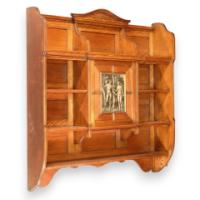
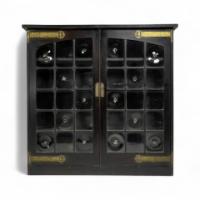
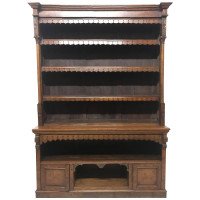
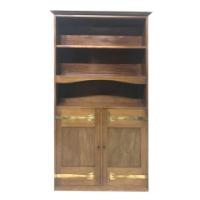
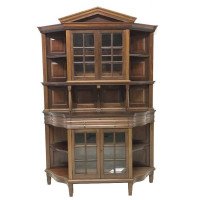
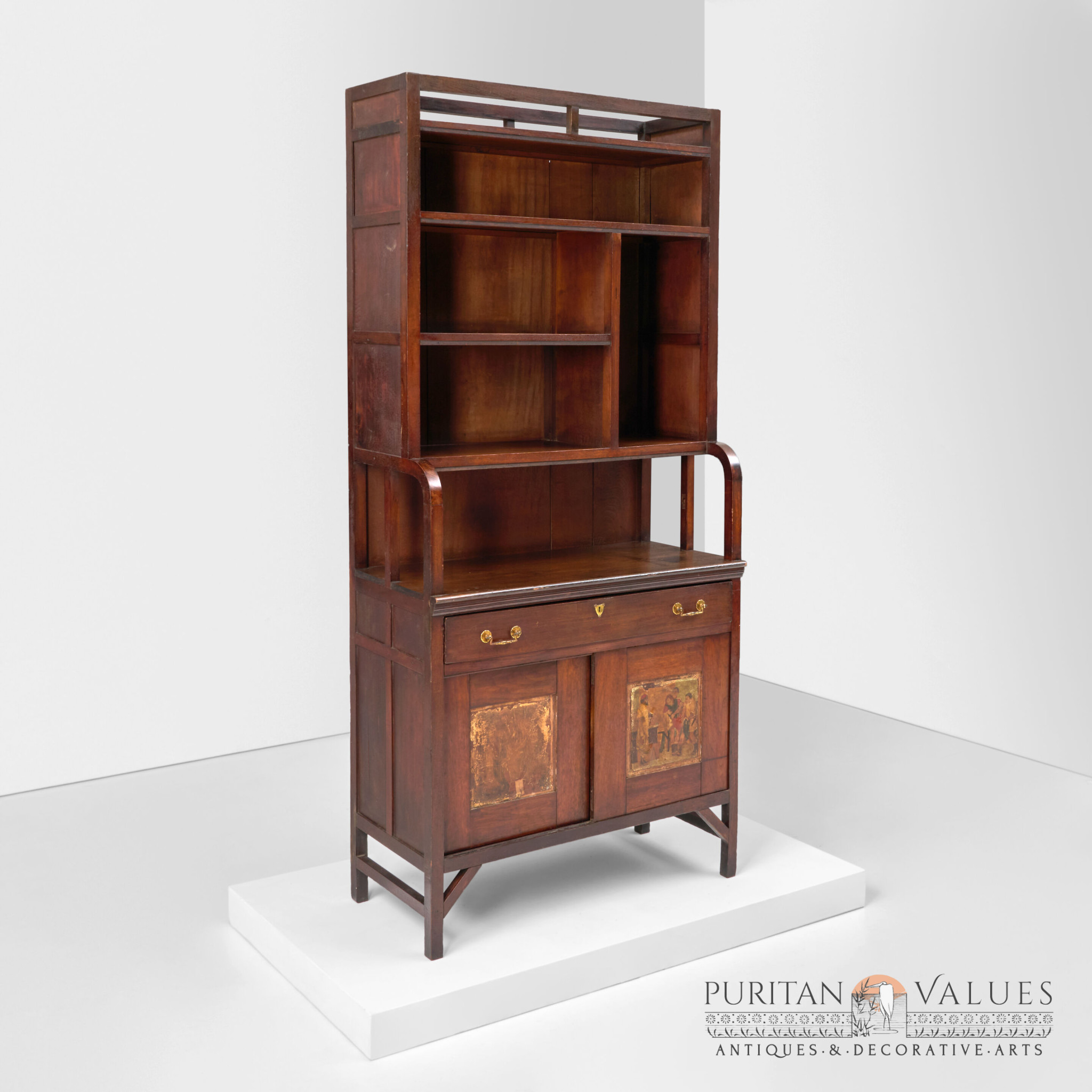
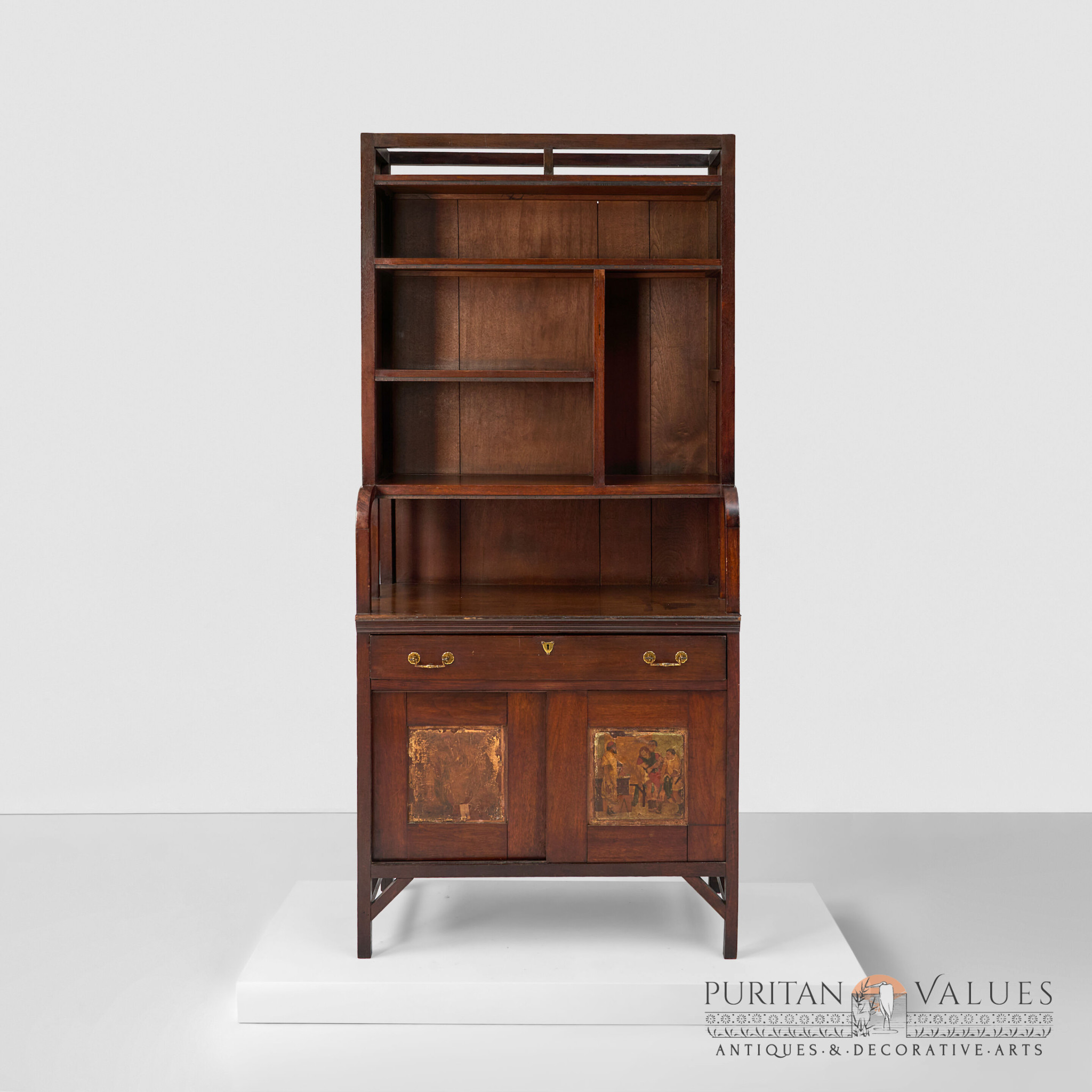
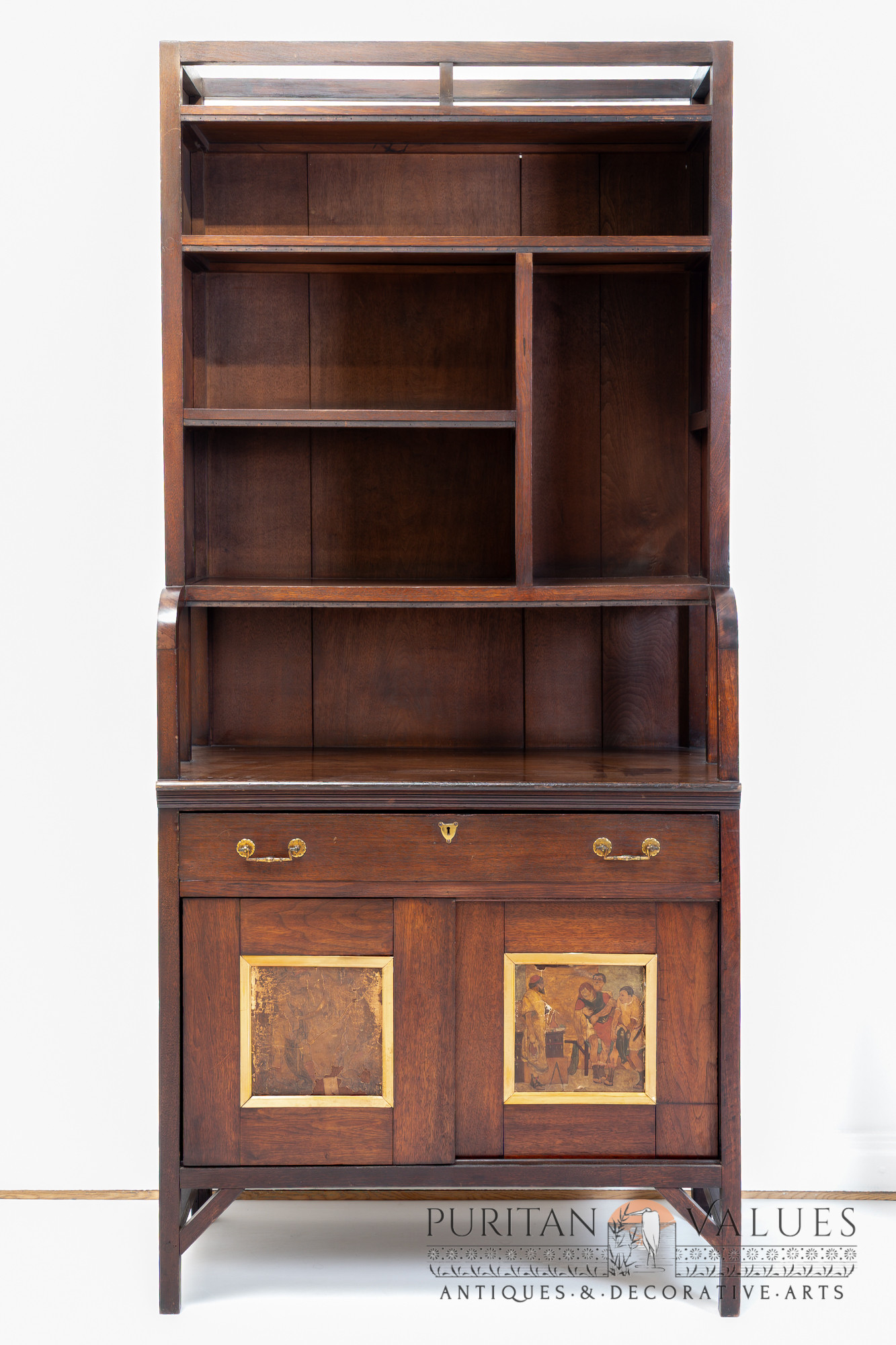
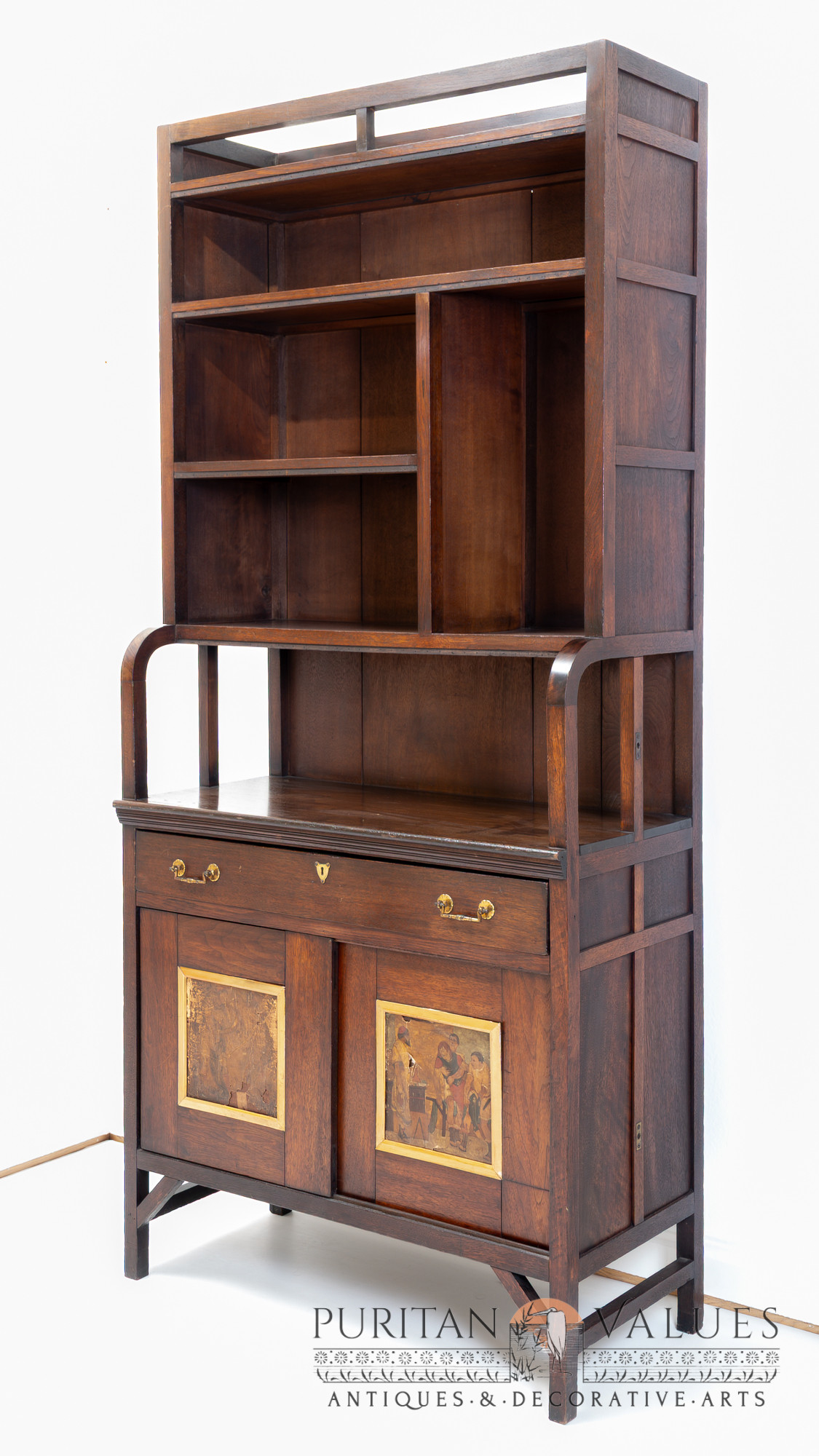
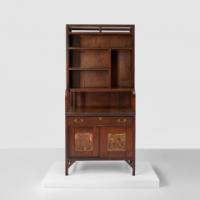
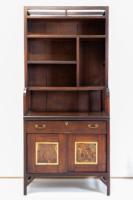
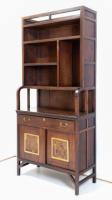
A rare and important Anglo-Japanese walnut bookcase, circa 1871, with brass handles and shield-style escutcheon; the lower cupboard with two sliding doors inset with painted panels attributed to Henry Stacy Marks.
See Soros, p. 201, Pl. 321, for an illustration of a related example. See also Christie's sale "Important 20th Century Design," 26th May 2005, lot 47.
The design and construction of these early bookcases share the same design that the iconic sideboard series have in three ways.
1. With economy in mind, Godwin has designed all of the shelves using thin panels set into larger square frames. He has also used the same design detail to the panels on the sides of the bookcase, thus making the piece altogether lighter and without sacrificing the unbroken outline.
2. Below the upper bookcase sides are extending rounded arms which follow forward and connect to the upper lower cupboard sides.
3. The angled side supports to the legs are identical to the leg supports on the iconic sideboard series. 4. Godwin also used sliding doors for a table made by Collinson & Lock that were part of a commission (1873–75) for William Randolph Innes Hopkins house, Grey Towers, Nunthorpe. V&A: AAD, E.487–1963, and Soros, Pg. 157 Pl. 223.1. Drawing on the right, noted 'sliding doors'.
Literature:
In 1949, Dudley Harbron photographed and recorded a bookcase that he concluded had been made for Dr. George Bird, a friend of Ellen Terry (see Godwin's ledger for 17th September 1871) and the father of Elfrida Bird, who married Luke Ionides. That bookcase, now cut down, together with another corresponding example, was then in the possession of Mrs Lewis Clarke, having been inherited from her grandfather, Alexander Ionides, son of Elfrida and Luke.
A third bookcase was known to have been in the possession of Mrs Alecco Ionides at about the same time (Soros, p. 201 Pl 321 and pl 321.1). Despite Harbron's research and evident interest in these bookcases, they were poorly maintained by their owners, and two were thought to be destroyed (Soros, p. 201), whilst one of the examples had its shelved superstructure removed and discarded. Susan Soros notes on Pg. 201 that this cut-down version is in "stained oak"; this is a small error, as one can see in the illustration, it is made from walnut.
Both being made from walnut and having identical measurements to their bases suggests the most likely event is that only one of the three cabinets was completely destroyed, and the cut-down version is likely to be one of two thought to have been destroyed, which it partially was. The present example is the only known example in existence to have emerged complete and therefore unique.
The painted panels to the cut-down 'Bird-Ionides' Soros (Pg 201 Pl 321) depict scenes from Greek antiquity. On the present version, there is a painted panel to one side, attributed to Henry Stacy Marks.
The pencil and watercolour cartoon to the other panel, although quite faded, has the feel of Edward Burne-Jones's work. Interestingly, the panels were originally believed to be executed by Burne-Jones, although Harbron in 1949 maintained the panels were painted by Charles Glidden, who died young at 20 years of age.
The panels have been attributed to Henry Stacy Marks by Christie's Art Department. Henry Stacy Marks is well documented to have painted for Godwin. The figures in the painted panel are of two men helping an injured man; their attire points to Greek mythology.
The opposite panel is quite different and depicts a prince or knight about to kiss a maiden or princess. She is looking into his eyes, reaching out and touching his arm, about to kiss. There is a sword lying at his feet, and his own sword is held to his waist or in his belt, with the blade in view and pointing to the earth. There is a tail of what could be a dragon adjacent to the sword, and possibly a person that may have been slain lying by the maiden. In the right-hand corner, there is a castle with a banner flying and a crescent moon beside it.
The Ionides Family.
The Ionides family were probably the biggest and most generous patrons of the arts in the late 19th century, building one of the most important and impressive collections of the period. As refined collectors of art from the Aesthetic Movement, Ionides' pool of artists to choose from was thoroughly connected through his high-society circle of friends, which included Edward Calvert and George Frederick Watts, James McNeill Whistler, Edward Poynter, George Du Maurier, Thomas Armstrong, Dante Gabriel Rossetti, and Edward Burne-Jones. William Morris, Philip Webb, Walter Crane, and Thomas Jeckyll, all part of his circle of friends, were commissioned to re-decorate 1 Holland Park, their family home, which is all well documented.
Henry Stacy Marks (1829-1898) was a painter, watercolourist, and illustrator who worked as a muralist and decorator for William Burges, Godwin, and Alfred Waterhouse. In 1869, Marks was commissioned by Godwin to execute an allegorical frieze to the dining room of Dromore Castle, but due to the incurable dampness of Dromore's enormously thick walls, it never came to fruition.
Brass Lock Plates
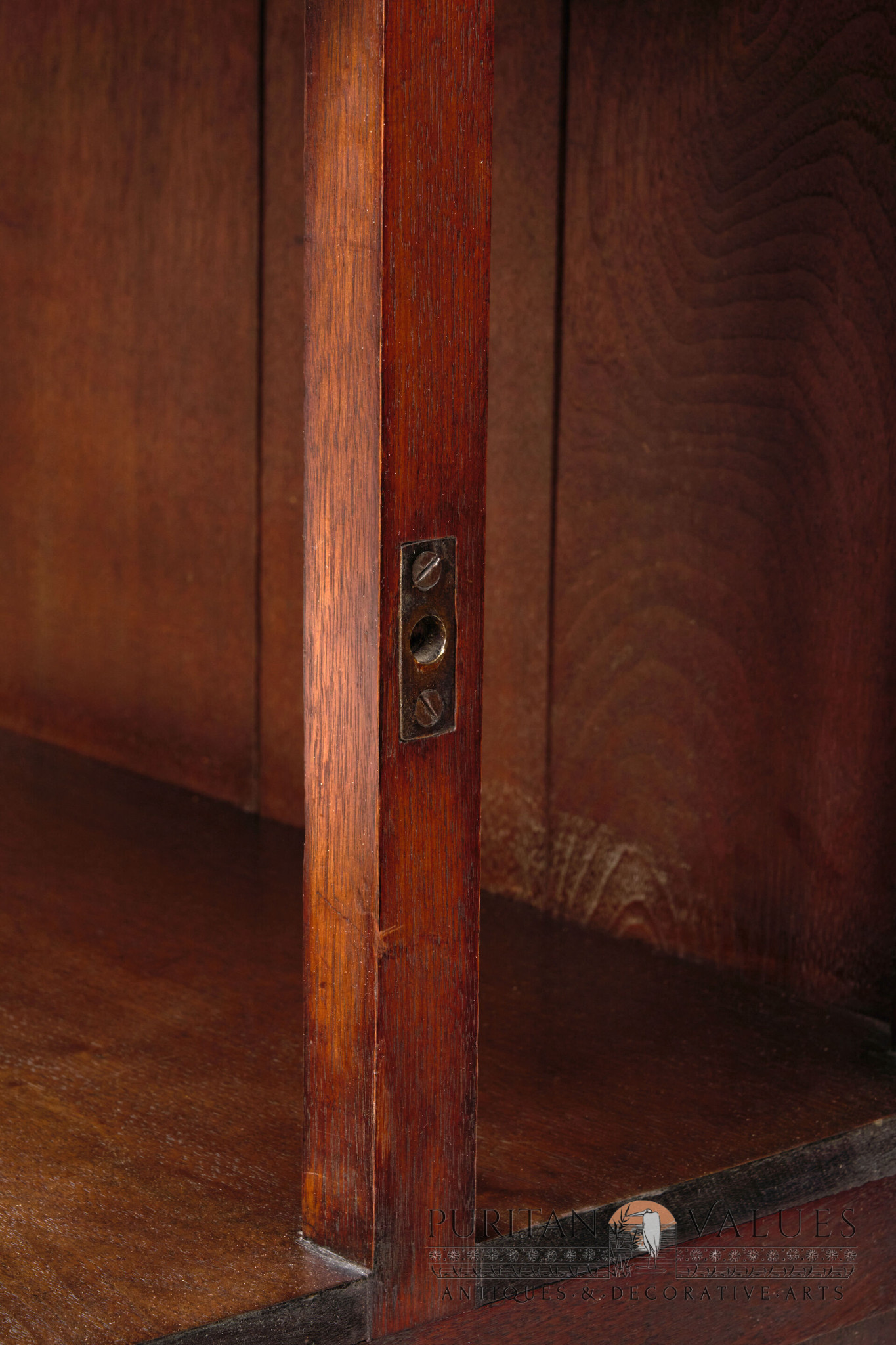
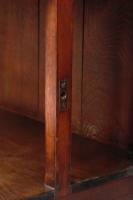
On the present example, there are two brass lock plates to the right-hand side: one in the middle of the central upright that runs through the middle of the bookcase side, and another one in the middle of the same central upright but located in the middle of the lower cupboard. These plates (one now missing) were used for joining two bookcases together and would have utilised a brass thumb screw bolt (also now missing). The sides of this bookcase and the cut-down bookcase are completely flat from top to bottom, which allows for them to butt up perfectly—a design detail that until this version surfaced was unknown.
Provenance
The present bookcase has a depository label to the back of Famine's, Colchester, and handwritten "G. M. LAWRENCE." Mrs G. M. Lawrence was the last owner of it. She was one of the last relatives of the Lawrences and passed away in her 90s in 2004. The Lawrence family owned a very successful lemonade and ginger ale company with factories and warehouses in Beccles, Bungay, and Halesworth, Suffolk.
It was removed from Mrs G. M. Lawrence's house by Durrants Auctioneers, one of the original houses built by the Lawrences in Station Rd, Beccles. At some point in its life, it made the journey down from London to Colchester and spent some time there, although exactly where is unknown. It seems its next move would have been from Colchester to Beccles.
Measurements
The measurements of the cut-down version are identical to the lower half of this version. The cut-down version measures 35 1/4" high, the same height to the open area of this present version. The depth and width of both of these examples conform: 19" deep, 39" wide. The present version measures 89 1/2" high.
E. W. Godwin: The First Modernist, Masterworks from the Anthony Geering Collection
16 December 2026, 10:00 EST
US$60,000 - US$80,000
£46,000 - £61,000
Provenance
Alexander Constantine Ionides (1810-1890), Holland Park, London, circa 1871
Thence by Descent
Mrs G. M. Lawrence, Colchester
Thence by Descent
Anthony Geering, United Kingdom
Exhibition History
'Edward W. Godwin and Oscar Wilde: Dandies, Decadence, Modernity', Brohan Museum, Berlin, April 2 - August 30, 2026
Literature / References
Susan Weber Soros, 'The Secular Furniture of E. W. Godwin', Yale University Press, 1999, p. 201, pl. 321, 321.1 (related bookcases illustrated)
Tobias Hoffmann, Theresa Augustin and Fabian Rerifferscheidt, 'Edward W. Godwin and Oscar Wilde: Dandies, Decadence, Modernity', Ernst von Siemens Kunstiftung, Brohan Museum, 2026, p. 59 (present lot illustrated)
Susan Weber Soros, 'The Secular Furniture of E. W. Godwin', Yale University Press, 1999, p. 157, pl. 223.1 (related sliding-door table design)