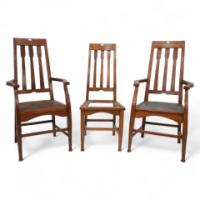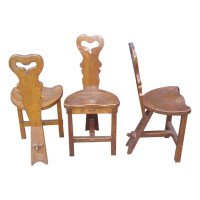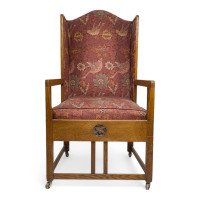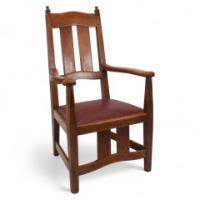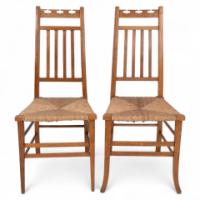




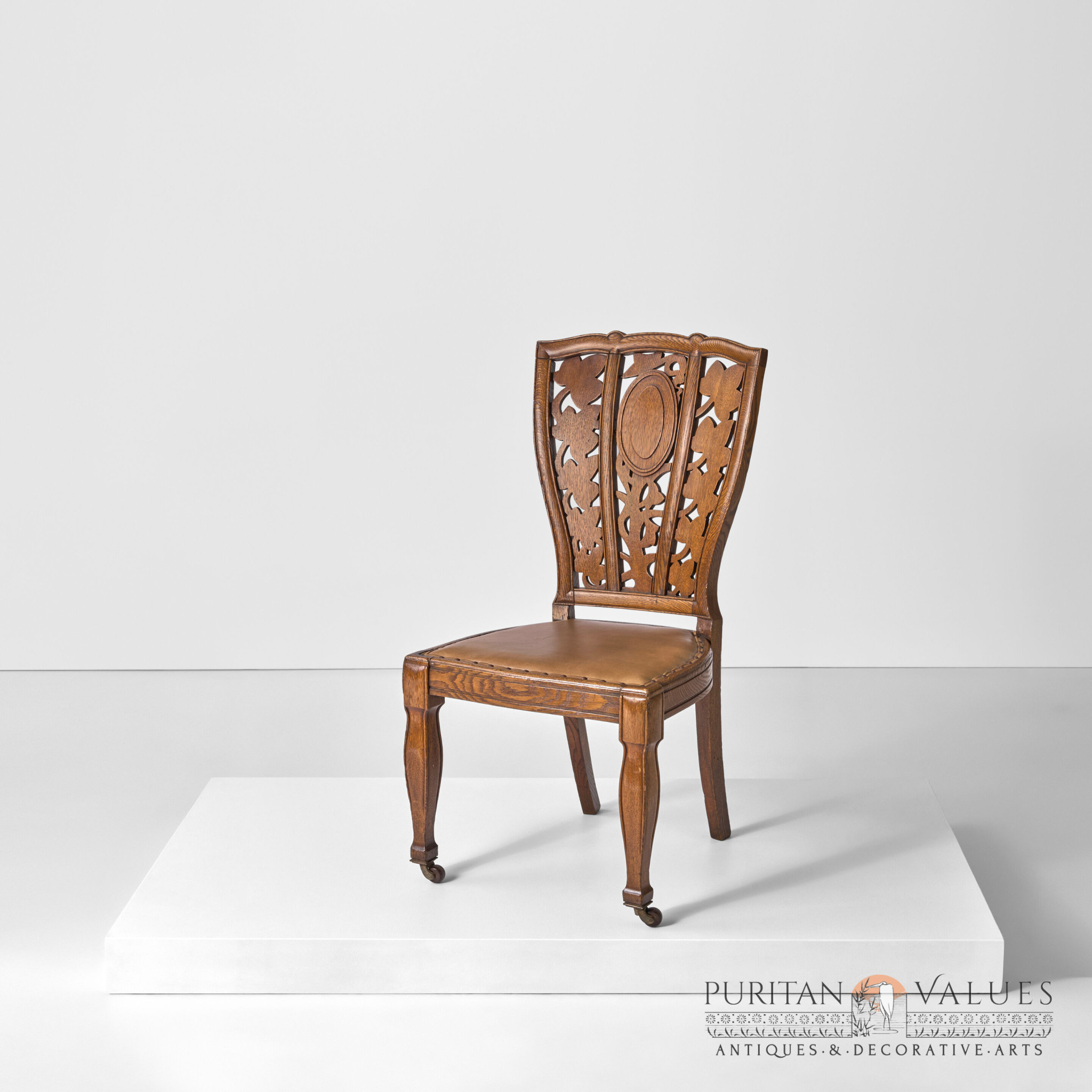
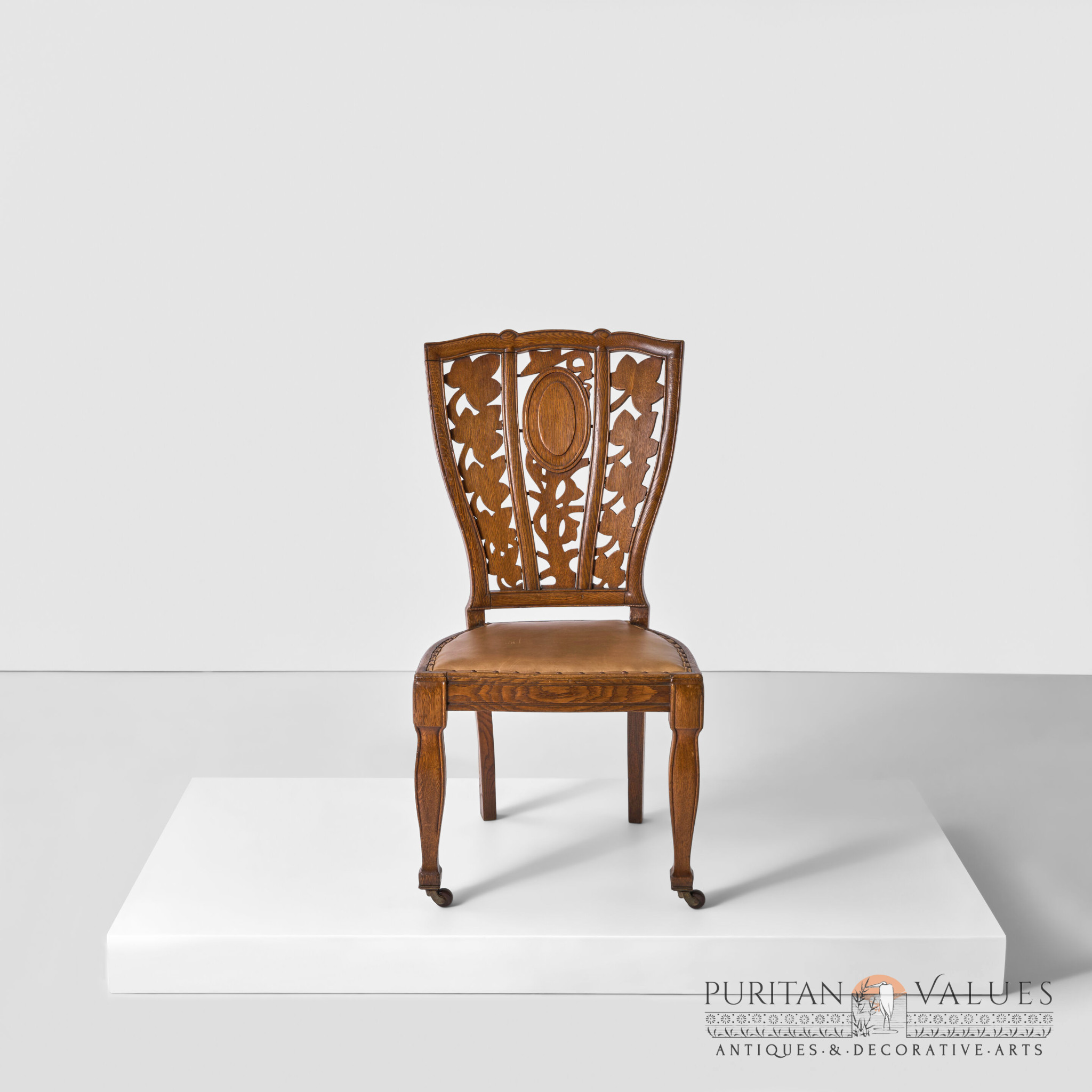
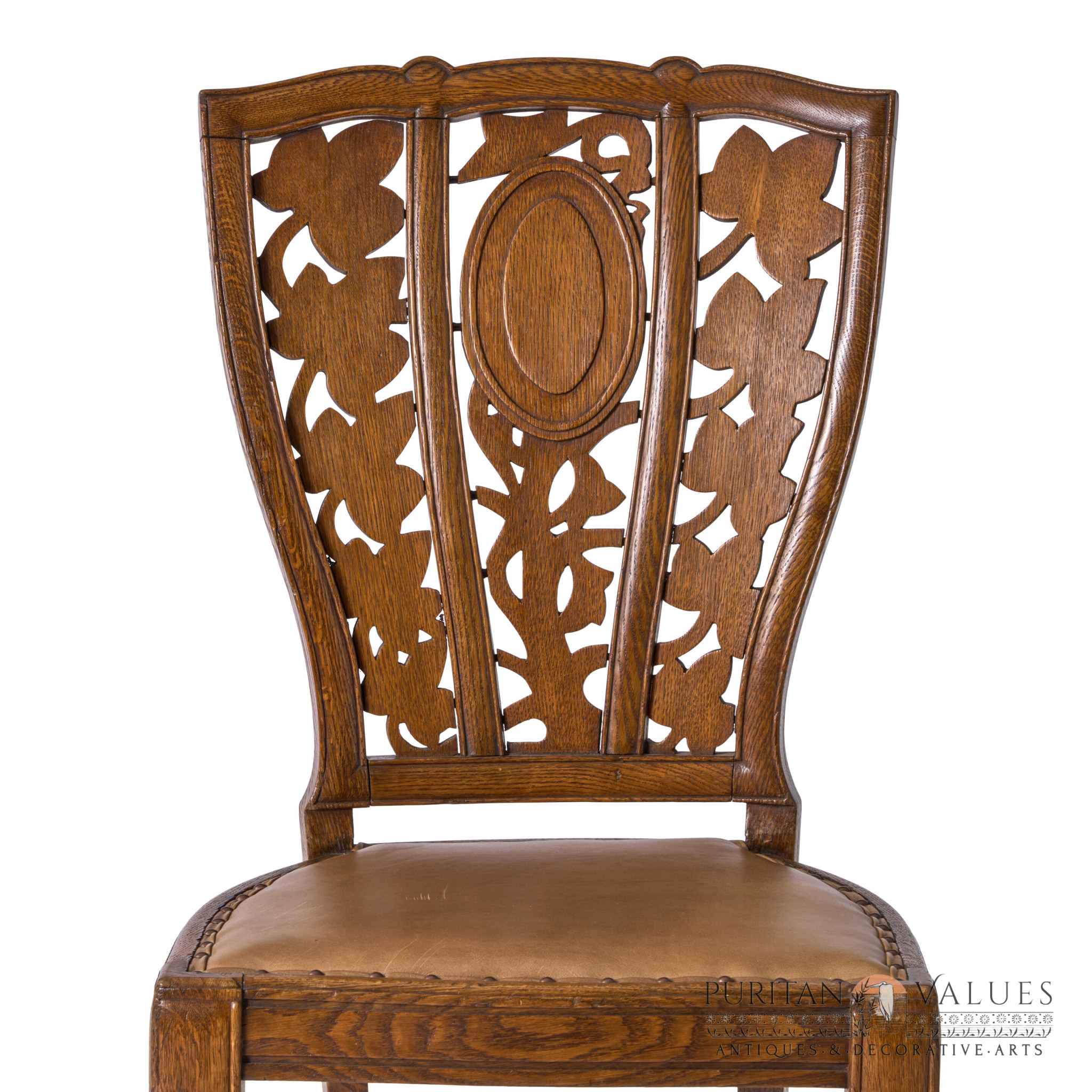
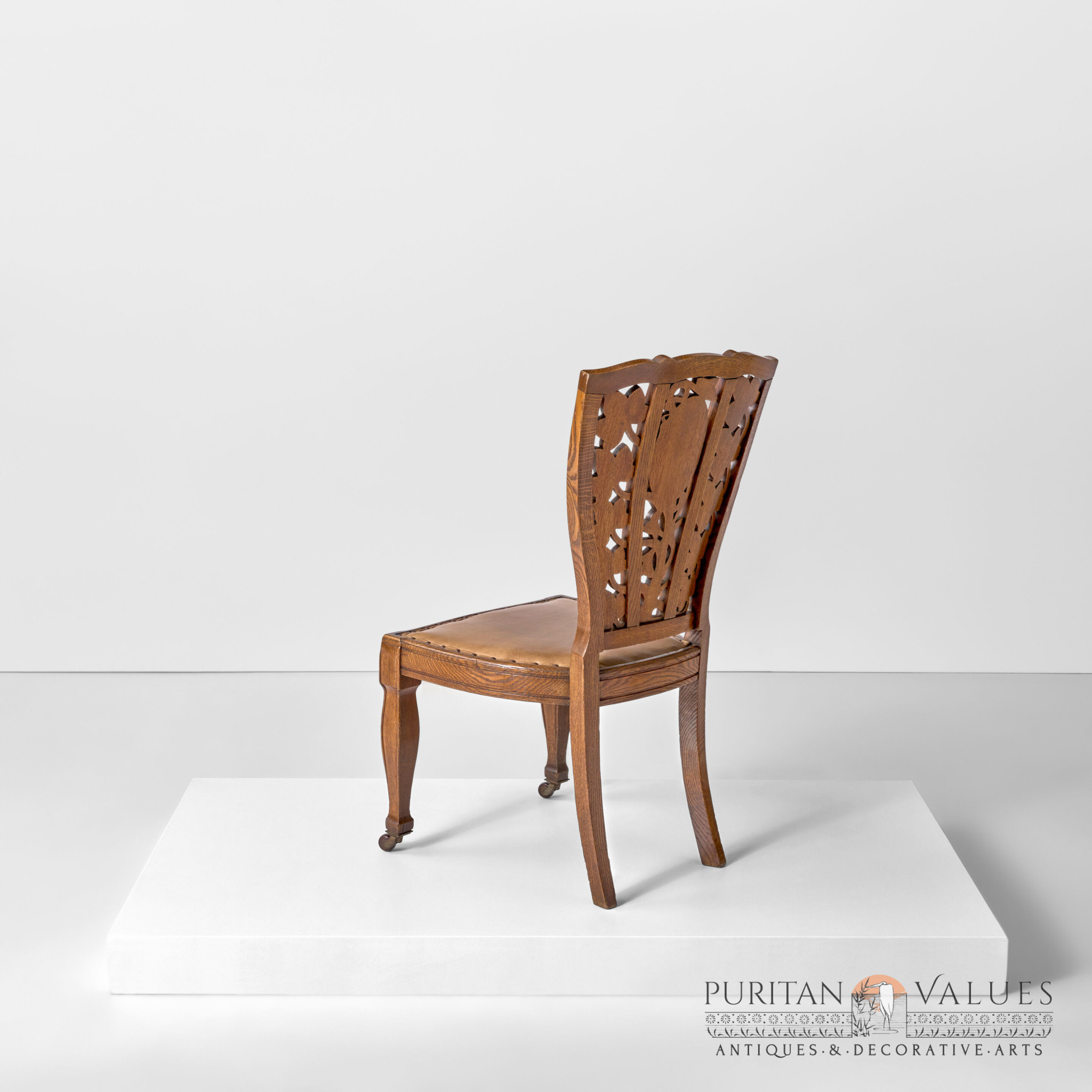
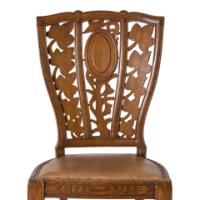
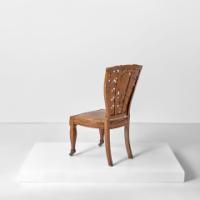
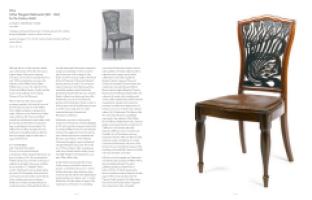
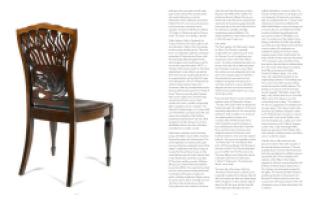
Arthur Heygate Mackmurdo for the Century Guild. Rare and Important Side Chair
Provenance
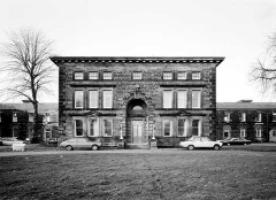
Dr. Thomas Lawes Rogers, Rainhill Hospital, St. Helens, Merseyside
Thence by Descent
The Fine Art Society, London
Anthony Geering, United Kingdom (acquired from the above, 27th November 2017)
Literature / References
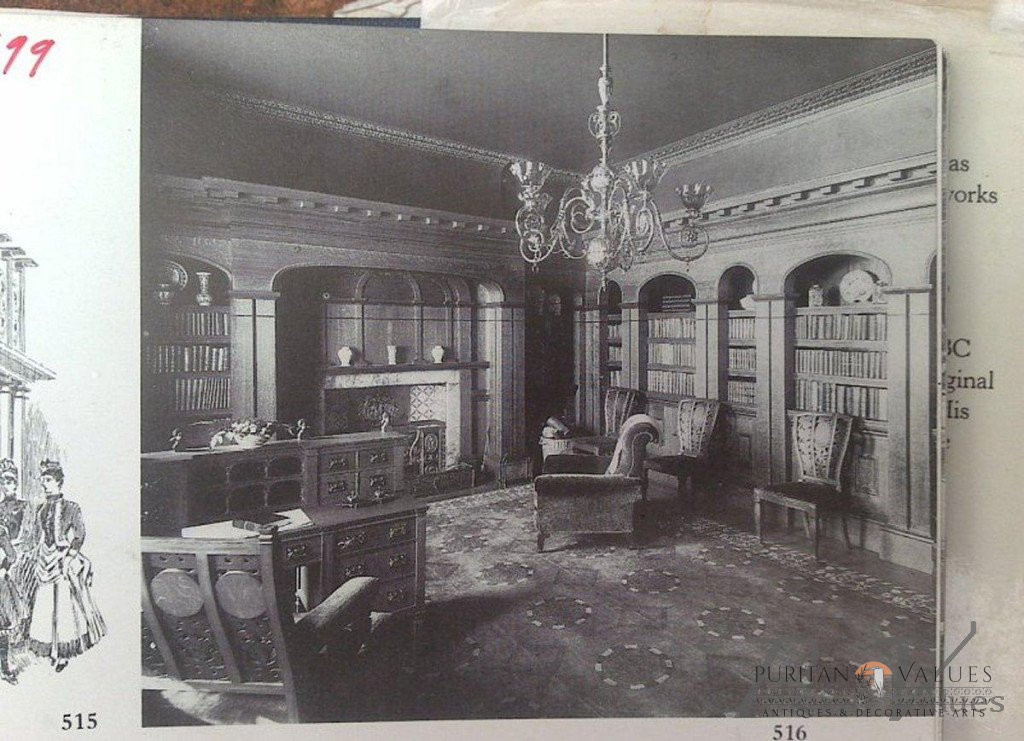
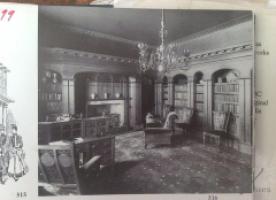
Jeremy Cooper, 'Victorian and Edwardian Furniture and Interiors', Thames and Hudson, 2007, p. 199, pl. 516 (present lot illustrated in situ)
Jeremy Cooper, 'Victorian and Edwardian Furniture and Interiors', Thames and Hudson, 2007, p. 198, pl. 514 (comparable 1882 chair illustrated)
Paul Reeves, 'The Best of British Design from the 19th and 20th Centuries: The Selling Exhibition', Sotheby's, London, March 2008, PR68 (comparable 1882 chair)
Width: 20.08 in (51 cm)
Depth: 18.31 in (46.5 cm)
Seat height: 17.52 in (44.5 cm)
1880-1889
About this piece
Lot 76W
Arthur Heygate Mackmurdo (1851–1942)
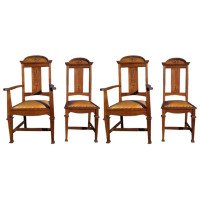
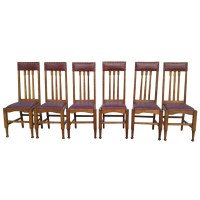
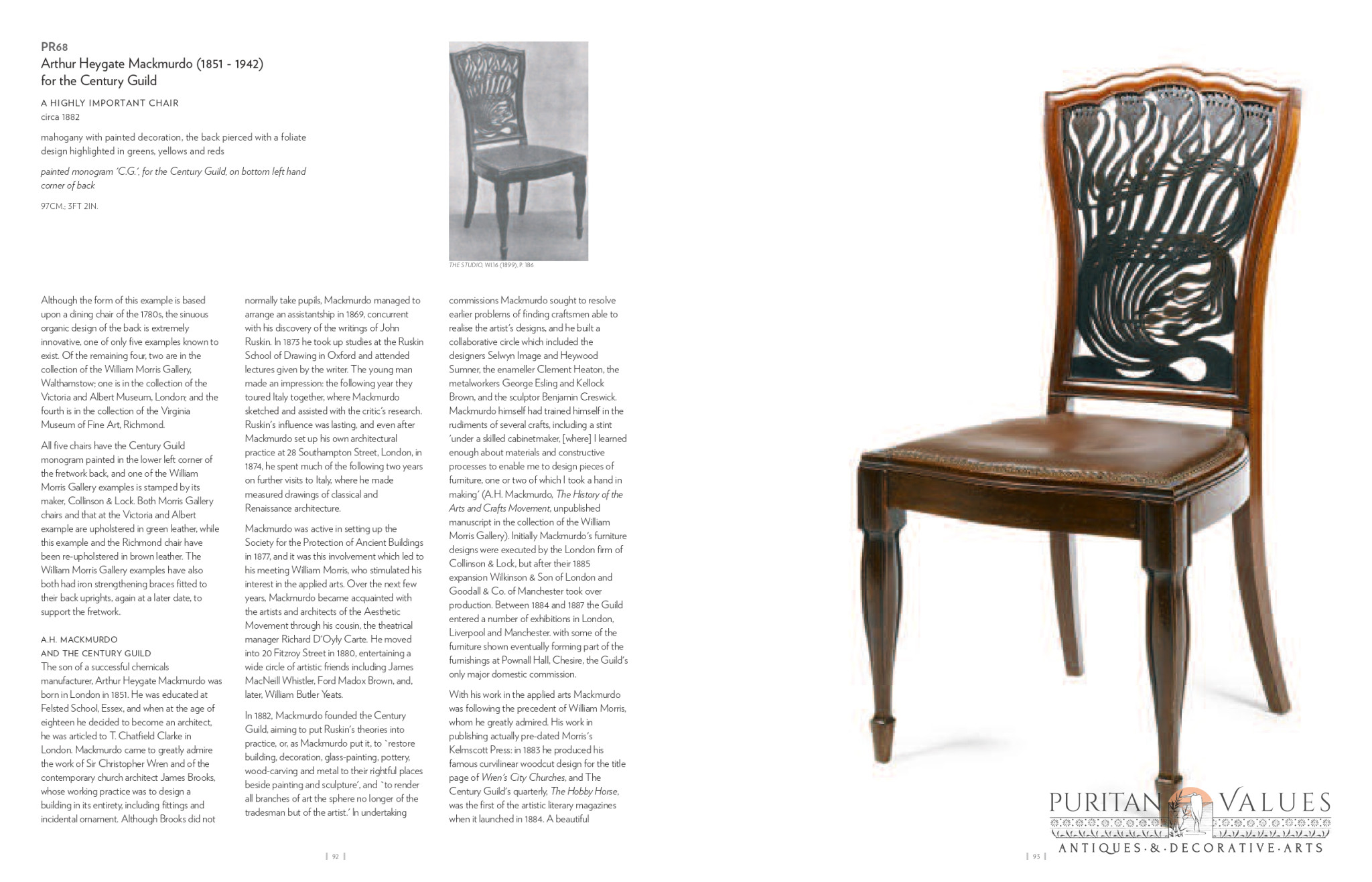
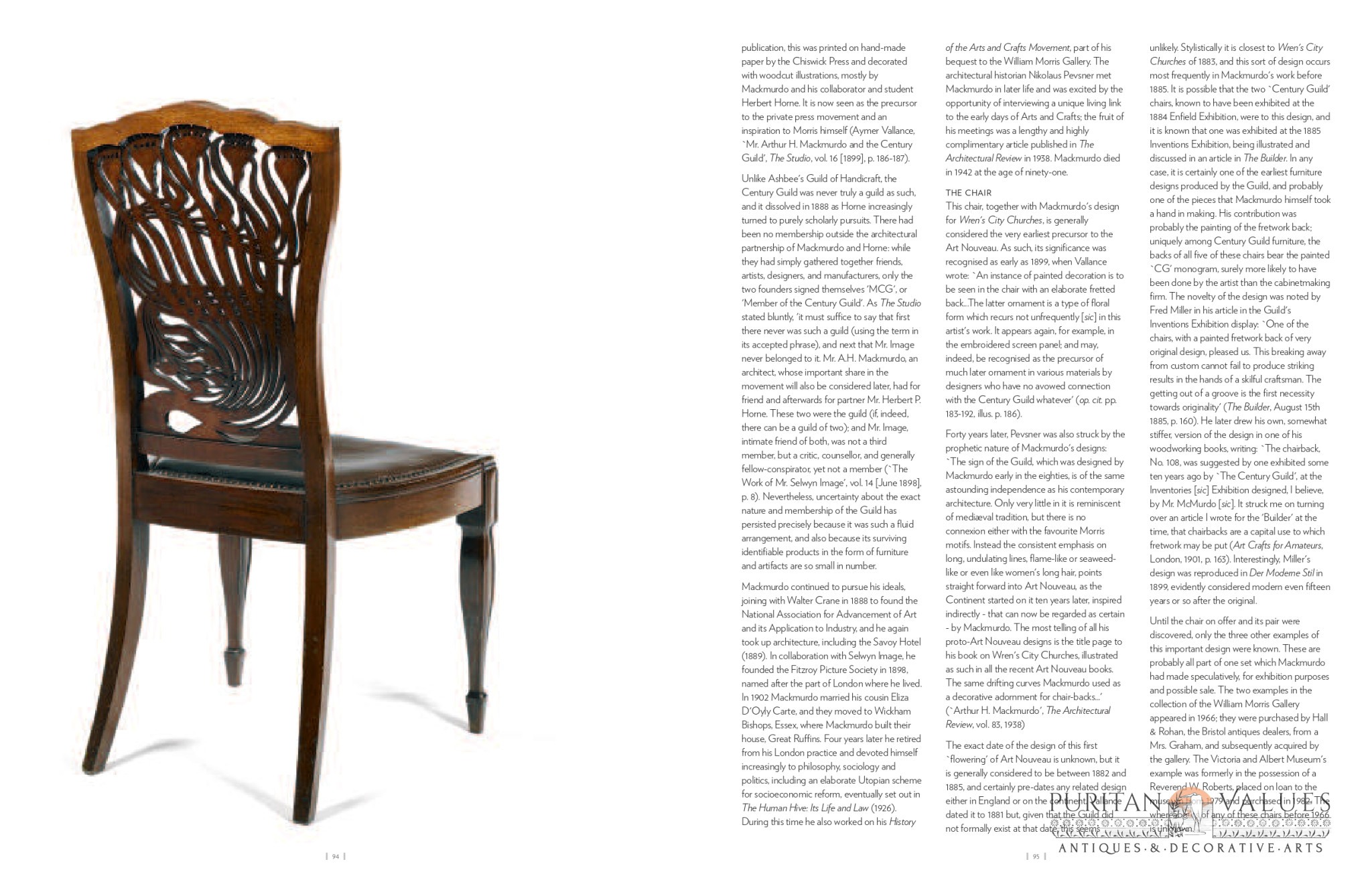
An important oak chair, with an Art Nouveau floral cut-out back. Mackmurdo's influence in Europe is recognised as having produced the earliest examples of Art Nouveau, particularly the title page for Wren's City Churches and in the styling of a chair-back designed in 1882, two years before he designed this version.
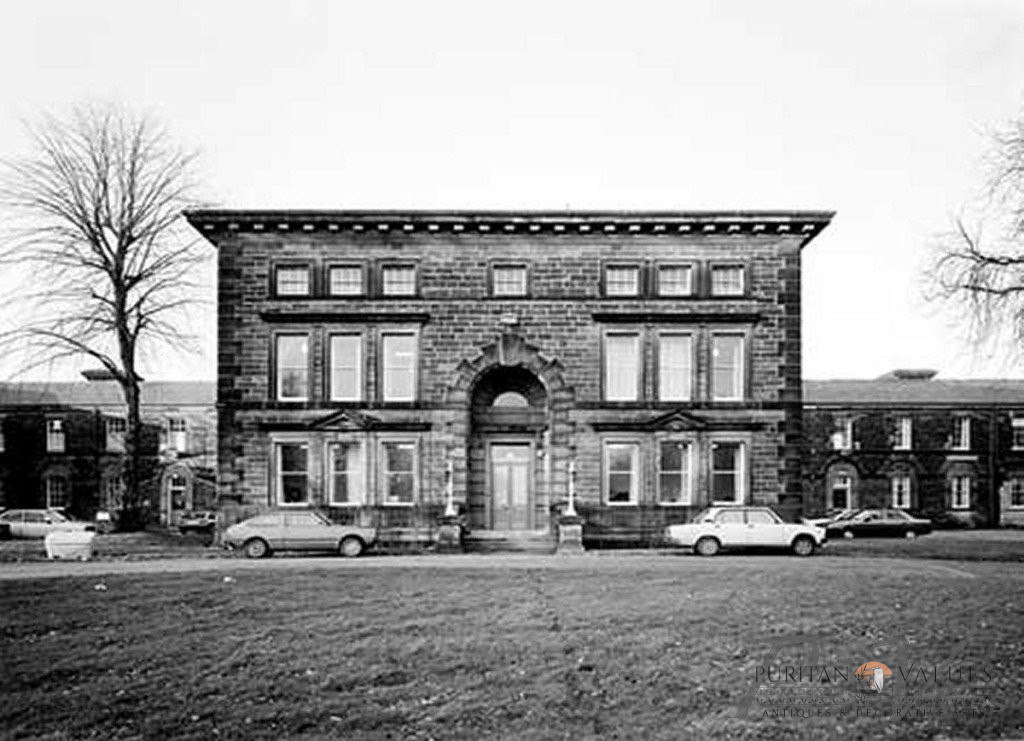
The present chair was designed for the head of Rainhill Hospital, St Helen's, South Lancashire/Merseyside (now demolished), as part of a unique interior scheme for his study.
This chair is illustrated in Jeremy Cooper's Victorian and Edwardian Furniture and Interiors, Pg. 199, Pl. 516, from the Bedford Lemere archive at the National Monuments Record, and credited as 'Rainhill, Edmund Rathbone'. Edmund Rathbone was actually the Century Guild Representative in Liverpool at that time and not the designer; the designer was Mackmurdo. Thanks to Stuart Evans for help with this provenance.
Like the 1882 chair, this one, designed in 1884, has the same conventional framing to the back and to the front legs; it also shares an infilled back with flowing foliage in an early Art Nouveau design. It is established that the Century Guild's work was known to the Belgian avant-garde group Les XX (Les Vingt). Mackmurdo's Art Nouveau influence in these chairs solidifies his reputation as the precursor to Art Nouveau.
See Cooper, Victorian and Edwardian Furniture and Interiors Pg. 199, Pl. 516 (from the Bedford Lemere archive at the National Monuments Record) for this chair in situ, and Pg. 198, Pl. 514 for the comparable example of 1882.
Also see Paul Reeves Best of British Selling Exhibition March 2008 PR68 for the 1882 example. Last image.
Mackmurdo was born in 1851, the year of the Great Exhibition, the son of a wealthy chemicals manufacturer who showed his goods there. He was educated at Felsted School in Essex and started his architectural career articled to T. Chatfield Clarke before entering the office of James Brooks. Later in life, Mackmurdo credited the value of the example of methodical thoroughness set by Brooks.
At Oxford in 1873, he attended lectures and drawing classes by John Ruskin. Ruskin had an enormous influence on the young Mackmurdo. The following year, he accompanied Ruskin to Italy. Florence was an awakening feast to his artistic thirst for knowledge. All his early training had been in Gothic architecture, and Florence was nothing less than a revelation.
He fell passionately in love with the Renaissance, something that stayed with him throughout his lifetime, and so set the seeds of Art Nouveau. In 1877, he met William Morris through his membership of the Society for the Protection of Ancient Buildings (SPAB), who further inspired his keen interest in the applied arts.
Setting up his own architectural practice at 28 Southampton Street, London. In 1882, he founded 'The Century Guild', to produce decorative work in every field of interior design and "to render all branches of art the sphere no longer of the tradesman but of the artist". Following Godwin's earlier lead to restore architecture building decoration, glass painting, pottery, wood carving and metalwork to their rightful place beside painting and sculpture.
His associates in this venture were Herbert Horne, Selwyn Image, Heywood Sumner, Kellock Brown, Benjamin Creswick, George Esling, Clement Heaton, and William De Morgan, whose decorative tiles they used and sold through the company. They complemented each other enormously with an impressive array of artistic skills.
The Guild started the magazine The Hobby Horse in 1884, printed at the Chiswick Press. It was beautifully illustrated with woodcuts by Selwyn Image and Herbert Horne; other contributors included D. G. Rossetti, William Bell Scott, and Ford Madox Brown.
The Guild's first appearance was at the Inventions Exhibition in London in 1885, though fame and recognition didn't arrive until they exhibited on two stands and a pavilion again at the Liverpool International Exhibition in 1886, where they designed two stands and a pavilion. Mackmurdo's output included design work for the Savoy Hotel ( 1889 ), a house in Chelsea for the artist Mortimer Menpes (a stunning Japanese-style interior), and interiors at Pownall Hall, Cheshire.
Mackmurdo designed a pair of houses north of the city in 1880, and a spa hotel in Nantwich, which lies to the south of the city in an area of salt mining in Cheshire, 1882 (since demolished).
At age 51, he married Eliza D'Oyly Carte and moved to Wickham Bishops in Essex, where he built his home, Great Ruffins. He retired at the age of 55. His later interests were in social reform. He died at the ripe old age of 91.
E. W. Godwin: The First Modernist, Masterworks from the Anthony Geering Collection
16 December 2026, 10:00 EST
US$50,000 - US$70,000
£38,000 - £53,000
Provenance
Dr. Thomas Lawes Rogers, Rainhill Hospital, St. Helens, Merseyside
Thence by Descent
The Fine Art Society, London
Anthony Geering, United Kingdom (acquired from the above, 27th November 2017)
Literature / References
Jeremy Cooper, 'Victorian and Edwardian Furniture and Interiors', Thames and Hudson, 2007, p. 199, pl. 516 (present lot illustrated in situ)
Jeremy Cooper, 'Victorian and Edwardian Furniture and Interiors', Thames and Hudson, 2007, p. 198, pl. 514 (comparable 1882 chair illustrated)
Paul Reeves, 'The Best of British Design from the 19th and 20th Centuries: The Selling Exhibition', Sotheby's, London, March 2008, PR68 (comparable 1882 chair)