































































Similar available products


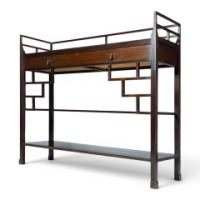


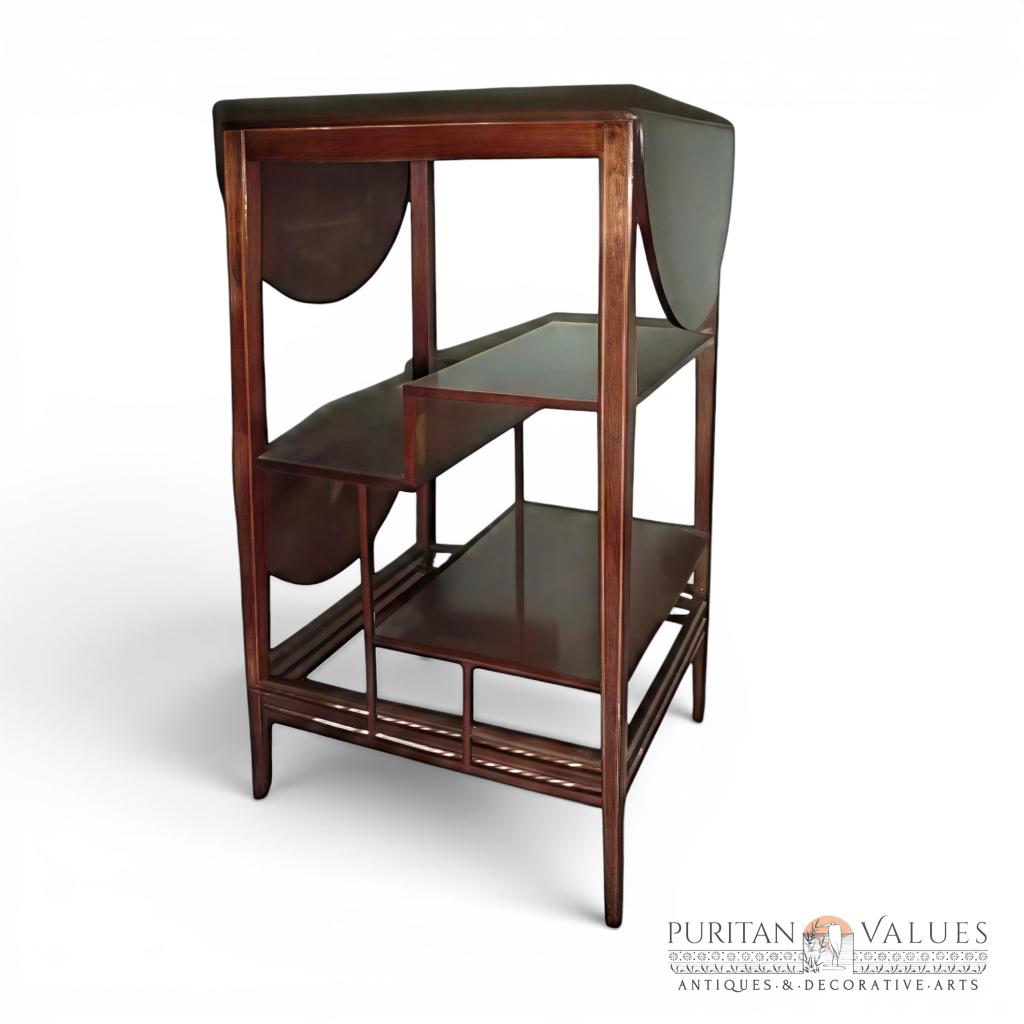
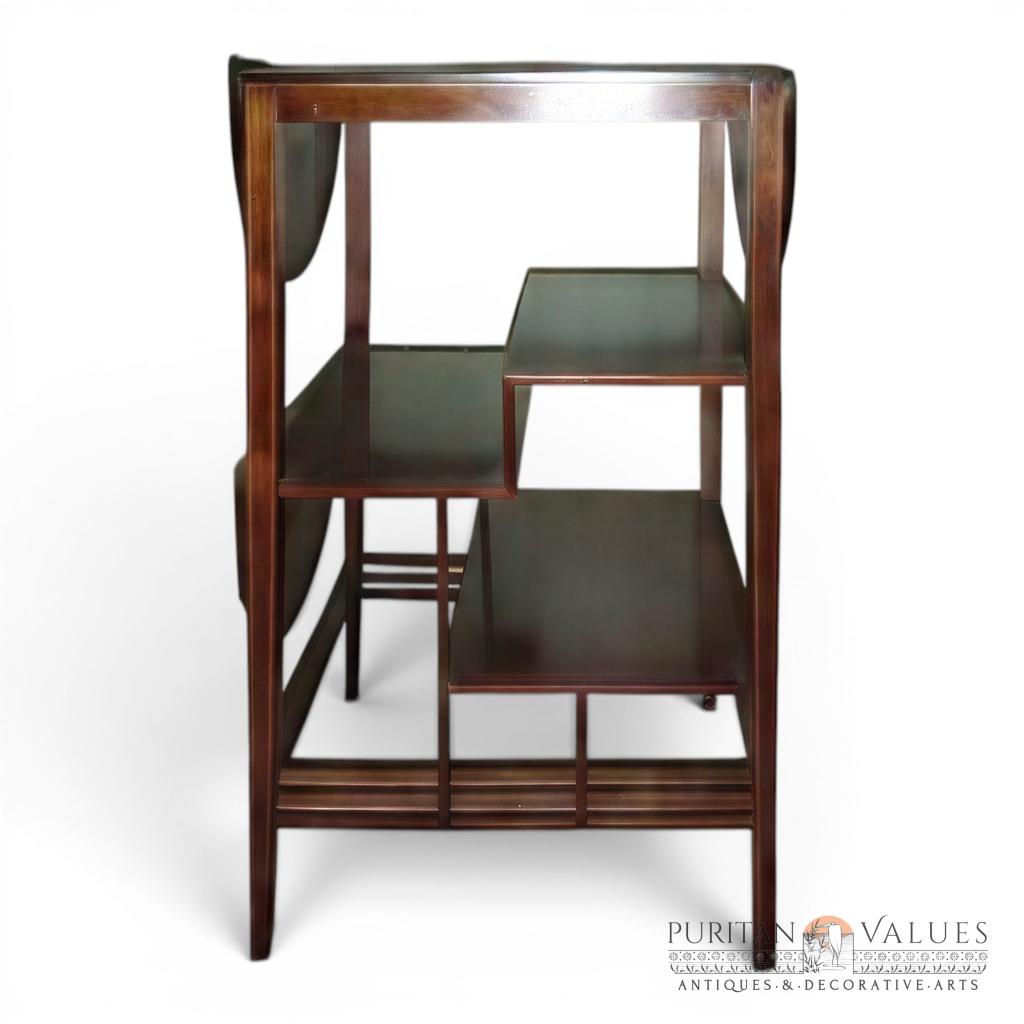
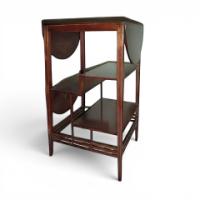
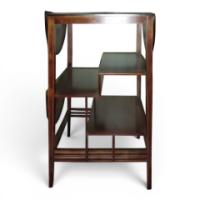
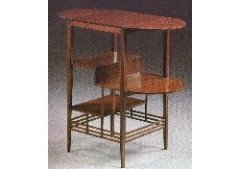
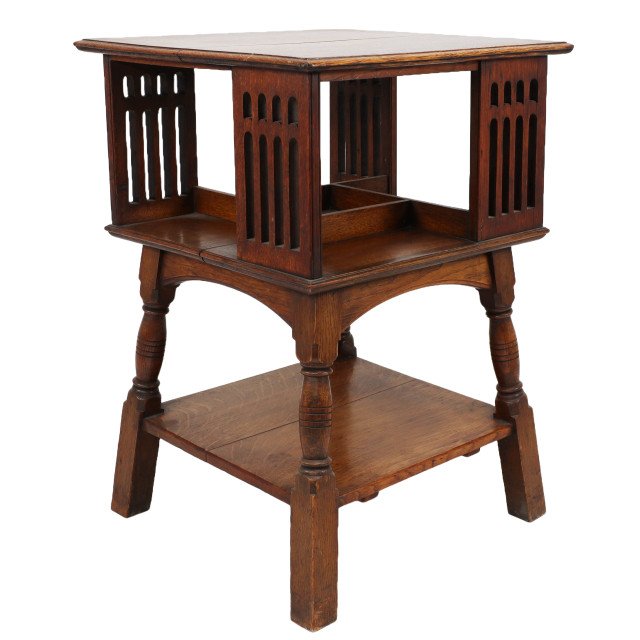
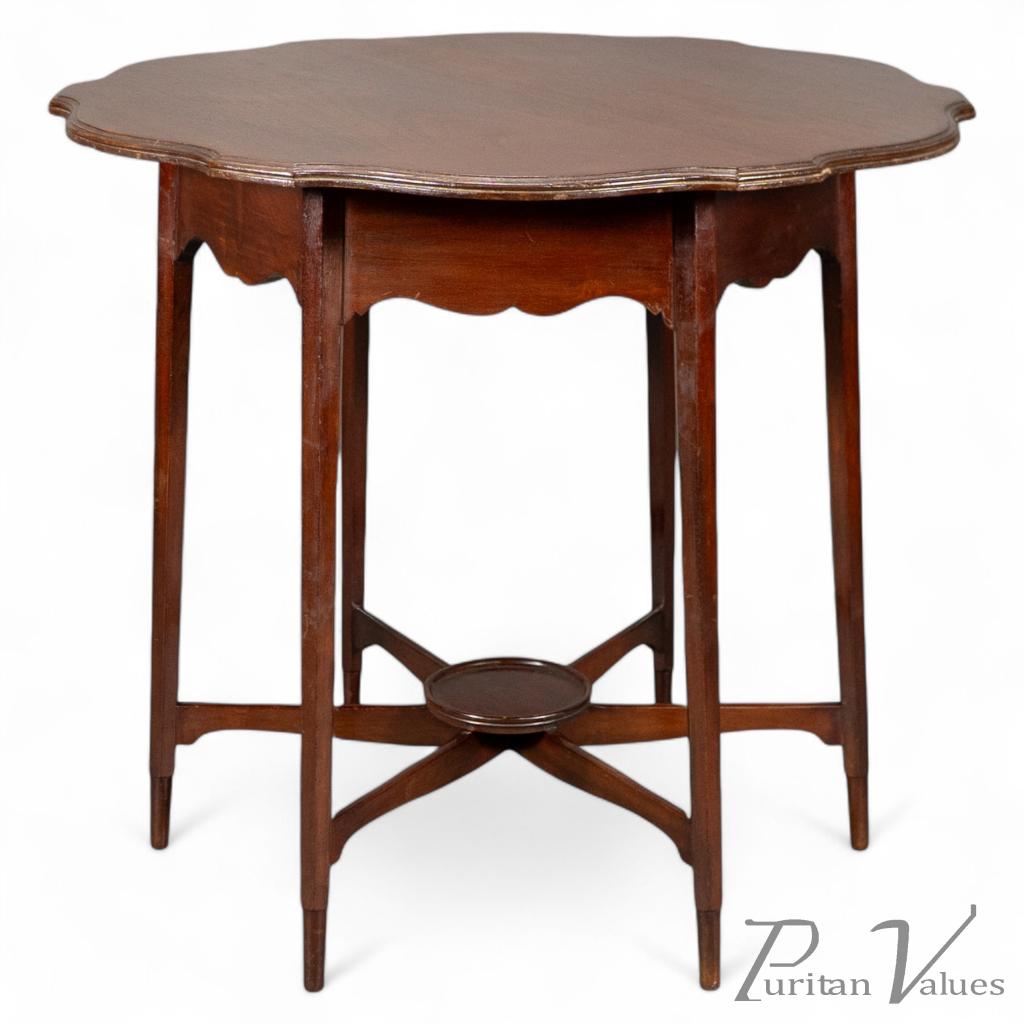
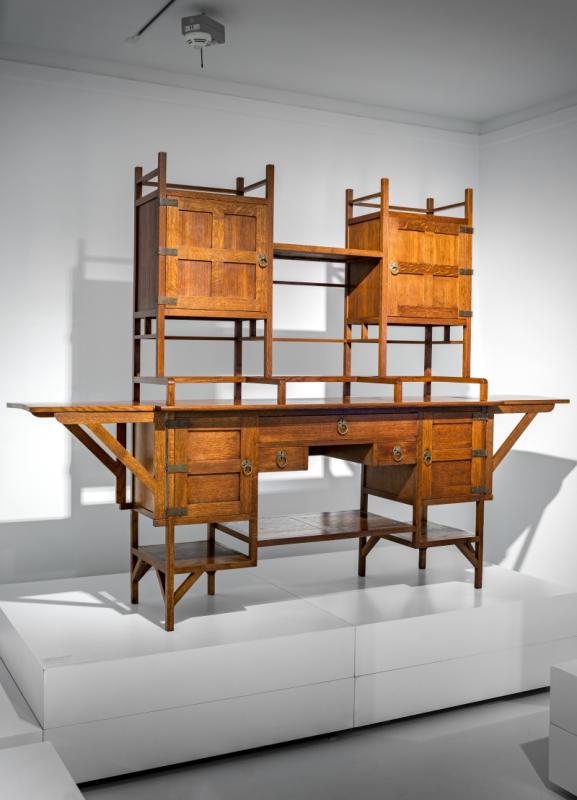
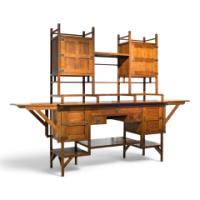
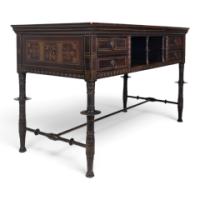
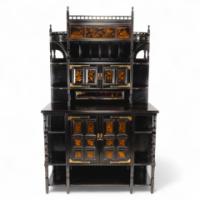
E. W. Godwin. Made by Collinson and Lock. A highly important Anglo-Japanese sidetable.
SOLD
About this piece
E. W. Godwin. Made by Collinson and Lock. SOLD
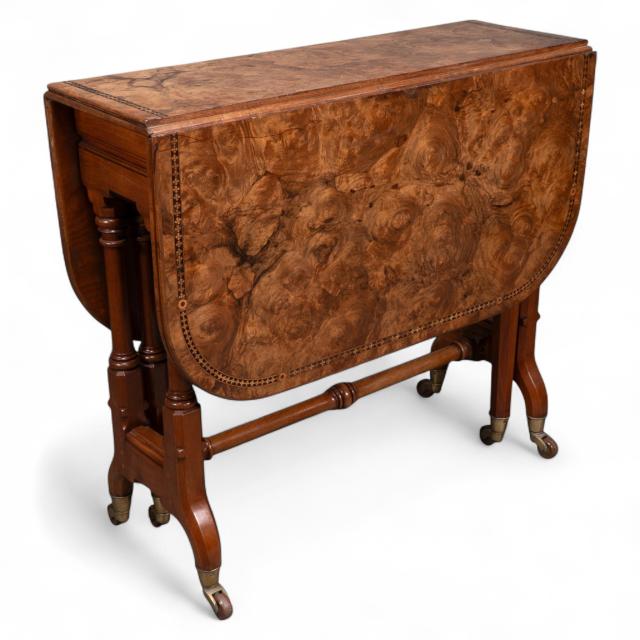
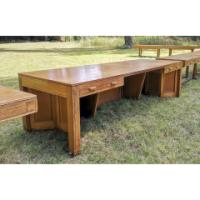
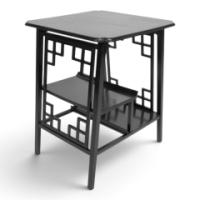
A ‘Smallhythe’ Anglo-Japanese Iconic side table with folding shelves and boxwood line inlay.
Circa 1872.
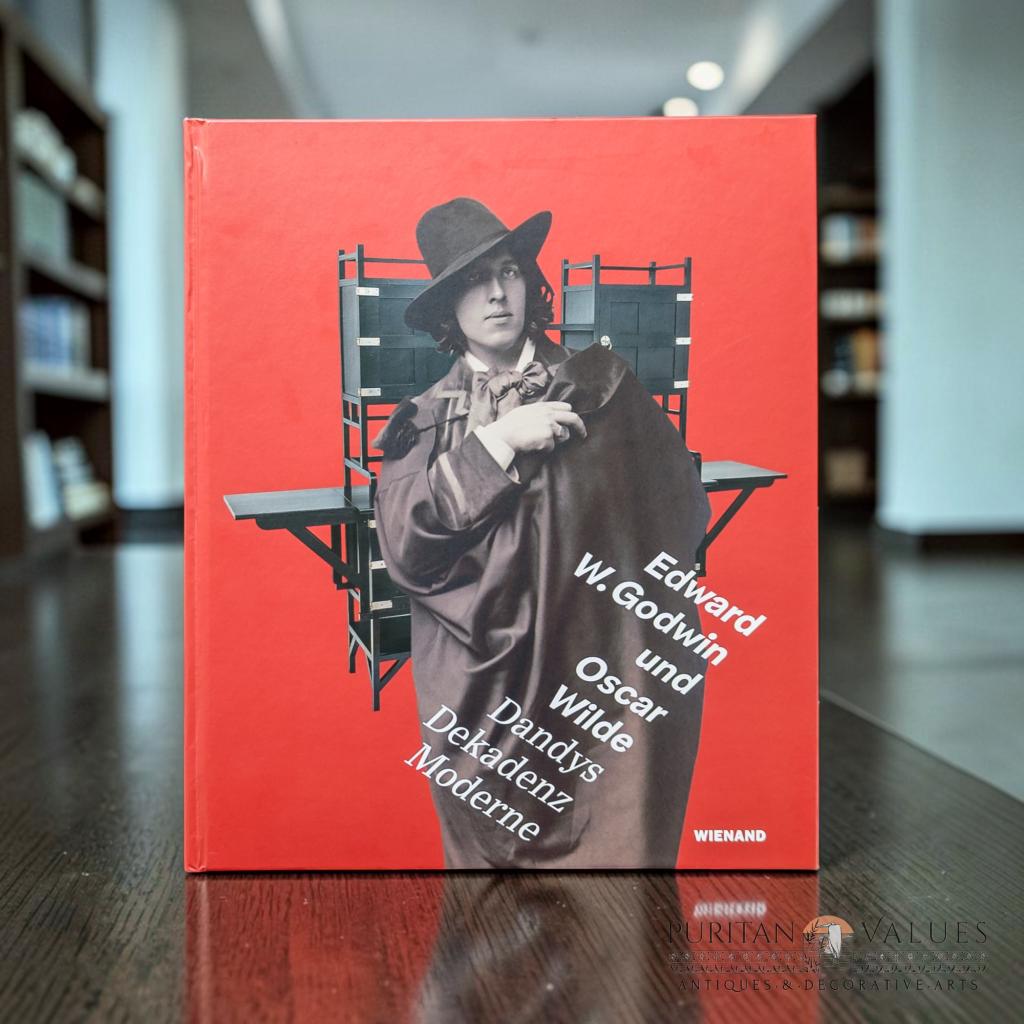
Godwin's drawing of this form is contained in his sketchbooks at the Victoria and Albert Museum, London (PD E.255-1963, fol. 21). One belonged to Dame Ellen Terry, the famous Shakespearean actress who lived with Godwin from 1868-75. She later moved to Smallhythe Place, Tenterden, Kent, where the table name comes from, and one in the collection of the Metropolitan Museum of Art. Those tables have a folding arm to hold up the folding shelves, metal adornments to the frames and brass sabots.
Similar examples are in the National Trust collection (illustrated in Jeremy Cooper, Victorian and Edwardian Furniture and Interiors, London, 1987, pl. 326; Charlotte Gere and Michael Whiteway, Nineteenth Century Design from Pugin to Mackintosh, London, 1993, 188) now in the Metropolitan Museum of Art, New York (Susan Soros, E. W. Godwin, Aesthetic Movement Architect and Designer, 1999, fig. 3-1).
In total seven 'Smallhythe' tables are known to exist, including this one and one other in my own collection.
When I bought this table in the late 1990s there were only two other examples known, one in the Ellen Terry museum in Smallhythe Place, Kent, and one in the collection of the Metropolitan Museum of Art mentioned above, both have folding arms to hold the folding shelves up, metal adornments to the frames and brass shoes but do not have a lower shelf. The one I discovered was plain and free from the distraction of the folding arms, metal adornments to the frames or brass shoes.
I spent two years researching Godwin's architectural drawings and his original sketch pads held at the Victoria and Albert Museum, London, donated in 1963 by his son Gordon Craig. On a Friday afternoon I found the original drawing in Godwin's own hand, the drawing had no metal adornments and no distraction of a folding arm to hold the folding shelves up. The two examples held at the Modern Museum of New York and the Ellen Terry museum both share the folding arms, adornments and brass shoes. Godwin’s drawing has no folding arms or metal adornments and relates exactly to the plain unadorned table I had found. When we consider Godwin’s obsession with economy, simplicity, flat surfaces and the perfect unbroken line, it is easy to decipher that the plain unadorned versions are more likely to be earlier than the adorned versions that have the distraction of the folding arms.
Regarding dates for the three differing designs, I have found no evidence that suggests the Smallhythe tables with boxwood inlays are later Edwardian examples probably made by Waring and Gillows. All three versions have the exact same piano hinges to the leaves and are made in the exact same way.
During the late Georgian period—specifically the Hepplewhite and Sheraton eras (circa 1780–1810), cabinetmakers heavily favored minimalist, linear boxwood inlays known as ‘stringing or line inlay’ over the complex marquetry seen in earlier Baroque or French styles. Godwin collected Georgian furniture and many of his designs in the Japanese style also have a strong Georgian influence which suggests again that the inlaid versions are earlier because they follow the simplicity of the Georgian style that Godwin so admired.
Discussing the smallhythe tables, on Pg 146/7 Pl 211 Soros states that ‘The folding shelves seem to be a Godwin adoption, taken from late-eighteenth-century Sheraton flap tables, since there is no precedent in Japanese furniture forms.’
I have owned two inlaid versions and an unadorned version with tramline scribe details to the tops of the legs, and studied both the adorned versions in the Ellen Terry museum and the Met, and all were certainly made in the 1870s/80s. Coupled with the fact that by the time the Edwardian period came along manufacturing had changed dramatically. The unadorned inlaid versions are faithful to the adorned ones, and also those unadorned versions without inlay that have scribed tramline details to the top of the legs were all made long before the Edwardian period arrived.